Plinko Casino Australia: Rules, Demo Play and Crypto Options
 Available in AU
- Online Casino Landscape in Australia
- Legal Framework for Real‑Money Gaming
- Slot Machines and Online Pokies: What Australian Players See
- Game Types Available at Australian Online Casinos
- Choosing a Reputable Australian Online Casino
- Understanding Plinko Casino Mechanics
- Free Play and Demo Options for Plinko
- Crypto Payments and Scripts in Plinko Casinos
- Bonuses, Promotions, and Responsible Gaming
- Plinko Casino Reviews: What to Expect
Online Casino Landscape in Australia
The online casino sector in Australia has been shaped by two forces pulling in different directions: a domestic regulatory system that prohibits locally licensed real-money casino sites, and a global technology base that keeps producing new game formats and delivering them to Australian screens regardless. The result is a market where the supply of games grows continuously while the legal supply of operators stays at zero. Any description of this landscape has to hold both facts at once.
Scale of Play in Australia
The numbers that exist for Australian gambling are almost entirely about land-based play, and they are substantial. In FY 2020–2021, Australians placed bets worth almost AUD$150 billion through electronic gaming machines, with total player loss of AUD$12 billion. Per-capita loss from those machines in the same period was AUD$608. Australia holds 3% of the world’s pub and club poker machines — pokies, in local usage — despite representing 0.3% of the global population.
These figures measure the pokies market, not online casinos. But they matter for understanding the online landscape for one reason: the appetite they document does not switch off when a player opens a browser. Online casino games in Australia sit at the intersection of that documented demand and a legal structure that declines to license anyone to serve it domestically. Who fills the gap, and under what rules, is a separate question — but the demand side is measurable, and it is large.
Before you spin the plinko boards at any Australian casino site, it helps to know how each licensed operator stacks up on welcome offers, deposit requirements, and payout handling.
License: Curacao Gaming Control Board (TechSolutions Group N.V.) · Bonus: 100% up to A$250 + 100 free spins (1st deposit) Bizzo Casino operates under a Curacao Gaming Control Board licence via TechSolutions Group N.V. and welcomes new players with a first-deposit match up to A$250 plus 100 free spins.
License: Curacao eGaming OGL/2024/923/0383 (Antillephone N.V.) · Bonus: up to A$2,000 + 100 free spins across 2 deposits · Min. deposit: A$30 WinSpirit Casino holds a Curacao eGaming licence through Antillephone N.V. and spreads its welcome package of up to A$2,000 plus 100 free spins across two deposits, with a A$30 minimum deposit.
License: Curacao eGaming (Roby Games Ltd) · Bonus: 100% up to A$750 + 200 free spins Roby Casino is licensed under Curacao eGaming via Roby Games Ltd and offers a straightforward 100% match up to A$750 alongside 200 free spins.
License: Curacao eGaming OGL/2023/174/0082 (Dama N.V.) · Bonus: up to A$10,000 + 500 free spins across 4 deposits · Min. deposit: A$15 LevelUp Casino runs on a Curacao eGaming licence issued to Dama N.V. and offers an extensive welcome package up to A$10,000 plus 500 free spins spread over four deposits, with a low A$15 minimum deposit.
License: Curacao Gaming Control Board · Bonus: up to A$5,000 + 400 free spins JustCasino is regulated by the Curacao Gaming Control Board and backs its offering with a bonus of up to A$5,000 plus 400 free spins.
License: Curacao (operating since 2017) · Bonus: 250% up to A$2,000 + 50 free spins on the first of six deposits · Min. deposit: A$20 Uptown Pokies has been operating under a Curacao licence since 2017 and offers a 250% match up to A$2,000 plus 50 free spins on the first of six qualifying deposits, with a A$20 minimum deposit.
License: Curacao Gaming Control Board OGL/2023/174/0082 (Dama N.V.) · Bonus: up to A$5,000 + 300 free spins across 4 deposits SpinsUp is licensed by the Curacao Gaming Control Board through Dama N.V. and provides a bonus of up to A$5,000 plus 300 free spins spread across four deposits.
License: Curacao Gaming Control Board OGL/2023/176/0095 (Hollycorn N.V.) · Bonus: 100% up to A$10,000 + 100 free spins GoldenCrown carries a Curacao Gaming Control Board licence via Hollycorn N.V. and offers a sizeable 100% match up to A$10,000 plus 100 free spins.
Bonus: 100% up to A$750 + 200 free spins, 35x wagering · Payout speed: crypto 30-120 minutes, fiat 24-72 hours · Min. deposit: A$30 MrPacho offers a 100% bonus up to A$750 plus 200 free spins with 35x wagering, and stands out for fast crypto payouts within 30-120 minutes alongside fiat withdrawals in 24-72 hours, with a A$30 minimum deposit.
Bonus: up to A$7,500 + 550 free spins across 10 deposits, 50x wagering · Payout speed: crypto under 1 hour, PayID 1-3 business days · Min. deposit: A$20 (A$30 to qualify for the bonus) Ricky Casino offers an extensive bonus of up to A$7,500 plus 550 free spins across ten deposits with 50x wagering, and supports quick crypto withdrawals under an hour plus PayID payouts in 1-3 business days, with a A$20 minimum deposit (A$30 to qualify for the bonus).
Regional distribution tells the same story at ground level. New South Wales alone has approximately 95,800 poker machines. The Central Coast region of NSW accounts for 4,672 of them, or 2.37% of Australia’s total. Within that region, Gosford has roughly 1,928 pokies — about one per 71 adults — and Wyong has about 2,608, about one per 47 adults. Density like that is not incidental; it is the physical infrastructure of a gambling culture that online platforms now sit alongside.
Site Growth and Where It Comes From
According to one industry review, the number of online casino sites, including Australian operators, is increasing. That single-source observation deserves its precise framing, because it is the only claim of growth on record here, and the "operators" in question are by definition not domestically licensed ones — there are no domestically licensed real-money online casino operators available to Australian players. The growth, insofar as it exists, happens offshore: sites holding licences from other jurisdictions, built on international software platforms, and accessible from Australia because the law targets providers rather than individual players.
The same review attributes the sector’s boost in popularity to the integration of technological innovations globally. That tracks with what is observable in the product itself. The current generation of online casino platforms runs on software that did not exist when the domestic framework was written: browser-based play without downloads, mobile-first interfaces, real-time video streaming for live-dealer tables, and provably fair mechanics for games built on cryptographic hashes rather than spinning reels.
Plinko belongs to that last wave. It is not a traditional pokie and not a table game; it is a specialty release that migrated from a television game-show format into casino lobbies, where it runs on an RNG rather than on any physical mechanism. Its presence in online casino catalogues aimed at Australians is part of the same trend: game studios keep shipping new formats, and those formats reach the Australian market through offshore channels within the same cycle as every other market. Searching for a Plinko casino online in Australia returns results; what it does not return is an Australian-licensed one, because none exists to find.

The Technology Layer
Two technical categories define essentially everything an online casino offers: RNG-based games and live-dealer games.
RNG-based games — pokies, digital table games, and specialty titles like Plinko — use Random Number Generators to produce outcomes. The RNG is the whole engine: no dealer, no physical wheel, no ball. Reputable operators run software whose RNGs are regularly audited by independent testing agencies, which is the closest thing this market has to an engineering guarantee that outcomes are random rather than tuned. Plinko in its online form is an RNG-based game: the ball’s path through the pegs is determined by the generator, and every drop is an independent random event.
Live-dealer games are streamed in real-time with professional dealers, providing an experience designed to replicate a physical casino floor. The card is actually dealt, the wheel actually spun, and the video feed carries the result. For players, the distinction matters practically: RNG games run at the player’s own pace with no scheduling, while live-dealer tables have opening hours, seat availability, and minimum stakes set by the studio.
Card games such as poker, baccarat, and blackjack are available in many variations online, and table games extend to roulette, craps, Pai Gow, and Sic Bo. Slot games are a dominant category on most Australian online casino sites, where they are called online pokies, and many can be played in demo mode with virtual funds. The catalogue breadth is a direct product of the technology layer: a single integration can put thousands of RNG titles from studios like Pragmatic Play, Microgaming, NetEnt, and Evolution Gaming into one lobby, which is why offshore site counts keep climbing without any corresponding domestic licensing.
Games where outcomes are produced by a Random Number Generator, such as slots, digital table games, and Plinko.
Games streamed with a real dealer, such as live roulette or live blackjack, providing a human‑centred experience.
Who Oversees What
Regulation of online gambling in Australia is overseen by the Australian Communications and Media Authority (ACMA). Its remit covers the enforcement side of the Interactive Gambling Act framework: ACMA investigates and acts against prohibited gambling services, coordinates with internet providers on blocking, and enforces rules against advertising prohibited services to Australian residents. The details of that framework — what the Interactive Gambling Act 2001 prohibits, where the legislative record is inconsistent, and what it means for individual players — belong to a separate discussion. For the purposes of the landscape itself, the structural fact is enough: one regulator, one Commonwealth statute, zero domestic online casino licences.
Participation Conditions
The conditions of participation, as stated by operators and the regulatory framework alike, are simple and fixed:
- Age. The minimum age to play at online casino operators in Australia is 18 years. This is the national legal gambling age, and it applies whether the site in question is a licensed wagering service or an offshore casino platform.
- Residency. Players must be Australian residents to participate in online casino games as the market defines its audience.
- Account verification. Operators require government-issued identity verification before withdrawals — a compliance measure that offshore sites serving Australians have adopted alongside their licensing conditions.
What does not exist is a participation condition on the operator side, because there is no operator side to condition. No Australian licence, no licensed operator, no register of licensed providers. The conditions above describe the player’s obligations; the operator’s obligations sit with whatever foreign regulator issued its licence, not with ACMA.
Where Plinko Fits
Within this landscape, Plinko occupies a specific and growing niche. It is a specialty game — RNG-based, fast-paced, structurally closer to an instant-win format than to a pokie — and it has become a common fixture in the catalogues of offshore casinos that accept Australian players. The search patterns reflect this: "plinko online casino," "online plinko casino games," "what online casino has plinko" are all, in effect, the same question asked twelve ways — which sites carry this game, and does anyone carry it under conditions worth accepting.
The honest answer has two parts. Yes, online casino games including Plinko are reachable from Australia, run on audited RNG software, and available both in demo mode with virtual funds and in real-money form. And no, none of that happens inside a domestic licensing system, because no such system exists for casino games — it is not possible to obtain a licence to operate an online casino domestically. The market for Plinko, as for every other online casino game in Australia, is an offshore market with Australian demand attached to it.
That is the landscape as it stands: measurable demand documented in the billions, a technology base that keeps expanding what a "casino game" can be, a single regulator enforcing a prohibition on domestic supply, and a player population that participates through channels the regulator does not license. The sections that follow take each piece — the law, the pokies, the game formats, the selection criteria, and the mechanics of Plinko itself — in turn.
Legal Framework for Real‑Money Gaming
The legal position of real-money casino gaming in Australia is unusually lopsided: the law prohibits the supply side almost completely, while leaving the demand side untouched. Anyone weighing up whether to play a plinko casino game for real money needs to understand that distinction first, because it determines who carries the legal risk and who does not.
The Interactive Gambling Act
The primary Commonwealth statute is the Interactive Gambling Act 2001 (IGA). It governs online gambling at the federal level and was introduced with an explicit public-protection purpose, with harm minimisation at its centre. Under the IGA, online casino-style games are prohibited — slots, poker, blackjack and roulette all fall inside that category, and a plinko-style game, being a real-money game of chance offered online, sits in the same prohibited class rather than in any licensed category.
Supply Prohibited
Offering real‑money casino games, including Plinko, to Australian residents is prohibited under the Interactive Gambling Act 2001.
One point of confusion deserves a straight answer. Some accounts of Australian gambling law cite an Interactive Gambling Act 1997 as the statute prohibiting the provision of online casino games to Australian residents; others cite the 2001 Act. The discrepancy is real and unresolved in public sources, so the accurate statement is this: the 2001 Act is the one consistently named as the primary Commonwealth law, while references to a 1997 Act appear in some accounts and should be treated as a divergence between sources rather than settled fact. What both versions agree on is the substance — providing online casino games to Australian residents is prohibited.
The scope of the federal prohibition is broader than casino games alone. Online casino gaming, online poker and in-play (live) betting are all banned federally under the IGA. By contrast, online sports betting is legal in Australia when offered under state or territory licences. That contrast matters for anyone categorising plinko by format: however much a plinko game resembles a slot — a wager, a drop, a multiplier — its legal treatment follows the online-casino category, not the licensed sportsbook category.
Who the law actually targets
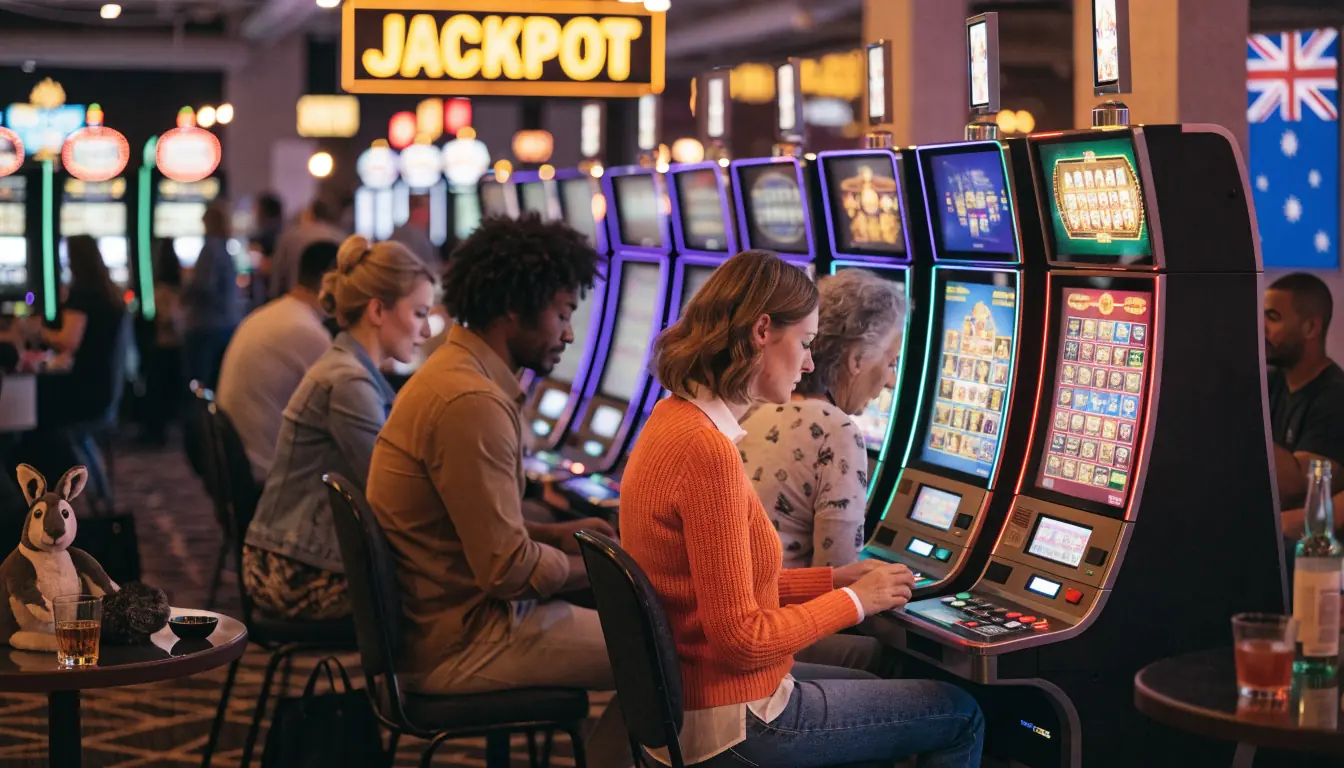
The single most consequential fact for players is this: it is not illegal for individual Australians to play at offshore-licensed online casinos. The IGA targets operators, not players. A person in Australia who plays a real-money plinko game on a site hosted and licensed elsewhere is not committing an offence under Commonwealth law; the person who offers that game to Australian residents is.
This asymmetry produces a market with a defined shape:
- No domestic licensing. There are no domestically licensed real-money online casino operators available to Australian players. It is not possible to obtain an Australian licence to run an online casino. Any site presenting itself as “licensed for Australia” in the casino sense is making a claim the licensing system cannot support, because the licence does not exist.
- No public register of casino licensees. Where a licence does not exist, there is no register to check it against. Advice to “verify the operator’s licence with the Australian regulator” for casino play is not caution; it is a statement about a licence that has never been issued.
- Offshore operation is the only supply channel. The sites Australians can reach for real-money casino games operate under foreign licences, outside Australian regulatory reach. This is the direct legal consequence of the IGA’s design: the Commonwealth chose prohibition of supply rather than licensing of it.
The Australian Communications and Media Authority (ACMA) oversees online gambling regulation, including enforcement against prohibited services directed at the Australian market. That enforcement runs against operators and their enabling infrastructure — not against the individuals who play.
What this means for real-money plinko specifically
Plinko entered the online-casino catalogue as a real-money game in the same regulatory position as slots or roulette. Searching for "plinko casino game real money Australia" therefore leads to a specific legal answer, not a grey one:
- A plinko casino game for real money cannot be lawfully offered to Australian residents by any operator, domestic or offshore. Offshore sites that accept Australians do so in breach of the IGA, regardless of whether they hold a licence elsewhere.
- The player commits no offence by playing. The exposure runs the other way: an offshore operator accepting Australian players is already operating outside Australian law, which is the practical starting point for assessing anything else the site promises.
- There is no Australian-licensed version of the game, no “regulated Australian plinko”, and no domestic authority standing behind withdrawal practices, fairness testing or dispute resolution for it.
Two follow-on questions from the search patterns around plinko are answered by the same framework. First, a "real money no deposit bonus" for plinko is a promotional construct offered by an operator that is already prohibited from serving Australians — the bonus terms carry no local enforcement. Second, withdrawals from real-money plinko play are a matter between the player and an offshore operator; no Australian mechanism exists to compel payment, because the transaction sits entirely outside the domestic licensing system that would ordinarily provide that recourse. Where a withdrawal dispute arises with a licensed operator in a functioning licensing regime, the regulator is the escalation route. In this market, there is no such route.
Where bonus promises sit legally
The legal framework also frames the promotional language that surrounds real-money play. Bonuses offered in this space frequently carry wagering requirements, game restrictions and time limits such as expiry dates. None of these conditions is governed by Australian casino regulation — again, because no such regulation of online casinos exists domestically. The terms are whatever the offshore operator sets, and the only enforcement mechanism available to a player is the operator’s own complaints process.
No Local Enforcement
Bonus terms offered by offshore operators are not overseen by Australian regulators, so players have no domestic protection.
That is not an argument about whether the terms are fair or unfair. It is a statement about whose rules apply: for real-money online casino play reaching Australian residents, the operative rulebook is the operator’s, written under a foreign licence, offered in breach of Australian law, with the player holding no domestic backstop. The IGA’s design makes that outcome deliberate — harm minimisation through supply-side prohibition — even though the player-side permission leaves the demand in place.
The summary fits in three lines. Supply of online casino games to Australians: prohibited federally, with no licence available. Playing at offshore sites: not an offence for the individual. Domestic protection, licensing or recourse for real-money plinko play: none, because the framework was built to ensure there is none.
Slot Machines and Online Pokies: What Australian Players See
In Australia, the slot machine has never been called a slot machine. It is a poker machine, or a "pokie" — a word that long ago detached itself from poker and attached itself to every machine with spinning reels and a payout schedule. When the same games moved online, the vocabulary moved with them: what international sites list as "slots" appears on sites aimed at Australians as online pokies. The name is the only thing that migrated cleanly. Everything else — where the machines sit, who regulates them, and what happens when a ball replaces the reels — changed shape along the way.
The physical pokies landscape
The scale of the physical machine base is documented, and it is unusual for a country of Australia’s size. Australians placed bets worth almost AUD$150 billion through electronic gaming machines in the 2020–2021 financial year, with a total player loss of AUD$12 billion. Per-capita loss from those machines for the same period was AUD$608. Australia holds roughly 3% of the world’s pub and club poker machines while representing 0.3% of the global population — a concentration that has no real counterpart elsewhere.
The machines are not spread evenly. New South Wales alone has approximately 95,800 poker machines. Within NSW, the Central Coast region accounts for 4,672 of them, or 2.37% of the national total. That figure splits unevenly between its two centres: Gosford carries roughly 1,928 pokies, about one machine per 71 adults, while Wyong has about 2,608, roughly one per 47 adults. A resident of Wyong walks past noticeably more machines per person than a resident of almost any comparable community in the country.
These are venue machines — pubs, clubs, casinos — regulated at state and territory level, with physical attendants, cash handling and venue-level exclusion schemes. They are a different animal from what an Australian player sees when opening a browser, and the difference is worth holding onto, because the word "pokie" covers both without distinguishing between them.
What moves online
The online equivalent keeps the name and drops the venue. Slot games are a dominant category on most Australian online casino sites — the single largest shelf in the catalogue, ahead of table games, card games and everything else. A site that offers a few dozen tables will typically offer its pokies by the hundred.
RNGs used in online casino games are regularly audited by independent testing agencies, which confirms the randomness of outcomes.
The mechanics translate directly. A physical pokie is a game of independent random outcomes with a fixed payout table; an online pokie is the same structure executed in software. There is no dealer, no opponent and no decision after the bet is placed — the reel animation is presentation, and the result is determined the moment play starts. This is what separates pokies from every table and card category: in blackjack or poker, the player’s choices change the outcome; in a pokie, nothing after the spin does.
The engine underneath is the Random Number Generator. Online casino games use RNGs to ensure random outcomes, and the software is regularly audited by independent testing agencies — a point any serious operator states plainly, because an unaudited RNG is an unfalsifiable claim. For the player, the practical consequence is simple: there is no system, no timing trick and no "hot machine." A machine in a pub can at least be observed wearing out its physical parts; an RNG has no parts to wear.
The online casino sector as a whole has gained popularity through the integration of technological innovations globally, and the number of online casino sites, including Australian-facing operators, is increasing — though the latter claim rests on a single industry review rather than an established market statistic, and should be treated as one observation, not a measured trend.
Where Plinko fits into the pokies shelf
Search interest in Plinko has produced a wave of machines marketed as "Plinko slots" — games that borrow the ball-drop format, dress it in reel-game styling and list it alongside the pokies. The placement is half honest. Plinko shares the defining feature of a pokie: the bet is placed, a random process runs, and the outcome is decided without any further input from the player. No decisions, no skill, no strategy — the same one-move structure as a spin.
The difference is visual rather than mechanical. A pokie resolves through symbol combinations on reels; Plinko resolves through a ball falling through a field of pegs into a slot with a multiplier attached. The suspense is stretched across a physical drop rather than compressed into a reel stop. Some Plinko-style machines add presentation layers on top — themed skins, bonus animations, escalating drop sequences — which is exactly the vocabulary pokies have used for decades to dress up an otherwise identical mathematical core.
What cannot be stated here is which specific Plinko-themed machines are worth playing. No verified data exists on named Plinko slot titles with measurable attributes — return-to-player figures, volatility ratings, provider attributions — for the Australian market. Reviews of individual "Plinko slots" circulate widely, but none of them publish audited numbers that can be checked against an independent source. A review without a verifiable RTP is a description of the artwork, not of the game. The honest position is that this information is not published in any form a reader could verify, and any page claiming otherwise is filling the gap with invention.
Demo mode: the one free look
One feature of the online format has no physical equivalent: many slot games can be played in demo mode with virtual funds. A pub pokie takes real money from the first press. An online pokie frequently offers the same game with play-money credits, unlimited in practice, with no registration beyond an account on the site.
Demo mode is worth more than it looks. It shows the game’s behaviour — the frequency of small returns, the structure of the bonus rounds, the pacing — without any of it costing anything. It cannot show the long-run return, because a demo session is too short to reveal it, and it cannot show how the game feels with real money attached, which is a different experience from the same software. But as an inspection tool it costs nothing, and refusing it means betting on a description.
Free Demo
Demo mode lets players try Plinko with virtual funds at no cost, but any winnings cannot be withdrawn.
For Plinko specifically, the demo version is arguably more informative than for a reel pokie, since the game has no features to unlock — the drop is the entire game — and a few play-money rounds expose the whole payout structure. The separate question of where to find these demo versions and how they work in practice is covered later in this article; the point here is only that demo play exists, that it is the one genuinely free product in the category, and that a site offering no demo on a machine it advertises is asking for money on the strength of a picture alone.
How pokies differ from the rest of the catalogue
The clearest way to see what a pokie is, is to see what it is not.
- Card games — poker, baccarat, blackjack and their many online variations — involve decisions after the bet. The player’s actions change the expected outcome. A pokie’s expected outcome is fixed at the moment of the wager.
- Table games — roulette, craps, Pai Gow, Sic Bo — run on chance with a known structure: the wheel, the dice, the tiles. Their randomness is visible. A pokie’s randomness is hidden inside an RNG, which is why the audit trail matters more for pokies than for any game where the randomising device is in plain sight.
- Live-dealer games are streamed in real time with professional dealers, and their appeal is the human presence. Pokies are solitary software: no dealer, no other players, no schedule. The game runs when the player does.
Within these categories, RNG-based and live-dealer versions of the same game exist side by side — an RNG roulette table next to a streamed one — but pokies have no live-dealer equivalent. There is nothing to stream. This is why pokies dominate the catalogue by volume: they are the cheapest category to produce, the cheapest to run, and the only one whose entire appeal fits inside a single screen.
What the player is actually looking at
Strip away the artwork and an online pokie is a pricing structure: a fixed cost per spin, a probability distribution over outcomes, and a payout table that connects the two. None of those three numbers is normally visible to the player in playable form. The wager is displayed, the win is displayed, and the underlying probabilities are not. The audited RNG guarantees the outcomes are random; it does not tell the player what the randomness is worth.
This is the asymmetry that defines the category — in pubs, in clubs and online alike. The machine knows its own mathematics. The player sees the animation. Demo mode narrows the gap slightly, at no cost; nothing else available to an Australian player narrows it at all.
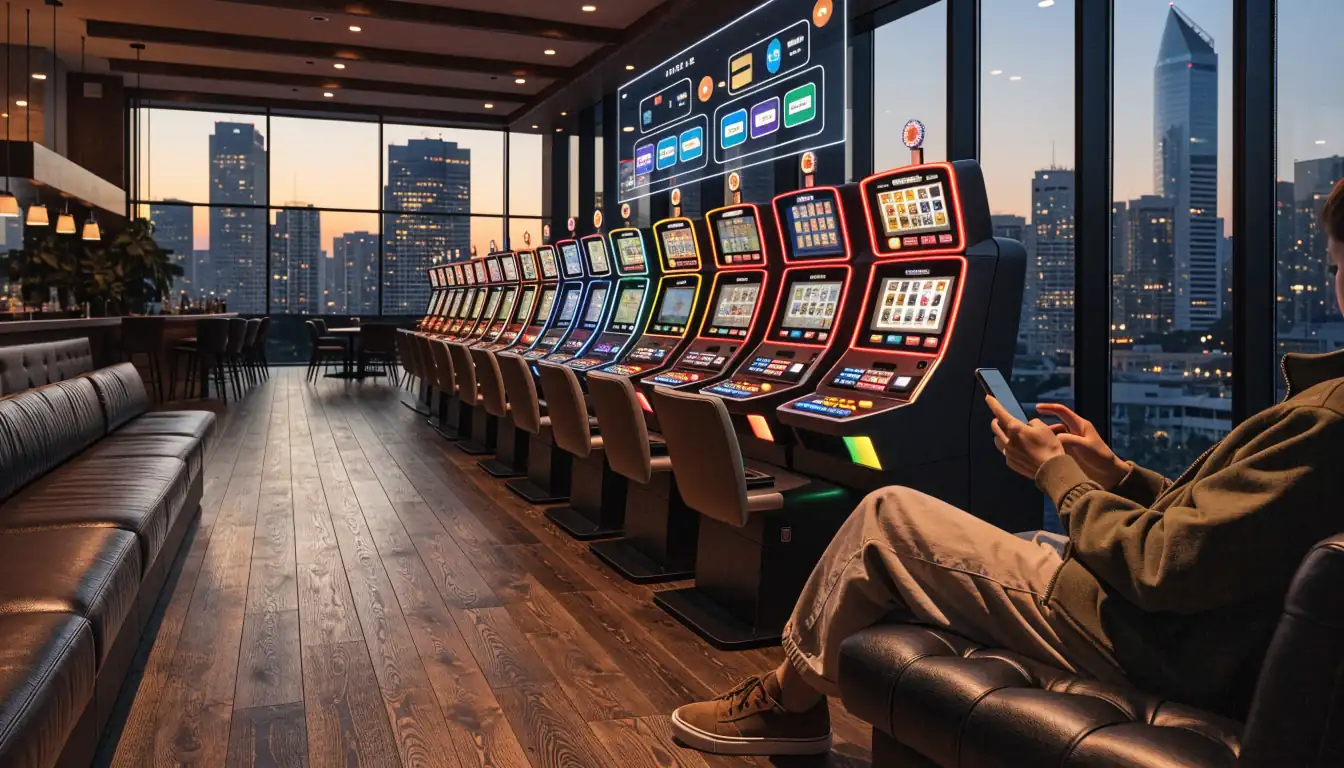
For someone arriving at the pokies shelf by way of Plinko, the lesson carries over intact. A ball through pegs and a spin of reels are the same transaction wearing different clothes: one decision, one random draw, one settlement. The category is honest about that, at least.
Game Types Available at Australian Online Casinos
The game catalogue at any online casino site breaks down into a small number of formats, and the differences between them are structural rather than cosmetic. Some games run on software alone; others involve a human dealer streamed in real time. Which format a player chooses determines the pace of the game, the way outcomes are produced, and whether the game can be tried without money at stake.
RNG-Based Games
The first and largest group consists of RNG-based games — titles in which outcomes are produced by a Random Number Generator. Online casino games use RNGs to ensure random outcomes, and the software is regularly audited by independent testing agencies. Slot games sit at the top of this category: they are a dominant category on most Australian online casino sites, where they are known as online pokies. Many slot games can be played in demo mode with virtual funds, which is a property of the RNG format — there is no dealer and no physical table, so a free version costs the operator nothing to run.
RNG
Random Number Generator – a software algorithm that produces unpredictable numbers used to determine game outcomes in RNG‑based casino titles.
Plinko belongs to this same group. A plinko casino game is RNG-based in the same way a pokie is: the ball’s path is determined by the software, not by physics, and the result is a payout multiplier drawn from the game’s internal table. Players looking to play plinko casino games will find them listed alongside slots and other instant-win titles rather than in the table-games section, because structurally they are closer to a pokie than to a card game.
Live-Dealer Games
The second format is live-dealer games. These are streamed in real time with professional dealers, providing an immersive experience that RNG software cannot replicate: an actual roulette wheel spins, actual cards are dealt, and the round proceeds on the studio’s clock rather than the player’s. The trade-off is straightforward. A live-dealer table has no pause button, no demo mode and no speed setting — the dealer deals when the dealer deals. RNG games, by contrast, run at whatever pace the player sets, including one round after another without a break.
Card Games
Card games — poker, baccarat and blackjack among them — are available in many variations online, and they straddle both formats. A blackjack hand can be dealt by RNG software in a standard game, or by a live dealer on camera. The rules of the game do not change between the two; what changes is the delivery. Card games also differ from pokies and plinko in one respect that matters to some players: the outcome depends partly on decisions made during the hand, not only on the deal.
Table and Specialty Games
The remaining table games — roulette, craps, Pai Gow and Sic Bo — are pure chance formats. The player places a bet, the wheel rolls or the dice fall, and nothing in between influences the result. Roulette appears in both RNG and live-dealer versions; dice games and Pai Gow follow the same split.
How the Formats Compare
| Format | Outcome produced by | Pace set by | Demo mode |
|---|---|---|---|
| RNG games (pokies, plinko) | Random Number Generator | Player | Common for slots |
| Live-dealer tables | Real dealer, streamed | Studio | Not available |
| Card games | RNG software or live dealer | Depends on version | Depends on version |
The practical distinction is this: RNG games are fast, repeatable and often free to try; live-dealer games trade that convenience for the experience of a real table. Card games sit in the middle, offering both versions of the same rules. A player comparing a plinko ball game casino style title against a live blackjack table is not comparing two games in the same category — they are comparing two different delivery models with different speeds, different stakes handling and different limits on how the game can be played.
Choosing a Reputable Australian Online Casino
Evaluating an operator comes down to a short list of verifiable checks. Most of them take minutes, and each one filters out a category of sites that fails on that specific point.
Start with the regulator, not the banner
Online casino regulation in Australia is overseen by the Australian Communications and Media Authority (ACMA). That fact sets the frame for anything a site claims: there are no domestically licensed real-money online casino operators available to Australian players, so a site advertising an "Australian casino licence" is advertising something that does not exist. Offshore licences do get issued by regulators elsewhere — the United Kingdom Gambling Commission and the Malta Gaming Authority are two bodies whose licence terms are publicly documented. A site that names its licensor and licence number is at least making a checkable claim; a site that shows a badge without a number is not.
Age and residency checks
Two baseline conditions apply regardless of operator: the minimum age for online casino play in Australia is 18 years, and players must be Australian residents to participate. An operator that skips identity verification before a first withdrawal is not being convenient — it is failing a compliance step that licensed operators treat as routine. Verification normally means a government-issued ID; the absence of any ID request at any stage of the account’s life is a signal in itself.
- Verify identity with a government‑issued ID before the first withdrawal.
- Check that the site lists a reputable offshore licence and licence number.
- Skip age or residency checks, assuming they are optional.
- Trust a site that displays a licence badge without providing the licence details.
Payments as a credibility test
The payment list tells you who processes the site’s money. Visa, Mastercard, PayPal and Skrill are established payment brands that conduct their own merchant vetting; their presence is a weak but real filter. Withdrawal processing deserves more attention than deposits: an operator that states its withdrawal times and ID requirements up front is easier to hold to its own terms than one that reveals them after a request is submitted.
Software and fairness
Casino games online use Random Number Generators (RNGs) to ensure random outcomes, and RNG software at reputable operators is regularly audited by independent testing agencies. A site should name the studios behind its games — Pragmatic Play, Microgaming, NetEnt and Evolution Gaming are established providers — and, ideally, the testing agency behind its audits. Where neither is named, the fairness claim rests on nothing verifiable.
Signals that cost nothing to check
- A named licensor with a licence number, not a decorative badge.
- Published withdrawal terms and identity verification requirements.
- Named game providers and audit references.
- A visible privacy policy detailing data-protection measures.
- Accessible complaint procedures with dispute-resolution information.
None of these guarantees a good experience. All of them, together, separate operators that submit to checkable obligations from those whose only verifiable feature is the deposit form.
Understanding Plinko Casino Mechanics
Plinko works on a principle closer to online pokies than to any table game. A ball drops from the top of a pegged board, bounces through the rows, and lands in a multiplier slot at the bottom. The player picks where to release the ball and, on some versions, the risk level; everything after that is chance.
The outcome is generated by a Random Number Generator (RNG), the same mechanism behind RNG-based pokies. There is no dealer, no strategy in the card-game sense, and no decisions once the ball is in play — the format sits with slots, not with blackjack or roulette. Many sites that carry Plinko list it alongside online pokies for exactly that reason.
The structure of a round matters for expectations:
- Stake — set before the drop; the payout is the stake multiplied by the slot value.
- Risk level — a setting on some versions that trades the spread of outcomes for the size of the edge multipliers.
- Result — determined by the RNG at the moment of the drop; the visual path of the ball is a rendering of that result, not its cause.
That last point is the one worth internalising. The pegs suggest physics; the software suggests pinball. Neither impression reflects how the outcome is produced. What looks like a game of skill is a slot in a different costume — a fact that the animations are not designed to advertise.
Demo mode with virtual funds is available for Plinko on many sites, and it is the practical way to see the payout spread at a given risk setting before any real money is involved.
Free Play and Demo Options for Plinko
Many slot-type games, Plinko included, can be played in demo mode with virtual funds. The demo version runs on the same Random Number Generator (RNG) software as the real-money version — the same mechanism that independent testing agencies audit on a regular basis — so the ball behaves the same way whether the balance on screen is virtual or actual.
The difference between the two modes is limited to what the player risks. In free play:
- no deposit is required and no account funding takes place;
- winnings are virtual and cannot be withdrawn;
- no wagering conditions attach, because there is nothing to wager.
Real-money play, discussed elsewhere on this page, reverses all three points.
What a demo mode does not do is simulate the financial dimension of the game. A losing streak with virtual funds costs nothing and teaches nothing about bankroll management; the same streak with money on the table has a price. Treating demo results as a preview of expected real-money returns is a category error — the RNG produces random outcomes either way, and randomness does not negotiate with practice.
Free-play Plinko is, in effect, a costless inspection of the game’s mechanics: the peg layout, the payout structure and the pace of play. Whether those mechanics suit a real-money budget is a separate calculation.
Crypto Payments and Scripts in Plinko Casinos
Cryptocurrency is a recurring theme in discussions of Plinko casinos. Bitcoin and Ethereum are the names most often attached to this conversation, alongside established payment options such as Visa, Mastercard, PayPal and Skrill. Beyond the payment brands themselves, however, verified detail runs thin.
There is no verified data on which cryptocurrencies specific Plinko operators accept, nor on the performance of claimed Plinko scripts.
What the record does not support: no verified data exists on which cryptocurrencies specific Plinko operators accept, at what cost, or on what timelines. Operators do not publish standardized terms for crypto deposits at Plinko tables, and independent audits of these processes are not available. Any site quoting exact crypto fees or processing times for Plinko is estimating.
The same applies to Plinko scripts — custom code marketed as automating play or adjusting outcomes. No verified factual data exists on how these scripts perform, whether they function as advertised, or what they actually do. A game built on RNGs audited by independent testing agencies leaves no documented opening a script could exploit; claims to the contrary are not supported by any tested mechanism.
One further point belongs in any payment discussion in this market: Australian restrictions prohibit accepting credit cards or digital currencies for deposits or betting, and the Interactive Gambling Act 2001 bars domestic online casino operation altogether. Crypto does not sit outside that framework.
The honest summary: the topic exists, the evidence does not.
Bonuses, Promotions, and Responsible Gaming
Promotional offers at online casinos almost never come without strings attached. Bonuses typically carry wagering requirements — a multiplier a deposit must be turned over before winnings become withdrawable — along with game restrictions and time limits such as expiry dates. A bonus that looks generous on its face can be worth little once those conditions are read in full; the terms, not the headline amount, define the value.
Separately from promotions, regulation is the Australian Communications and Media Authority’s (ACMA) domain. It oversees online gambling rules, and its remit sits apart from anything an operator advertises: a bonus does not change a site’s legal position under the Interactive Gambling Act 2001.
Responsible-gaming measures — spending limits, regular breaks and self‑exclusion options — are likewise distinct from marketing. Players encountering gambling harm can contact Gambling Help Online or register with BetStop, the national self‑exclusion register.
Plinko Casino Reviews: What to Expect
Reviews of Plinko-focused casino sites follow a predictable structure, and most of it can be checked against verifiable facts rather than marketing claims. A review that skips compliance entirely is not a review — it is advertising.
What a review should cover
A competent Plinko casino review addresses three layers:
- The game itself. Plinko is an RNG-based game, so a review that describes “skill” or “timing” is misrepresenting the mechanics. Outcomes are generated randomly, and no strategy changes the distribution.
- Demo access. Many Plinko versions can be played in demo mode with virtual funds. A review should state whether free play is available before sign-up, not after.
- The compliance picture. Under the Interactive Gambling Act 2001, online casino games cannot be offered to Australian residents by operators, and no domestic licence for this exists. Playing at an offshore-licensed site is not illegal for the individual — the law targets operators, not players. A review that omits this asymmetry leaves the reader with an inaccurate risk assessment.
Claims to discount on sight
Named celebrity-endorsed Plinko casinos — including the widely circulated "Mr Beast" casino promotions — have no basis in verified fact. No celebrity-endorsed Plinko platform appears in any regulator’s records, and where no public registry of licensees exists for this market, an endorsement is unverifiable by definition. The same applies to branded variants such as "Plinko Deluxe" or "Plinko Verde" presented as exclusive products: the names circulate as search bait, not as documented titles from known providers.
Practical reading of any review
Where a review quotes bonus terms, the numbers should be checked against the operator’s own published conditions — wagering requirements, game restrictions and expiry dates are attached to bonuses as standard. A review that repeats headline figures without these conditions is quoting a price without the terms.
The consistent pattern: reviews that verify mechanics, demo access and the offshore-licensing reality are worth reading. Reviews built around a celebrity name or an "exclusive" Plinko variant are not.
What does RTP mean in pokies?
The provided facts do not define RTP, but they confirm that online pokies use Random Number Generators (RNGs) audited by independent agencies to ensure random outcomes rather than tuned results.
What is the impact of gambling advertising on young Australians?
The provided facts do not specify the impact, but they note that the Interactive Gambling Act 2001 was introduced to protect the public with a focus on harm minimisation.
What should a valid complaint include?
A valid complaint should include the player’s account details, a description of the issue, and any relevant evidence such as screenshots or transaction records.
Are crypto casinos legal in Australia in 2026?
Online casino games are prohibited under the Interactive Gambling Act 2001, which targets operators, not individual players, meaning it is not illegal for Australians to play at offshore-licensed casinos, including those using crypto.
What are the key limits on providing services to customers?
The law targets operators providing online casino style games to Australian residents, with the minimum age to play set at 18 years, though specific service limits like deposit caps are not detailed in the provided facts.
Created by the ”Casino Payment Info” editorial team.