
Online Pokies E-Wallet Australia: Rules and Risks
 Available in AU
Understanding Pokies in Australia: Market Size, Regulation, and Risks
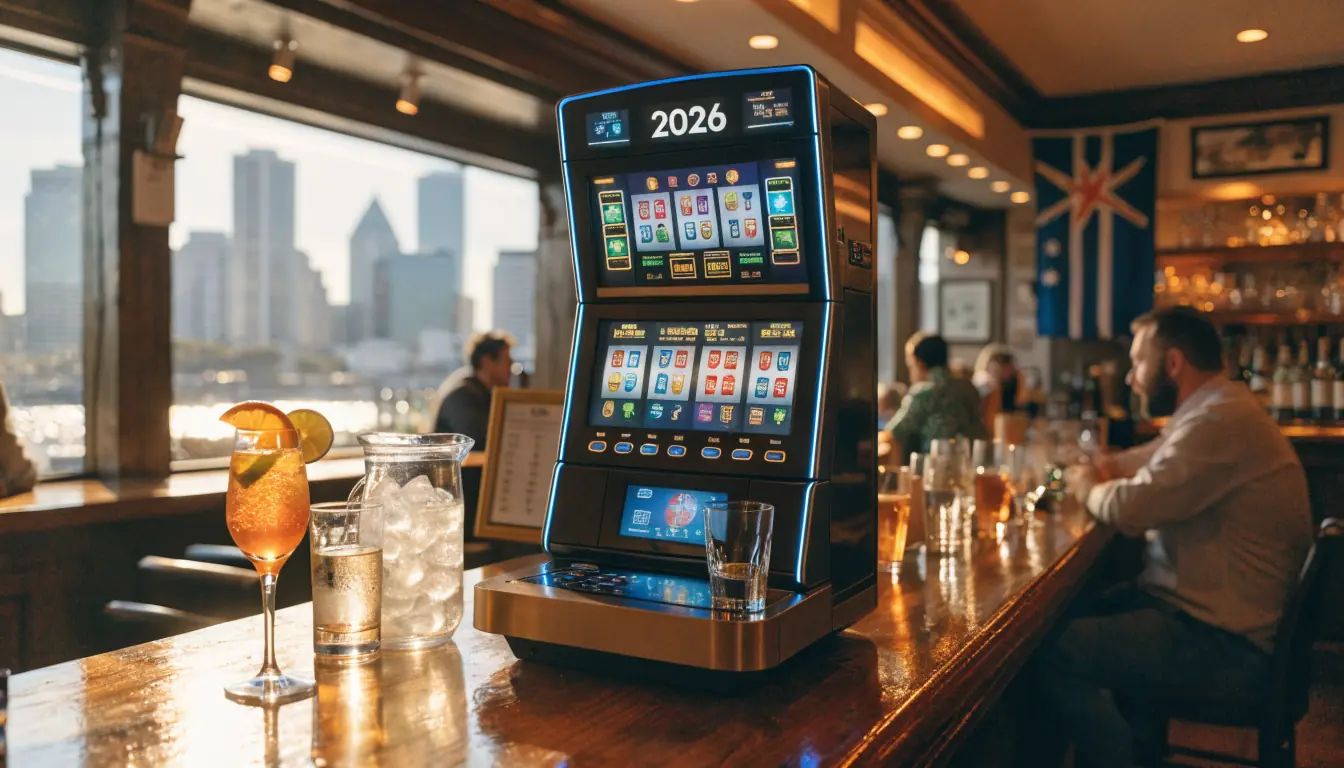
The word "pokies" is the local, colloquial Australian term for electronic gaming machines — slot-style terminals that accept wagers, spin reels on a screen, and pay out on programmed combinations. In regulatory and academic writing the same machines are called electronic gaming machines, or EGMs, and the two terms refer to exactly the same hardware. Pokies are operated in every Australian state, in the Australian Capital Territory and in the Northern Territory; there is no jurisdiction on the continent where the machines are absent. They sit in pubs, in licensed clubs and in casinos, and in each of those settings they are governed by a different mix of state law, Commonwealth law and financial-crime regulation. That mix is what this section sets out — what the machines are, how much money moves through them, who regulates them, and what can go wrong when large volumes of cash meet limited traceability.
The subject matters for anyone thinking about payment methods, because the way money enters and leaves a pokie machine is now the central regulatory question in this market. The conversation about e-wallets and digital payments for pokies — the reason a page like this exists — is not a conversation about convenience. It is a conversation about whether the machine can see where the money came from.
If you’re planning to fund your play through an e-wallet, it helps to know which operators actually support fast, flexible deposits and offer welcome terms worth checking before you sign up.
License: Curacao Gaming Control Board (TechSolutions Group N.V.) · Bonus: 100% up to A$250 + 100 free spins (1st deposit) Licensed under the Curacao Gaming Control Board via TechSolutions Group N.V., this casino pairs its first deposit with a 100% match up to A$250 plus 100 free spins.
License: Curacao eGaming OGL/2024/923/0383 (Antillephone N.V.) · Bonus: up to A$2,000 + 100 free spins across 2 deposits · Min. deposit: A$30 Operating under a Curacao eGaming license issued to Antillephone N.V., it offers a two-deposit welcome package worth up to A$2,000 with 100 free spins, and a relatively low A$30 minimum deposit makes it accessible.
License: Curacao eGaming (Roby Games Ltd) · Bonus: 100% up to A$750 + 200 free spins Licensed through Curacao eGaming under Roby Games Ltd, this casino’s welcome offer stands out with a 100% match up to A$750 plus 200 free spins.
License: Curacao eGaming OGL/2023/174/0082 (Dama N.V.) · Bonus: up to A$10,000 + 500 free spins across 4 deposits · Min. deposit: A$15 Backed by a Curacao eGaming license held by Dama N.V., it features one of the larger welcome packages on this list, up to A$10,000 with 500 free spins spread across four deposits, and a low A$15 minimum deposit.
License: Curacao Gaming Control Board · Bonus: up to A$5,000 + 400 free spins Licensed by the Curacao Gaming Control Board, this operator offers a sizeable welcome bonus of up to A$5,000 plus 400 free spins.
License: Curacao (operating since 2017) · Bonus: 250% up to A$2,000 + 50 free spins on the first of six deposits · Min. deposit: A$20 Operating under a Curacao license since 2017, this established casino offers a 250% bonus up to A$2,000 with 50 free spins on the first of six deposits, with a A$20 minimum deposit.
License: Curacao Gaming Control Board OGL/2023/174/0082 (Dama N.V.) · Bonus: up to A$5,000 + 300 free spins across 4 deposits Licensed by the Curacao Gaming Control Board through Dama N.V., it provides a multi-deposit bonus structure worth up to A$5,000 plus 300 free spins.
License: Curacao Gaming Control Board OGL/2023/176/0095 (Hollycorn N.V.) · Bonus: 100% up to A$10,000 + 100 free spins Holding a Curacao Gaming Control Board license via Hollycorn N.V., this casino offers a generous 100% match up to A$10,000 plus 100 free spins.
Bonus: 100% up to A$750 + 200 free spins, 35x wagering · Payout speed: crypto 30-120 minutes, fiat 24-72 hours · Min. deposit: A$30 This operator’s welcome offer of 100% up to A$750 plus 200 free spins comes with 35x wagering, and it stands out for fast crypto payouts within 30-120 minutes alongside fiat withdrawals in 24-72 hours; a A$30 minimum deposit applies.
Bonus: up to A$7,500 + 550 free spins across 10 deposits, 50x wagering · Payout speed: crypto under 1 hour, PayID 1-3 business days · Min. deposit: A$20 (A$30 to qualify for the bonus) With a substantial welcome package of up to A$7,500 and 550 free spins across ten deposits (50x wagering), this operator also offers quick crypto payouts under an hour and PayID withdrawals within a few business days.
What a pokie machine actually is
An electronic gaming machine is a self-contained wagering terminal. A player inserts money or a voucher, places a bet, and the machine’s internal software determines the outcome. The outcome is not mechanical; it is produced by a random number generator, and the long-run share of wagers the machine retains is set in its configuration. Pokies are widely used in Australian pubs, clubs and casinos, and in most states the pub-and-club segment — not the casino segment — is where the majority of machines sit.
Three properties of the machines define the regulatory problems that follow. First, they are high-volume: a single terminal can process a continuous stream of small wagers for as long as someone is feeding it. Second, they have historically been cash-first: notes go in, tickets or coins come out, and in the classic configuration nothing links a player to a transaction. Third, they are anonymous by design: no account, no login, no identity check at the machine itself. Volume plus cash plus anonymity is the exact combination that anti-money-laundering regulators elsewhere in the economy spend their time dismantling. The pokies debate in Australia is, at its core, a debate about whether to keep that combination or replace it with an account-based model.
The machines are legal — but only in their physical form, and only under state and territory licensing. The Commonwealth draws a hard line at the online version, and that line shapes everything else on this page.


How large the market is
The scale is not folklore; it is measured. In the financial year 2020–2021, Australians placed bets worth almost AUD 150 billion on electronic gaming machines. That figure is turnover — the total wagered — not profit, and the distinction matters. A machine that takes a hundred dollars and pays out ninety-five has wagered a hundred and kept five; the turnover number counts the hundred, the loss number counts the five.
The loss number for the same period is about AUD 12 billion. That is the total player loss from electronic gaming machines across the country in FY 2020–2021 — the amount that went in and did not come back. Per capita, losses from electronic gaming machines in that financial year were AUD 608. On a per-person basis, that figure places Australia in the top tier of gambling expenditure worldwide, and it is the number most often cited when the policy debate turns to harm.
A later figure circulates as well: that pokies generated AUD 191.2 billion in gambling turnover in 2023. That number comes from a single source — complyadvantage.com — and it should be read as that source’s claim rather than as an established market statistic. It is reported here as reported there, not as a market norm, and the gap between the FY 2020–2021 turnover figure and the 2023 figure is wide enough that the two should not be casually blended into one trend line.
Large cash volumes and anonymity make pokies a high risk for money laundering, so operators must implement robust AML controls.
One further statistic illustrates how measurement itself can be contested. On the question of Australia’s share of the world’s machines, the sources disagree: one version holds that Australia accounts for 3% of the world’s pub and club poker machines; another holds that Australia accounts for about 18% of the world’s poker machines. The discrepancy is not a rounding difference — it is a difference in what is being counted. The 3% figure speaks of pub and club machines specifically; the 18% figure speaks of poker machines of all kinds. Depending on which population of machines a researcher counts — licensed venues only, or every machine in every casino and club on earth — Australia’s share lands either modest or enormous. Both figures are cited here because both circulate; choosing between them silently would manufacture a certainty that the underlying data does not support.
What is not in dispute is the direction of the numbers. Turnover in the tens of billions of dollars per year, losses in the billions, and a per-capita loss figure near six hundred dollars mean that the pokies market is one of the largest concentrations of cash-adjacent consumer spending in the country. Markets of that size attract two kinds of attention: tax collectors, and criminals.
The regulatory framework: two levels of law
Australian gambling regulation is split between the Commonwealth and the states, and the split is clean in principle even where it is messy at the edges.
The Commonwealth level: the Interactive Gambling Act 2001. The Interactive Gambling Act 2001 is the primary Commonwealth law governing online gambling in Australia. It was introduced to protect the public with a focus on harm minimisation, and its central provision is the one that defines the online side of this market: the IGA makes it an offence for online operators to offer real-money gambling to Australian residents. Online casino-style games — slots, poker, blackjack, roulette — are prohibited under the Act. It is not possible to obtain a licence to operate an online casino domestically, and there are no domestically licensed real-money online casino operators available to Australian players. None.

This is a point that deserves plain statement, because much of what is written about "online pokies" for Australian audiences implies a licensed domestic market that does not exist. The offence sits with the operator, not the player: it is not illegal for individual Australians to play at offshore-licensed online casinos, because the law targets the supply, not the demand. But there is no Australian licence to check, no Australian register of online casino licensees, and therefore no such thing as a "licensed Australian online pokies site." Offshore operators that accept Australian players hold licences from foreign regulators — the Malta Gaming Authority, the UK Gambling Commission — whose rules were written for other markets and whose protections do not extend into Australia by default. What is licensed in Australia is different in kind: online sports betting under state and territory licences, and lotteries. Live in-play betting online is illegal, though live betting placed by phone is legal. The asymmetry is deliberate, and it is the law as written.
The state and territory level: machines and venues. Physical electronic gaming machines are licensed at state and territory level. Each jurisdiction sets its own rules on machine numbers, venue caps, operating hours, signage, self-exclusion schemes and harm-minimisation features, and each taxes the machines differently. Taxation of gambling operators in Australia varies by state and by type of gambling service — a club in one state and a casino in another can face entirely different rates on the same class of revenue, which is why operators structure themselves around state boundaries and why cross-state comparisons of venue economics are rarely like-for-like.
One taxation point runs the other way and is worth stating because players routinely get it wrong: gamblers’ winnings in Australia are not taxed. Winnings are not treated as income. The state collects from the operator, not from the player, and a player who cashes out ahead owes the tax office nothing on the win. The practical corollary is that a large win does not generate the tax paperwork a large win generates in some other jurisdictions — which, as discussed below, is precisely one of the properties that makes pokies attractive to money launderers. Clean, untaxed winnings are a high-quality financial product if one can manufacture their appearance.
The financial-crime layer: AUSTRAC and the AML/CFT regime
Sitting above the state licensing regime is a Commonwealth financial-intelligence layer, and in recent years it has become the most active force in the pokies debate. The Australian Transaction Reports and Analysis Centre — AUSTRAC — is the regulator for anti-money-laundering and counter-terrorism-financing obligations, and its jurisdiction reaches gambling venues in a way that surprises many operators.
The trigger for AUSTRAC’s involvement is machine count, and the obligations are tiered:
- Operators with up to 15 pokies must register with AUSTRAC, keep identification records, and submit suspicious matter reports. The obligations are real but comparatively light — the regime recognises that a small venue is not a casino.
- Operators with more than 15 pokies carry the full weight of the regime: they must appoint a compliance officer, conduct risk assessments, implement AML/CFT programs, perform customer due diligence, and report cash transactions over AUD 10,000. At that scale, a venue is treated as a financial institution in all but name, because in cash-flow terms it effectively is one.
Non-compliance is not theoretical. Operators who fail to meet these obligations may receive remedial directions, infringement notices and civil fines, and — often the more expensive part — suffer reputational damage that outlasts the penalty. The regulatory trajectory is unambiguous: more scrutiny, higher expectations, and escalating consequences.
In 2024, AUSTRAC issued a guide to help firms recognise money-laundering red flags. The guide matters because it converts a vague duty ("be alert to laundering") into a concrete checklist that a venue’s compliance officer can actually work from. The red-flag indicators include unusually high cash access, large deposits, cash transfers, casino disbursement checks, and — a detail that catches operators off guard — certain occupations. The list reflects the practical reality of laundering through gambling: it is not one giant transaction that gives the scheme away, it is a pattern of behaviour around cash that looks wrong against the background of ordinary play.
Offshore Operators Illegal
Offering real‑money online pokies to Australian residents breaches the Interactive Gambling Act 2001 and can result in prosecution.
Why pokies attract launderers
The high volume of cash transactions and the limited traceability of pokies make them attractive for money laundering. That sentence is the economic core of the entire cashless-gaming debate, and every reform proposal on the table is, in one way or another, an attack on one of its two halves.
The mechanics are not sophisticated, which is the point. The methods that AUSTRAC’s guidance targets are well documented:
Cash-in, minimal play, cash-out. Criminals insert large sums of cash into EGMs, perform minimal gambling activity, and then cash out. The machine’s ticket now records a "winnings" payout against cash that was never really gambled. The launderer accepts a small expected loss — the margin the machine skims during the brief play — as the cost of converting dirty cash into a redemption ticket that looks like a win. Given that genuine winnings are untaxed, the output of the process is a clean, traceable, tax-free-looking instrument.
Buying winning tickets. Offenders purchase winning tickets from other players to convert dirty money into clean, traceable funds. The mechanics are simple: a player holding a winning ticket is offered cash for it — often face value or close to it — and the buyer redeems the ticket in their own name. The redemption record shows a legitimate gambling win paid to a legitimate person, and the dirty cash has changed places with it. The original player walks away with cash and no record; the buyer walks away with a record of winnings they never earned.
Structuring across venues. Structuring involves spreading smaller cash deposits across different venues to avoid AML reporting thresholds. Since the reporting duty for large venues attaches to cash transactions over AUD 10,000, a sum that would trigger a report in one venue is split into pieces fed into machines in several venues, none of which individually crosses the line. The method exploits the seam between the regulatory framework and the physical geography of the market: obligations are calculated per venue and per transaction, while the launderer’s money is mobile.
Mules. Money mules are recruited to launder money through pokies. Complyadvantage.com reports on the recruitment of mules as part of the laundering ecosystem — individuals, often unaware of the full scheme or wilfully incurious about it, who insert cash, play briefly, redeem tickets and pass the proceeds back up the chain. Mules add a layer of separation between the criminal and the machine, and they multiply the structuring problem, because each mule is a separate identity with a separate pattern of play that looks unremarkable on its own.
The red flags, in order of what they look like at the counter
The red-flag indicators from AUSTRAC’s guidance translate into observable behaviour at the venue level. A compliance officer watching the floor is looking for patterns, not single events:
- Large or repeated cash insertions followed by minimal play and immediate cash-out. This is the classic laundering signature. An ordinary player who feeds a large sum into a machine plays with it; a player whose purpose is the ticket, not the game, does not. The behaviour is distinguishable from play, and the distinction is visible in the machine’s own session data.
- Frequent small redemptions across different venues within a short period. One venue cannot see the pattern, because each venue sees only its own slice. This is why structuring works against single-venue monitoring and why regulators push for transaction monitoring that is broader than any one venue’s ledger.
- Customers refusing identification, or using multiple player cards. A player with nothing to hide has no reason to cycle identities. Multiple cards against one person, or a player who declines identification at a point where the regime requires it, is the behaviour the identification-record obligations exist to catch.
None of these indicators is proof of anything on its own. A player can legitimately prefer not to carry a card, can legitimately visit several venues in a week, can legitimately cash out early after a win. The red-flag framework is a screening layer, not a conviction machine — but it is the screening layer the law now requires venues to operate.
The enforcement backdrop: NSW and the cashless timeline
Two developments in New South Wales frame where the enforcement environment is heading, and both carry the caveat that each rests on a single source.
The first is the NSW Crime Commission’s work on the infiltration of pokies by criminal money, which produced what is commonly cited as the 2022 Islington Report. According to complyadvantage.com, the report recommended making all NSW pokies cashless by the end of 2028. If implemented in full, that recommendation would end anonymous cash play on NSW machines within the decade and replace it with account-based wagering. It is a single source’s account of a recommendation, not a legislated deadline — but the recommendation’s existence at all signals that the policy question has moved from "whether" to "how fast."
The second is legislative. An amendment to the Casino Control Act 1992 allows NSW casino operators to be fined up to AUD 100 million for compliance failures. That ceiling is the number to sit with. A decade ago, casino compliance failures were a licensing matter handled quietly between operator and regulator; today, in NSW, a failure can be priced at a hundred million dollars. The amendment changes the arithmetic of compliance investment: when the downside of a weak AML program is measured in nine figures, the compliance officer stops being a cost centre. Comparable dynamics are visible across the Australian casino sector, where inquiries in multiple jurisdictions have produced findings that would previously have been settled behind closed doors.
The direction of travel is consistent across regulators: tighter customer due diligence, continuous transaction monitoring, and the adoption of cashless gaming systems. These three are not independent recommendations — cashless play is what makes the other two workable at scale, because an account-based machine produces the transaction record that due diligence and monitoring are meant to examine.
Cashless and account-based play: what it changes
The case for cashless, account-based pokies rests on one structural property: traceability. According to facctum.com, the adoption of cashless, account-based pokies improves traceability and reduces anonymity. Transparent, account-based machines provide full traceability of deposits, gameplay and withdrawals — every dollar that enters the system is tied to an account, every spin is tied to a session, and every payout is tied to a destination. Anonymity, which is the laundering economy’s raw material, is engineered out rather than policed out.
E‑wallet deposits do not change the legal status of online pokies; offshore sites accepting e‑wallets operate outside Australian regulation.
It is worth being precise about what this does and does not mean. Traceability does not stop problem gambling. A player with an account can lose as much as a player with a handful of notes; the per-capita loss figure of AUD 608 from FY 2020–2021 was generated almost entirely under the cash model, and an account model does not, by itself, lower it. What traceability does is close the gap between the machine and the financial system — the gap that cash-in-minimal-play-cash-out schemes, ticket purchasing and structuring all depend on. The money-laundering case for account-based play is strong on its own terms; the harm-minimisation case requires additional features, such as loss limits and pre-commitment, that sit on top of the account infrastructure.
The connection to digital payments is direct. An e-wallet is, in structural terms, an account-based payment instrument: it has an owner, a transaction history and an issuing institution. A pokies ecosystem that accepts account-based payments is one in which the machine’s cash flow is visible in a way that note-fed play never was. That is why the payment-method question and the anti-laundering question are the same question wearing different clothes, and why the regulatory momentum described above pushes the market — physical and online alike — toward instruments that carry identity with them.
The online side of the picture inherits this tension in a specific form. Because the Interactive Gambling Act 2001 prohibits domestically licensed online casino play, the e-wallet discussion for Australian players concerns offshore operators operating outside the Australian licensing system entirely. An offshore site may accept digital wallets and may advertise whatever promotions it likes, but none of that operates under Australian regulation, and none of it can be checked against an Australian licence, because no such licence exists to check. The payment method can be modern while the legal position remains what the IGA made it in 2001: the operator commits an offence by offering, the player breaks no law by playing, and no Commonwealth regulator stands behind the transaction.
The financial risks on the player side
Beyond the criminal layer, the financial risks of pokies are arithmetic, and the arithmetic is not friendly. The AUD 12 billion in player losses in FY 2020–2021 is the aggregate form of a simple structural fact: the machines are configured to retain a share of everything wagered, and over enough play the retention rate wins. Turnover of AUD 150 billion converting into losses of AUD 12 billion is a market that returns roughly eight dollars in every hundred wagered to the house — not on any individual session, which is random, but across the full population of play, which is not.
For an individual, the practical consequences are threefold. First, there is no strategy that changes the machine’s long-run retention; each outcome is generated independently, and the configuration governs the aggregate. Second, losses are unrecoverable in any administrative sense — a losing session is a completed transaction, not a disputed charge, and there is no chargeback mechanism that reaches into a licensed machine. Third, the per-capita figure is an average, and averages in gambling hide dispersion: most players lose modestly, a minority lose severely, and the harm-minimisation apparatus — state self-exclusion registers, Gambling Help Online, the national self-exclusion register BetStop — exists because the tail of that distribution is where the damage concentrates. Almost one in three 12-to-17-year-olds in Australia gambles, and 46% of 18-year-olds do, which is the tail forming early; the minimum legal gambling age is 18, and the enforcement of that line is a live regulatory concern rather than a settled one.
The untaxed status of winnings, mentioned earlier, cuts both ways on the player side. It is a genuine benefit to a player who wins — the payout is the payout. It is also the property that gives laundering through pokies its value: a manufactured "win" is indistinguishable, on its face, from a real one, and neither is taxed. The same rule that spares the genuine winner the paperwork spares the launderer too. Policy that tightens one side of that trade-off without touching the other is possible; policy that improves both at once is what the account-based model is attempting.
Where this leaves the market
The Australian pokies market at the mid-2020s point can be summarised in four propositions, each traceable to the record above.
One: the market is enormous. Nearly AUD 150 billion in annual turnover, around AUD 12 billion in annual player loss, AUD 608 per capita, machines in every jurisdiction in the country.
Two: the legal structure is two-tiered and asymmetric. Physical machines are legal, licensed and taxed state by state; online casino-style play is prohibited at Commonwealth level with no domestic licence available, while online sports betting and lotteries are licensed and legal, and individual players who use offshore casino sites commit no offence.
Three: the enforcement environment has hardened materially. AUSTRAC’s tiered obligations for machine operators, its 2024 red-flag guidance, theAUD 100 million penalty ceiling for NSW casino compliance failures, and the cashless recommendations attributed to the NSW Crime Commission’s reporting together describe a regulator class that has moved from guidance to consequences.
Four: the technological direction is set. Cash-in-minimal-play-cash-out, ticket purchasing and cross-venue structuring all exploit anonymity; account-based, cashless play removes anonymity; regulators recommend exactly that — tighter due diligence, transaction monitoring, and cashless systems — because the tool that defeats laundering through pokies is the same tool that defeats anonymity everywhere: a record.

The sections that follow turn to the payment-method question directly — what e-wallets mean for pokies play in an Australian legal context, and what to make of no-deposit bonus offers in a market where the domestic licensing of online casinos does not exist. The factual ground for that discussion is the ground laid here: a market of measurable size, a licensing regime that distinguishes sharply between what is legal onshore and what is not, and a regulatory momentum that rewards payments carrying identity and penalises payments that do not.
e‑Wallet Pokies and No‑Deposit Bonuses: Legal Landscape in Australia
An e‑wallet changes nothing about the legal position of online pokies in Australia. The Interactive Gambling Act 2001 makes it an offence for online operators to offer real‑money gambling to Australian residents, and that prohibition applies regardless of how a deposit is funded. A payment method does not create a licence: there are no domestically licensed real‑money online casino operators available to Australian players, so no Australian regulator authorises an e‑wallet‑linked pokies site. Offshore sites that accept e‑wallet deposits operate outside that framework, and the Act targets operators, not individual players — playing at an offshore site is not itself illegal for the player.
No‑deposit bonuses sit in the same position. Because no operator can lawfully offer real‑money online pokies to Australians, there is no regulated local market in which such a promotion could carry verified terms. Anything advertised on that basis comes from offshore operators whose conditions — eligibility, withdrawal rules, verification requirements — are not subject to Australian oversight.
On the taxation side, only the operator dimension matters here: taxation of gambling operators in Australia varies by state and by type of gambling service. Player winnings are not taxed in Australia.
What is the minimum legal gambling age in Australia?
Gamblers’ winnings in Australia are not taxed, and taxation of gambling operators varies by state and by type of gambling service, though specific age requirements are set at the state level.
Can I play online pokies for free?
The Interactive Gambling Act 2001 makes it an offence for online operators to offer real-money gambling to Australian residents, so licensed online pokies for real money are not legally available.
What are the red flags for pokies-related money laundering?
Red flags include unusually high cash access, large or repeated cash insertions followed by minimal play and immediate cash-out, structuring deposits across venues to avoid reporting thresholds, and refusing identification or using multiple player cards.
How safe are my funds at a crypto casino?
While the text does not cover crypto casinos, funds safety in the broader pokies market is being improved through recommended adoption of cashless, account-based systems that provide full traceability of deposits and withdrawals.
Written by the editors at Casino Payment Info.