
Best Pokies in South Australia SA: 2026 Guide
 Available in AU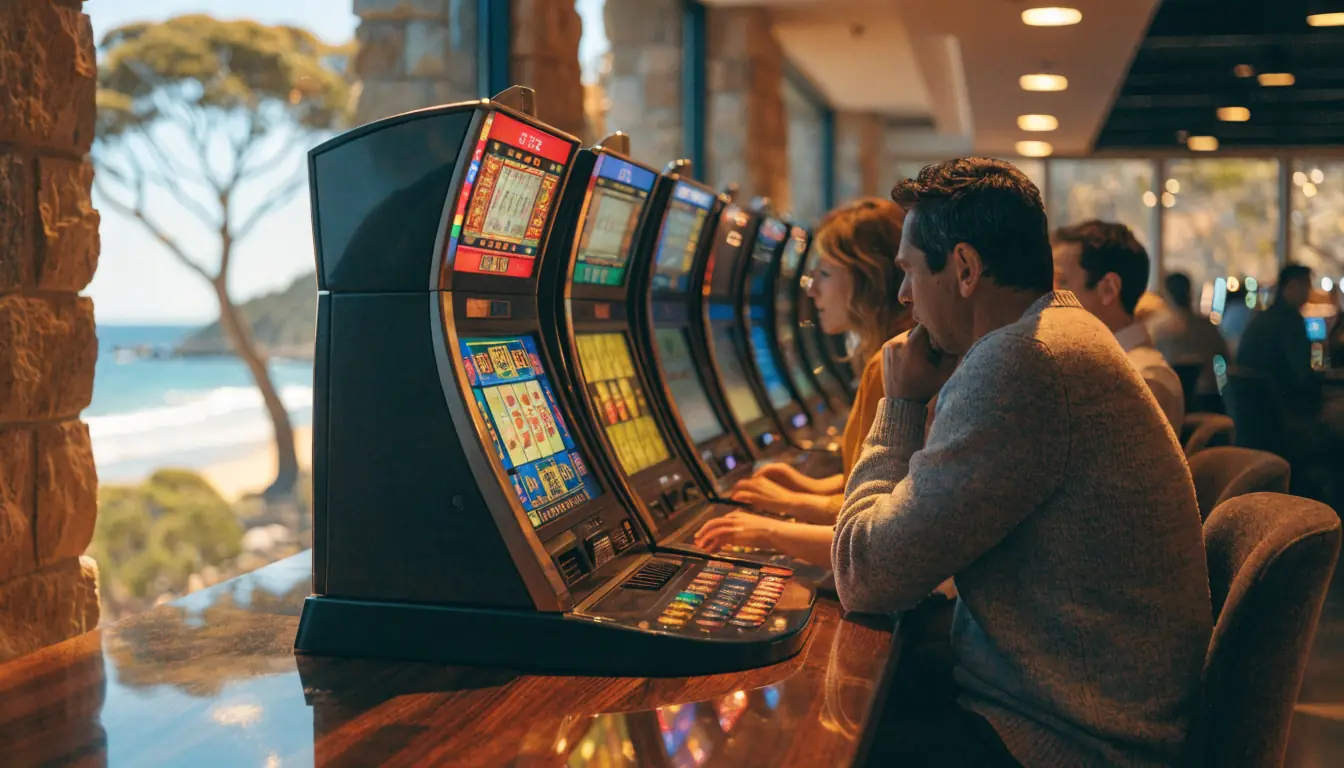
Understanding Pokies in South Australia
Pokies — the Australian shorthand for poker machines — are reel-based casino games built around simple play and an enormous variety of themes, mechanics and bonus structures. In South Australia, as everywhere in the country, the word covers everything from a three-reel classic to a Megaways title with cascading symbols and a feature buy button. What separates one machine from another is not the reel count but the mathematics underneath: the return to player, the volatility, and the hit frequency. Those three numbers, more than any theme or jackpot banner, decide what a game actually does to a bankroll over time.
This section covers the foundations: what pokies are, how they work, how RTP and volatility interact, and where the South Australian legal framework sits. Later sections deal with payments and payout percentages in detail; here the point is to give the vocabulary and the arithmetic needed to read everything after it.
What a Pokie Actually Is
A pokie is a game of pure chance built on spinning reels. Symbols land on the reels after each spin; matching symbols across active paylines or in scatter positions produce payouts. There is no skill element in the base game. The player chooses a stake, presses spin, and the outcome is determined the instant the button is pressed.
Before spinning the reels at any pokies site in South Australia, it pays to check how each operator is licensed and what its welcome offer actually involves.
License: Curacao Gaming Control Board (TechSolutions Group N.V.) · Bonus: 100% up to A$250 + 100 free spins (1st deposit) Licensed under the Curacao Gaming Control Board through TechSolutions Group N.V., with a first-deposit bonus of 100% up to A$250 plus 100 free spins.
License: Curacao eGaming OGL/2024/923/0383 (Antillephone N.V.) · Bonus: up to A$2,000 + 100 free spins across 2 deposits · Min. deposit: A$30 Holds a Curacao eGaming licence via Antillephone N.V. and offers a two-deposit welcome package worth up to A$2,000 plus 100 free spins, with a A$30 minimum deposit.
License: Curacao eGaming (Roby Games Ltd) · Bonus: 100% up to A$750 + 200 free spins Operates under a Curacao eGaming licence through Roby Games Ltd, backing its welcome offer of 100% up to A$750 plus 200 free spins.
License: Curacao eGaming OGL/2023/174/0082 (Dama N.V.) · Bonus: up to A$10,000 + 500 free spins across 4 deposits · Min. deposit: A$15 Licensed under Curacao eGaming via Dama N.V., with a substantial four-deposit bonus reaching up to A$10,000 and 500 free spins, and a low A$15 minimum deposit.
License: Curacao Gaming Control Board · Bonus: up to A$5,000 + 400 free spins Regulated by the Curacao Gaming Control Board, pairing that oversight with a bonus of up to A$5,000 plus 400 free spins.
License: Curacao (operating since 2017) · Bonus: 250% up to A$2,000 + 50 free spins on the first of six deposits · Min. deposit: A$20 A long-running Curacao-licensed operator active since 2017, offering a 250% match up to A$2,000 plus 50 free spins on the first of six deposits, with a A$20 minimum deposit.
License: Curacao Gaming Control Board OGL/2023/174/0082 (Dama N.V.) · Bonus: up to A$5,000 + 300 free spins across 4 deposits Licensed by the Curacao Gaming Control Board through Dama N.V., offering a four-deposit bonus of up to A$5,000 plus 300 free spins.
License: Curacao Gaming Control Board OGL/2023/176/0095 (Hollycorn N.V.) · Bonus: 100% up to A$10,000 + 100 free spins Holds a Curacao Gaming Control Board licence via Hollycorn N.V., with a headline bonus of 100% up to A$10,000 plus 100 free spins.
Bonus: 100% up to A$750 + 200 free spins, 35x wagering · Payout speed: crypto 30-120 minutes, fiat 24-72 hours · Min. deposit: A$30 Offers a 100% bonus up to A$750 plus 200 free spins with 35x wagering, and stands out for fast payouts—crypto withdrawals in as little as 30 to 120 minutes, fiat within 24-72 hours, with a A$30 minimum deposit.
Bonus: up to A$7,500 + 550 free spins across 10 deposits, 50x wagering · Payout speed: crypto under 1 hour, PayID 1-3 business days · Min. deposit: A$20 (A$30 to qualify for the bonus) Provides a large ten-deposit bonus of up to A$7,500 plus 550 free spins at 50x wagering, alongside quick crypto payouts under an hour and PayID withdrawals in 1-3 business days; minimum deposit is A$20, or A$30 to qualify for the bonus.
That last point matters more than it sounds. On any reputable machine — physical or online — the result of a spin is not influenced by how long the reels animate, by previous results, or by anything the player does after pressing the button. Reputable online casinos use RNG-based games from audited providers, meaning a random number generator selects the outcome and independent testing bodies verify that the generator behaves as advertised. A game without audited RNG is not a pokie with bad odds; it is a game with unknowable odds, which is a different category of problem.
Around that core, the variety is close to endless. Australian-friendly casinos vary widely in the software they offer — some build their library around a handful of large studios, others aggregate dozens of providers into a single lobby. For a South Australian player comparing venues, the provider list is one of the fastest signals of quality: names with published, audited RTP figures and a long release history behave predictably; anonymous titles with no listed developer do not.
Pokies and the Law in South Australia
The legal picture in Australia splits cleanly in two, and any discussion of "pokies in South Australia" has to respect the split.
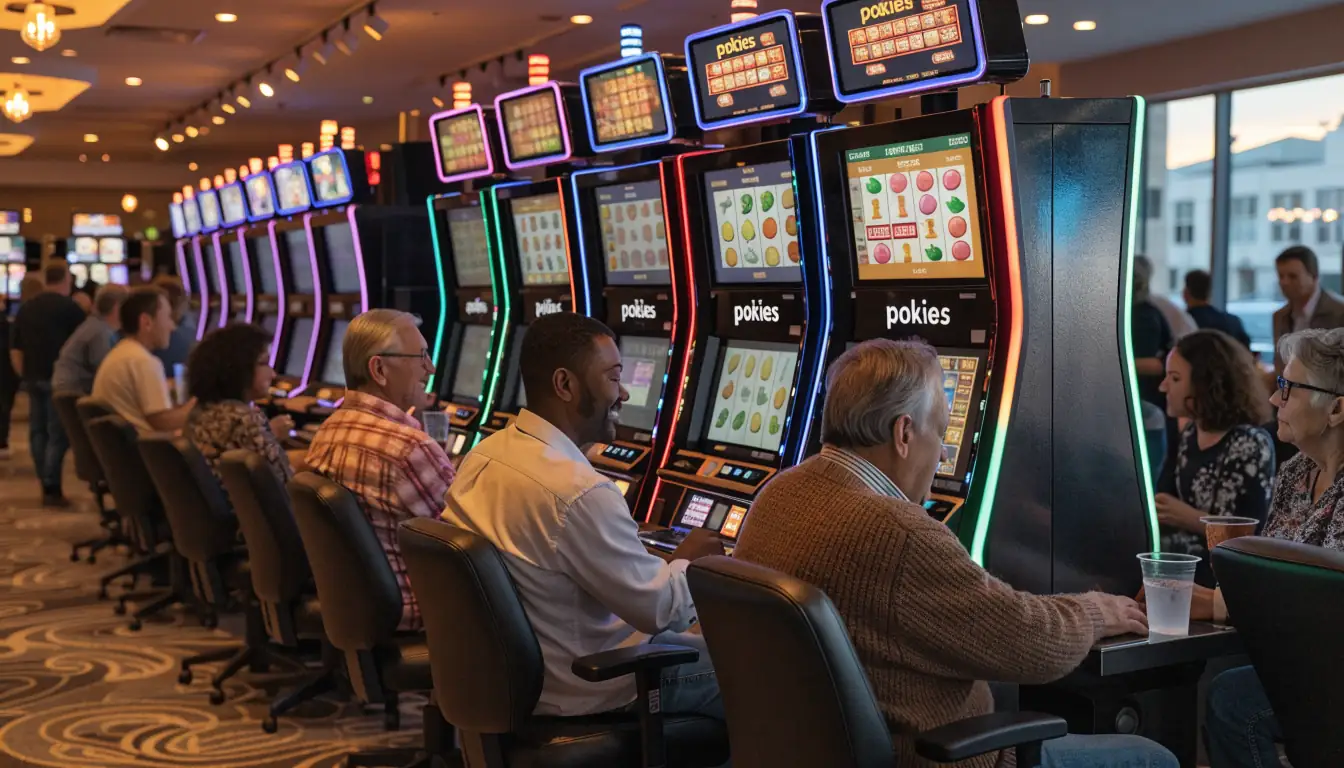
Land-based pokies are legal and regulated. Poker machines operate in licensed venues across South Australia — hotels, clubs and the casino in Adelaide — under state regulation. These venues operate under conditions set by the state licensing authority: mandatory responsible gambling measures, player pre-commitment systems and, in recent years, movement toward cashless gaming technology. The exact venue-by-venue details — which venues run machines, and their operating hours — sit with the state regulator, and anyone searching for a specific venue’s hours should check with the venue or the regulator directly rather than rely on a third-party list that may be out of date.
Online pokies are a different matter. The Interactive Gambling Act 2001 (IGA) is the primary Commonwealth law governing online gambling in Australia, introduced to protect the public with a focus on harm minimisation. Under the IGA, online casino-style games — including pokies, poker, blackjack and roulette — cannot lawfully be offered to Australian residents. It is not possible to obtain a domestic licence to operate an online casino in Australia, and there are no domestically licensed real-money online casino operators available to Australian players.
Offshore licences are not regulated by Australian authorities, so players have limited recourse if a site breaches its promises.
What this means for the individual is precise: the law targets operators, not players. It is not illegal for an individual Australian to play at an offshore-licensed online casino. The prohibition sits on the supply side. Any site serving South Australians is doing so under an offshore licence — commonly Curaçao, Anjouan or Kahnawake — with everything that implies about dispute resolution and regulatory recourse. A player who understands this understands why "check the operator’s licence" is more complicated advice here than in markets with domestic licensing: there is no Australian registry of approved online casino operators, because there are no approved domestic online casino operators.
The practical consequences of the framework:
- There is no Australian government body to complain to about an offshore casino’s conduct. Complaints go to the operator, its licensor, or its alternative dispute resolution provider.
- Offshore licences vary widely in rigour. A Curaçao licence and an Anjouan licence are legal instruments, not guarantees.
- Gambling advertising restrictions apply domestically, which is why online casino promotion reaches Australians through channels the Commonwealth regulators have spent years trying to choke off.
The minimum legal gambling age in Australia is 18, online and offline alike.
Where Pokies Sit in South Australia: Venues, Hours and the Cashless Shift
Search interest around South Australian pokies clusters heavily on three practical questions: which venues are open, whether any run around the clock, and what is happening with cashless gaming. The answers sit in state regulation rather than in the online world.
Venue types. South Australia’s poker machines live in three settings: hotels (pubs with gaming rooms), licensed clubs, and the Adelaide Casino. Hotels and clubs hold the bulk of the state’s machines. The casino offers a different proposition — a larger floor, higher-limit rooms, and machines that hotels and clubs do not carry. The mix varies by venue, and venue-level machine counts and game lists are published through the state regulator’s data.
Hours. Venue operating hours in South Australia are set under state licensing conditions, and they differ between venue types and between metropolitan and regional locations. Some venues hold extended or near-continuous trading approvals; others operate on standard licensed hours. No general rule covers all of them. For a player looking for machines at a specific hour, the only reliable method is to check the venue’s published hours or licensing details — a list compiled by a third party ages quickly, and "open now" is a fact with a shelf life of hours, not months.
Cashless gaming. South Australia, like the rest of the country, has been moving toward cashless and card-based play on poker machines. The policy direction exists — pre-commitment and card-based systems are the stated destination — but the rollout timeline and the technical detail of the South Australian system are regulatory matters that change faster than any article should claim to track. What can be said without a date attached: the direction of travel is away from cash, toward systems that link play to a card and enforce pre-set limits, and that shift is one of the larger structural changes to land-based pokies in a generation.
None of this touches the online side, because there is no regulated online side. The remainder of this section is about the games themselves — the mechanics — which apply to any pokie a South Australian player encounters, wherever it is legally situated.
How a Pokie Works: Reels, Symbols and the RNG
Every pokie, from the oldest pub machine to the newest online release, runs on the same skeleton:
- Reels. Vertical columns that display a set of symbols each spin. Classic games use three; most modern titles use five or more.
- Paylines or win ways. The patterns across which matching symbols pay. Traditional games use fixed lines; Megaways engines replace lines with a dynamic system where the number of ways to win changes with every spin.
- Symbols. Standard symbols pay per the paytable; special symbols — wilds substitute for others, scatters trigger bonuses regardless of position — carry the game’s main event.
- The RNG. The random number generator that decides the outcome of each spin before the reels stop moving.
The animation is theatre. The moment of decision is the button press. Everything after — the reel spin, the near-miss, the slow third reel — is presentation layered over an already-determined result. This is not a defect; it is how the category works. But it explains two things players routinely get wrong. First, stopping the reels early changes nothing. Second, a "near miss" — two jackpot symbols and a blank — is not a signal that the machine was "close" to paying. The RNG produced a losing outcome; the symbol arrangement is one of many losing arrangements it could have displayed.
Hit frequency sits next to the RNG in the anatomy of a game. Hit frequency is the share of spins that return anything at all. A balanced pokie has a hit frequency between 25% and 35% — roughly one winning spin in three to four. Games below that range feel dry and expensive; games above it feel generous, but the wins are frequently smaller than the stake, so the feeling is not evidence. Hit frequency and RTP are separate numbers: a game can pay on 40% of spins and still return less overall than a game that pays on 20%.
RTP: The Number That Governs Everything Else
RTP — return to player — is a long-term theoretical measure of how much a game returns over many spins. A game with a 96% RTP is engineered to return 96 cents of every dollar staked across millions of spins. The emphasis on long-term and theoretical is not fine print; it is the whole concept.
- RTP says nothing about a session. Over a hundred spins, a 96% game can return 60% or 130%. The number holds over the full life of the machine, not over an evening.
- RTP is a property of the game’s mathematics, not of the player’s behaviour. No betting pattern changes it.
- RTP is a ceiling on the category, not a promise. Over enough spins, the house edge embedded in the RTP is close to certain to express itself.
The working threshold is straightforward: players should avoid pokies with RTP below 96%. Below that line, the mathematics is measurably worse without any compensating feature that the RTP number does not already account for. Two games at the same volatility with RTPs of 96% and 94% are not variants of each other; the second one simply costs twice as much in expected loss per dollar.
Examples of the top end of the range, from current high-RTP releases:
- Merge Up — 97.25% RTP, a genuine outlier above the threshold.
- Snoop Dogg Dollars — 97.00% RTP, holding the same territory.
The gap between 97.25% and a bottom-end 94% title sounds small. Over a long run of play it is the difference between two games in different cost categories entirely. The later section on payout percentages in South Australia takes this comparison further, including how online RTP figures relate to what the regulated land-based machines in SA return; the point established here is only the mechanic itself — what the number measures, and what floor to treat as non-negotiable.
Volatility: How a Pokie Pays
If RTP measures how much a game returns, volatility describes how it tends to pay — the shape of the return rather than its size. The distinction is the single most useful piece of pokie literacy, because two games with identical RTP can behave in completely different ways across a realistic session.
Low volatility pokies offer frequent but smaller wins. The bankroll declines slowly, the balance ticks along with regular small returns, and sessions are long relative to the stake. Nothing dramatic happens in either direction. This is the structure for players whose priority is duration — entertainment per dollar, not the possibility of a transformative hit.
Frequent small wins, bankroll drains slowly, ideal for long sessions and steady entertainment.
Infrequent large wins, bankroll can deplete quickly, suited for players chasing big payouts.
High volatility pokies offer an all-or-nothing approach with massive wins. Long stretches of nothing, occasional large payouts, and a real possibility of burning through a bankroll before the variance turns. The maximum win ceiling is higher; the probability of reaching it is correspondingly small. High volatility is not a better or worse deal than low volatility at the same RTP — the long-run expected cost is the same — but the short-run experience is a different product entirely, and the bankroll required to survive the variance is larger.
The practical application:
| Priority | Suitable profile |
|---|---|
| Longest session per dollar | Low volatility |
| Regular small returns to pace the play | Low volatility |
| Chasing a large single win | High volatility, with a bankroll sized for long dry spells |
| Bonus features as the main event | Higher volatility titles, where the features carry the RTP |
Volatility interacts with hit frequency but is not the same number. A balanced pokie with a hit frequency between 25% and 35% can be either low or high volatility depending on the size of the typical win — frequent small pays and infrequent large pays can produce the same hit rate with opposite session experiences.
Progressive Jackpot Pokies
Progressive jackpot pokies increase their top prize over time as players keep spinning — a small share of each stake across the network of machines or the pool of online players feeds the jackpot until someone triggers it, at which point it resets and the climb begins again. This is the mechanism behind the headline figures that follow jackpot titles around: the prize is not a marketing number, it is an accumulation of other players’ stakes.
The arithmetic cuts both ways. The jackpot component is funded from the game’s overall return, which means a progressive title’s base game typically returns less spin-to-spin than a comparable non-progressive at the same nominal RTP. The player buying a progressive ticket is, in effect, redirecting part of their expected return into a lottery on the top prize. Whether that trade makes sense depends entirely on what the player is there for — it is a preference, not an error, but it should be a priced preference. A player who understands that the base game subsidises the jackpot is choosing with open eyes; a player who does not is wondering why the regular wins feel thin.
Feature Buy: Paying to Skip the Queue
Modern releases increasingly carry a feature buy option — a button that purchases direct entry to the game’s bonus round instead of waiting for scatters to land naturally.
A feature buy typically costs about 100 × the base bet and adds roughly 0.5‑1.5 % RTP, turning a low‑unit‑cost game into a high‑unit‑cost gamble.
The numbers attached to the mechanic, as reported by moviemaker.com, are these: a feature buy can increase a game’s RTP by 0.5%–1.5%, and typically costs about 100 times the base bet. The RTP uplift is real but marginal — a small shift in expected return, not a transformation of the game’s economics. The cost multiple is the part that matters to a bankroll: at roughly 100× the stake per purchase, the feature buy converts a pokie from a low-unit-cost game into a high-unit-cost one, where a single click commits the equivalent of a hundred base spins.
Whether the trade is worth it depends on the volatility discussion above. Feature buys concentrate variance: fewer, larger exposures instead of many small ones. On a high-volatility title, buying the bonus repeatedly is the fastest structured route to either a large win or an empty balance. The mechanic itself is neither an advantage nor a trap — but a player who knows the ~100× price and the fractional RTP uplift is pricing the decision instead of guessing at it.

Megaways, Hold & Win and the Modern Feature Set
The vocabulary of contemporary pokies is worth having in order, because lobbies are organised around it.
- Megaways. An engine in which the number of ways to win changes on every spin, as each reel displays a random number of symbols. Instead of fixed paylines, wins form across adjacent reels. The trademarked mechanic has become shorthand for high-variance play with a shifting board.
- Hold & Win. A bonus structure in which landed symbols lock in place and award respins, with the round continuing while new symbols keep arriving. Cash values and jackpots accumulate on the held grid. The mechanic dominates a large share of current releases because it produces the suspense pattern the format does best: a board filling toward a threshold.
- Turbo play. A speed setting that shortens or removes the spin animation. It changes the pace of play and nothing else — the RNG outcome is fixed at button press regardless of animation length.
- Side bets. Optional extra wagers that modify the game — commonly improving bonus trigger odds or activating extra features. Side bets change the effective RTP profile of a spin and should be treated as a separate priced decision, not a toggle.
On multipliers: Pragmatic Play’s 1000 series offers multipliers up to 1,000×, a ceiling that illustrates where the flagship titles of the current cycle have settled — the marketing arms race is over maximum multiplier, and the 1000-series branding exists precisely to signal it.
Provably Fair and the Auditing Layer
On the online side, one technology has changed how outcomes can be verified. BGaming pioneered Provably Fair technology — a system in which the seed data behind each result is published in a form that lets the player independently verify that the outcome was not altered after the bet was placed. Where traditional auditing (eCOGRA, iTech Labs) verifies that a provider’s RNG behaves correctly in aggregate, over a large sample, Provably Fair moves verification to the individual round. The two are complements rather than substitutes: audited RNG certifies the engine; Provably Fair certifies the transaction.
For a South Australian player dealing exclusively with offshore-licensed operators — the only kind that can serve them — this layer is the closest thing available to institutional assurance. A licence from Curaçao or Anjouan is a legal framework; a published audit trail and a working Provably Fair implementation are things a player can check personally, today, on a specific game. In a market without a domestic regulator to appeal to, the verifiable carries more weight than the nominal.
What provably fair means
Provably Fair technology publishes the seed data for each spin, allowing players to independently verify that the outcome was not altered after the bet was placed. It complements traditional RNG audits by giving individual‑round transparency.
Providers and What the Lobby Reveals
Australian-friendly casinos vary widely in the software they offer, and the variance is informative. A lobby built from a small number of long-established, audited studios publishes game RTPs, submits to independent testing, and has a reputation to protect. A lobby dominated by unbranded titles or studios with no verifiable footprint offers none of that — the games may be fair, but nothing on the site allows a player to establish it.
The names that recur across reputable offshore lobbies serving Australians include the major studios and their flagship lines — Pragmatic Play with its 1000 series, BGaming on the Provably Fair side, and the longer-established European providers. The presence of specific studios is a weaker signal than the presence of auditable studios: a provider whose RTP figures are published, tested and consistent across casinos is the pattern worth looking for, because it is the pattern a player can verify without trusting the casino’s own copy.
The Base Question: What "Best" Means for a Pokie
Ranking pokies is a numbers exercise before it is a matter of taste. Stripped of theme and presentation, the decision sequence for any game is:
- RTP at or above 96%. The floor. Below it, the rest of the evaluation does not start.
- Volatility matched to bankroll and purpose. Long sessions, low volatility; chasing a ceiling, high volatility with the stake sized to survive the gaps.
- Hit frequency in the balanced 25%–35% band, unless the game is deliberately chosen for its extremes.
- Feature economics understood in advance — what a feature buy costs, what side bets change, what the maximum multiplier ceiling is.
- Verifiable fairness — audited RNG, published figures, and on the online side, Provably Fair where available.
Everything else — theme, graphics, sound, brand — is preference layered on top of that structure, and preference is legitimate. But preference is the last filter, not the first. A beautifully presented game at 94% RTP is worse value than a plain one at 97%, in the same way and for the same reason that a nicely decorated loan at a higher rate is a worse loan.
Responsible Gambling: The Part of the Structure That Points Back at the Player
Every element above — RTP, volatility, hit frequency — describes the machine’s behaviour. The remaining variable is the player’s, and the regulated framework in Australia treats it as a system rather than a slogan.
Responsible gambling tools include deposit limits, reality checks and self-exclusion. Deposit limits cap what can be moved into play before the session starts. Reality checks interrupt play at intervals with a display of time elapsed and amounts wagered — a direct counter to the time-distortion effect that spin-based games produce by design. Self-exclusion closes access to a venue or an account for a chosen period, and in the land-based sector it is enforced through the card-based systems that the cashless transition is building out.
These tools work only when engaged before they are needed, which is the structural problem they exist to address: the moment a limit is most useful is the moment it is least likely to be set. The machine’s mathematics is fixed and published; the session’s mathematics is not, and the tools are the only mechanism that fixes it in advance. In South Australia, gambling help services operate independently of both venues and operators, and the state regulator maintains the complaint and support pathways for gambling-related harm.
Choose wisely
Selecting pokies with an RTP of 96 % or higher guarantees you are playing the most value‑efficient games available.
The minimum age of 18 applies across all of it, online and offline, and the harm-minimisation focus of the Interactive Gambling Act 2001 is not incidental language — the entire Commonwealth framework exists because the category carries a measurable social cost, and the data on youth gambling exposure underlines why the advertising and access restrictions are structured the way they are.
What This Section Establishes for the Rest of the Page
The concepts set out here carry through everything that follows. The payment landscape for South Australian players — covered next — matters because withdrawal speed and verification requirements determine how quickly the RTP mathematics becomes actual money in an actual account. The payout percentage comparison — covered in the section after — takes the RTP mechanic defined here and applies it to the specific question of what South Australian machines return against the industry baseline.
The short version of this section, for reference:
| Concept | What it measures | Working rule |
|---|---|---|
| RTP | Long-run theoretical return | Avoid below 96% |
| Volatility | The shape and size of payouts | Match to bankroll, not to mood |
| Hit frequency | Share of spins that pay anything | Balanced range: 25%–35% |
| Progressive jackpots | Top prize accumulating from stakes | Base game subsidises the jackpot |
| Feature buy | Direct entry to the bonus round | ~100× the stake per purchase, RTP up 0.5%–1.5% |
| RNG / Provably Fair | Integrity of individual outcomes | Audited providers only; verification beats assertion |
A pokie is a machine for converting stakes into a defined statistical distribution of outcomes. Everything the industry builds on top of that — themes, jackpots, bonus buys, multiplier ceilings up to the 1,000× of the current flagship series — is a different way of packaging the same underlying trade. The player who reads the packaging in terms of the trade is the one the packaging is not designed for, which is precisely the point of learning to read it.
Online Casino Payment Landscape for South Australian Players
The money side of online play deserves more scrutiny than the games themselves. A pokie with a strong RTP still has to pay out through a payment pipeline, and that pipeline — not the reel set — is where the differences between operators show up. Withdrawal speed is the single most important factor when choosing an online casino, and it is the one thing a welcome bonus will never tell you.
The legal frame that shapes every payment
The Interactive Gambling Act 2001 prohibits the provision of online casino games — pokies included — to Australian residents, and no domestic licence for that activity exists. The law targets operators, not players: it is not illegal for an individual Australian to play at an offshore-licensed casino. This is why payments to and from such sites run through international rails rather than domestic ones, and why the practical questions — how fast, how safe, how traceable — matter more than any licence claim a site makes in its footer.


PayID and Osko: the local rails
For Australian bank accounts, the practical entry point is PayID. It links a mobile number or email address directly to an Australian bank account, which removes the need to copy BSB and account numbers by hand when funding a casino balance. Deposits routed this way travel over the Osko network, where transactions are settled in real-time, 24/7 — including weekends, which is precisely when many players sit down to play.
Since July 2025, Australian banks have also introduced the Confirmation of Payee service. When a PayID is entered, the account name is cross-checked against the registered details before the transfer goes through. For casino transfers, this closes the classic gap where a mistyped or spoofed payee reference sends money to the wrong place with no recourse. A payment that passes Confirmation of Payee has been matched at both ends, not just at the sender’s.
What fast actually looks like
Speed claims are cheap; settlement data is not. High-performing casino sites process over 90% of payments in under 15 minutes using digital ID protocols. The mechanism matters: the delay in most withdrawals is not the transfer itself but identity verification. Sites that run digital ID checks at the point of withdrawal — rather than queueing a manual document review behind a support ticket — are the ones clearing payouts in minutes. An operator still asking for emailed passport scans after a withdrawal request is telling you its pipeline predates the current standard.
Crypto, cards and what the rules exclude
Domestically, the rules are firm on method: no credit cards and no digital currencies for deposits or betting at licensed Australian gambling services. Offshore casino sites may present crypto as an option, but players should be aware that AUSTRAC regulations effective 31 March 2026 require the Travel Rule for crypto transfers, meaning more originator and beneficiary information attaches to each movement than in previous years. A crypto withdrawal is no longer the quiet side door it once was.
Verification before the first withdrawal
One requirement is uniform across serious operators: identity verification with a government-issued ID before any withdrawal. Completing this at sign-up rather than at cash-out is the single biggest controllable factor in how long a payout takes. The player who verifies on day one is not waiting on day forty.
Controls that travel with the account
Payment speed is a convenience; payment control is a safeguard. Deposit limits, reality checks and self-exclusion are the standard responsible-gambling tools, and they operate on the same rails as the money itself — a deposit limit is enforced at the payment layer, before a transaction is initiated, not after. For South Australian players who want a hard boundary, self-exclusion is the tool that blocks the payment pathway entirely. Gambling in Australia is restricted to those aged 18 and over, and that age gate sits in front of every payment method listed above.

The payment landscape for South Australians comes down to three checkpoints: PayID and Osko for fast, verified local transfers; digital ID protocols for withdrawals measured in minutes rather than days; and deposit limits that work at the point of transaction. An operator that passes all three is doing the boring part correctly — which is exactly what you want from the part of the casino that holds your money.
Pokies Payout Percentages in South Australia
RTP is a long-term theoretical measure of how much a game returns over many spins. A single session can finish far above or below that figure — it is the average across millions of spins, not a schedule of payouts.
The practical cut-off is straightforward: pokies with RTP below 96% are not worth playing. Any title meeting that threshold returns more per dollar staked over time than one below it, and the difference compounds with every spin.
A published RTP only means something when the operator runs RNG-based games from audited providers. A number stated on a promotional page carries no weight unless an independent body has verified the underlying game.
The rule for South Australian players is short: check the RTP, confirm it sits at 96% or higher, and treat anything less as a price not worth paying.
Can I play crypto casino games on my mobile device?
Yes, modern casinos use Progressive Web App technology, allowing you to add a casino directly to your home screen without downloading an app.
What security features must licensed casinos have?
Reputable casinos must use RNG-based games from audited providers and implement digital ID protocols for security. High-performing sites also process over 90% of payments in under 15 minutes.
How to recognise problem signs and where to get help?
You can use responsible gambling tools like deposit limits, reality checks, and self-exclusion to manage your play. If you need support, licensed venues and operators provide direct access to responsible gambling resources.
How to pick a winning slot machine online?
Avoid pokies with an RTP below 96% and look for high-RTP titles like Merge Up (97.25%). Also check the hit frequency—a balanced pokie sits between 25% and 35%—and pick low volatility for frequent small wins or high volatility for massive, rare payouts.
Prepared by the Casino Payment Info editorial staff.