Gambling Casino Sites in Australia: Slots Guide 2026
 Available in AU
- Slots Landscape in Australia 2026
- Slot Gambling: Player Behaviour and Risks
- Slot Machines and Casino Regulations
- Casino Games Beyond Slots
- Pokies in Australian Pubs and Clubs
- Cryptocurrency and Online Casino Payments
- Real‑Money Slot Play: Stakes and Payouts
- Ethereum-Based Online Gambling Platforms
- Online Casino Operations in Australia
- Advertising, Compliance and AML Requirements for Casinos
Slots Landscape in Australia 2026
Australians bet almost AUD$150 billion on electronic gaming machines in FY 2020–2021, and lost AUD$12 billion of it. That single pair of figures frames the entire slot market in this country: an enormous turnover feeding a steady, measurable loss. Per-capita loss from electronic gaming machines in that same financial year was AUD$608 — a figure that holds across the adult population, not just those who play, which is worth keeping in mind when comparing Australia with other jurisdictions.
Pokies — the local term, formally electronic gaming machines or EGMs — sit at the centre of this market. They are installed in pubs, clubs and casinos across the country, and they are not a marginal form of entertainment. On the numbers, they are the dominant gambling product in Australia by turnover.
Scale Relative to the World
Two comparisons put that scale in context. Australia is home to 3% of the world’s pub and club poker machines while holding only 0.3% of the global population. That is a tenfold overrepresentation relative to population, and it is the structural fact behind most policy debate on the subject.
With so many pokies sites competing for Australian players in 2026, it helps to see at a glance how each casino’s licensing and welcome offer stack up before you sign up.
License: Curacao Gaming Control Board (TechSolutions Group N.V.) · Bonus: 100% up to A$250 + 100 free spins (1st deposit) Licensed under the Curacao Gaming Control Board via TechSolutions Group N.V., this casino greets new players with a 100% match up to A$250 plus 100 free spins on the first deposit.
License: Curacao eGaming OGL/2024/923/0383 (Antillephone N.V.) · Bonus: up to A$2,000 + 100 free spins across 2 deposits · Min. deposit: A$30 Holding a Curacao eGaming licence through Antillephone N.V., it offers a two-deposit welcome package worth up to A$2,000 plus 100 free spins, with a low A$30 minimum deposit to get started.
License: Curacao eGaming (Roby Games Ltd) · Bonus: 100% up to A$750 + 200 free spins Operating under a Curacao eGaming licence via Roby Games Ltd, this site backs its welcome offer with a 100% bonus up to A$750 alongside 200 free spins.
License: Curacao eGaming OGL/2023/174/0082 (Dama N.V.) · Bonus: up to A$10,000 + 500 free spins across 4 deposits · Min. deposit: A$15 Licensed by Curacao eGaming through Dama N.V., it stands out for a large four-deposit bonus package reaching up to A$10,000 plus 500 free spins, with entry from a A$15 minimum deposit.
License: Curacao Gaming Control Board · Bonus: up to A$5,000 + 400 free spins Regulated by the Curacao Gaming Control Board, this casino pairs its licence with a sizeable welcome bonus of up to A$5,000 plus 400 free spins.
License: Curacao (operating since 2017) · Bonus: 250% up to A$2,000 + 50 free spins on the first of six deposits · Min. deposit: A$20 A Curacao-licensed casino that has been running since 2017, offering a 250% bonus up to A$2,000 plus 50 free spins spread across the first of six deposits, with a A$20 minimum deposit.
License: Curacao Gaming Control Board OGL/2023/174/0082 (Dama N.V.) · Bonus: up to A$5,000 + 300 free spins across 4 deposits Licensed by the Curacao Gaming Control Board under Dama N.V., it offers a four-deposit welcome bonus totalling up to A$5,000 plus 300 free spins.
License: Curacao Gaming Control Board OGL/2023/176/0095 (Hollycorn N.V.) · Bonus: 100% up to A$10,000 + 100 free spins Operating under a Curacao Gaming Control Board licence via Hollycorn N.V., it provides a straightforward 100% bonus up to A$10,000 plus 100 free spins.
Bonus: 100% up to A$750 + 200 free spins, 35x wagering · Payout speed: crypto 30-120 minutes, fiat 24-72 hours · Min. deposit: A$30 Offers a 100% bonus up to A$750 plus 200 free spins with 35x wagering, and is notable for fast crypto payouts of 30-120 minutes alongside fiat withdrawals in 24-72 hours; minimum deposit is A$30.
Bonus: up to A$7,500 + 550 free spins across 10 deposits, 50x wagering · Payout speed: crypto under 1 hour, PayID 1-3 business days · Min. deposit: A$20 (A$30 to qualify for the bonus) Features an extensive 10-deposit bonus structure worth up to A$7,500 plus 550 free spins at 50x wagering, with quick crypto payouts under an hour and PayID withdrawals in 1-3 business days; minimum deposit is A$20, though A$30 is needed to qualify for the bonus.
One source, complyadvantage.com, puts Australia’s share of the world’s poker machines even higher, at about 18% — a claim that covers all machine categories, not only pub and club installations, and should be read as that source’s figure rather than as an agreed market statistic. The direction of the evidence, however, is consistent across sources: measured against population, Australia operates more pokies than almost any comparable country.
Where the Machines Are
New South Wales is the densest concentration. There are approximately 95,800 pokies in NSW alone — a count that excludes nothing incidental: it covers the machines licensed across the state’s clubs, pubs and hotels. NSW is also where the harm statistics are sharpest. Poker machines have been identified as the most harmful form of gambling in NSW, which is a stronger statement than generalised concern about gambling: within the state’s gambling mix, pokies are ranked first on harm.
The state distribution matters for any analysis of the national market because Australia’s gambling regulation is split. The states and territories license and supervise physical gaming machines, while the Commonwealth sets the rules for what may be offered online. A national picture of slots in Australia is therefore two pictures: a land-based pokies market licensed at state level, and an online casino space that operates under a different legal regime altogether.
The Legal Frame for Online Slots
The Interactive Gambling Act was passed on 28 June 2001. Its effect on the online side of the slots market is unambiguous: online casino-style games — slots among them, along with poker, blackjack and roulette — are prohibited from being provided to Australian residents. It is not an unregulated gap; it is a prohibition.
Two clarifications follow from that, and both matter for anyone assessing the 2026 landscape.

First, the prohibition targets operators, not players. It is not illegal for individual Australians to play at offshore-licensed online casinos. The law’s enforcement weight falls on the supply side — the companies offering the service — and on advertising and payment channels that support them.
Second, there is no domestic licensing route for online slots. No Australian regulator issues an online casino licence, and there are no domestically licensed real-money online casino operators available to Australian players. Sports betting and lotteries are licensed under state and territory authority; online casino games are not licensed at all. Any discussion of "licensed online slots in Australia" runs into that structural absence. What exists offshore is outside the Australian licensing system by definition, and the reputations of offshore regulators — the Malta Gaming Authority, the UK Gambling Commission — are not substitutes for a licence that does not exist here.
The result is a market split by law: a large, legal, heavily licensed land-based pokies sector, and an online slots sector that operates from offshore in a legal grey-to-prohibited zone for operators but remains lawful for individuals to access.
The Money Flow
The headline turnover figure deserves a closer look, because turnover and loss are different measures and the gap between them is where the economics live.
In FY 2020–2021, nearly AUD$150 billion was wagered on electronic gaming machines and AUD$12 billion was lost. The difference is money that cycled through machines and returned to players before being wagered again — the "recycling" effect characteristic of pokies, where repeated play on the same bankroll generates turnover several times the size of the actual loss. Turnover measures the volume of play; player loss measures what the play cost. Regulatory attention concentrates on the second figure, and so should any financial analysis.
Financial risk
Players can lose hundreds of dollars per year; gambling losses are not tax‑deductible and can impact personal finances.
A more recent figure, again reported by complyadvantage.com alone: pokies generated $191.2 billion in Australian gambling turnover in 2023. If accurate, it suggests the post-pandemic recovery lifted play above the FY 2020–2021 baseline, but as a single-source number it should be attributed rather than stated as settled fact.
On the revenue side, gambling is not a marginal income stream for governments. In 2015–16, gambling revenue accounted for 7.7% of state and territory taxation revenue — a share significant enough that any reform proposal runs directly into budget arithmetic. States that rely on pokies taxes have a documented fiscal interest in the status quo, and that interest is a standing feature of the policy landscape, not a temporary obstacle.
One further point on the money: gambling winnings are not taxed in Australia. A player who wins on a pokie machine keeps the full amount; the state collects its revenue from operators — taxes on machine profits and licensing — rather than from winners. For anyone comparing Australian conditions with jurisdictions that tax gambling winnings, this is a material difference.
Player Numbers and Age
The player base starts young. Almost one in three Australians aged 12–17 — 30% — gamble, and 46% of 18-year-olds do. The minimum legal gambling age is 18, which means a measurable share of gambling activity among adolescents occurs below the legal age. These figures shape the regulatory direction of travel: age verification, advertising limits aimed at minors, and early intervention are all responses to a player base that begins before, and immediately after, the legal threshold.
What 2026 Looks Like
Three structural features define the slots landscape as of 2026.
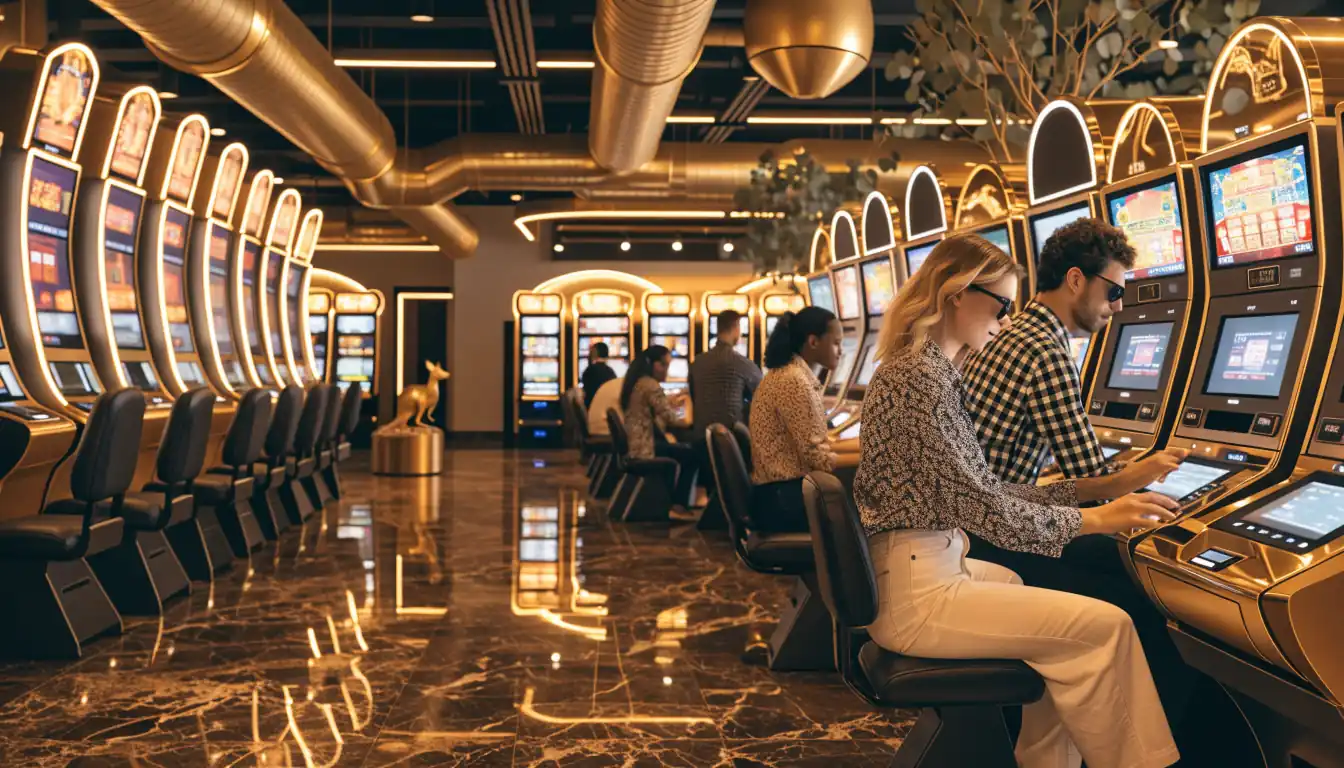
The first is the standing of the land-based sector. The physical pokies base — 95,800 machines in NSW, with substantial installations across Victoria, Queensland and elsewhere — remains the centre of gravity of Australian slot play by turnover and by loss. Regulation of it is intensifying at state level, with cashless and account-based play, transparency measures and harm-minimisation requirements on the agenda across multiple jurisdictions.
The second is the unresolved position of online slots. The Interactive Gambling Act 2001 prohibition has held for over two decades, and no domestic licensing pathway has appeared to soften it. Offshore sites continue to accept Australian players, ACMA continues to act against the advertising and payment channels that serve them, and the player-side legality means demand does not disappear when enforcement tightens. This tension — prohibited supply, lawful individual access — is stable and unlikely to resolve in either direction quickly.
The third is the fiscal dependence of the states. A tax base that carried 7.7% of state and territory revenue (as measured in 2015–16) does not get dismantled by regulation without a replacement. Every harm-reduction proposal with a revenue cost meets this arithmetic, and it explains why reform in this sector moves slowly and unevenly across states.
The sections that follow take each layer apart in turn: how players actually behave on pokies and where the risk patterns lie; the machines and the regulation governing them; the non-slot casino games alongside them; the role of pokies in pubs and clubs specifically; and the payment and compliance mechanics — cryptocurrencies, real-money play, Ethereum platforms — that sit underneath the online side of the market.
Each is a separate discipline. The size of the market, set out above, is the reason each of them matters.
Physical pokies generate the bulk of turnover and are heavily regulated by states.
Offshore operators supply slots to Australians despite the Interactive Gambling Act prohibition.
Gambling revenue accounts for around 7.7% of state tax income, limiting reform speed.
Slot Gambling: Player Behaviour and Risks
Slot gambling occupies a peculiar position in Australia. It is the most widely available form of casino gambling, the most heavily used, and — by the assessment of public inquiries and sector guidance — the most attractive to money launderers. The player-behaviour picture and the criminal-risk picture overlap more than either regulators or operators would like: the same features that make pokies convenient for ordinary players make them convenient for someone with a bag of cash and no intention of playing.
How players actually engage
Slot play in Australia is dominated by electronic gaming machines — pokies — located in pubs, clubs and casinos, with online slot gambling occupying a separate and legally distinct corner (online casino games cannot be lawfully offered to Australian residents, though playing at offshore-licensed sites is not an offence for the individual). The typical engagement pattern with land-based machines is high-frequency, repetitive session play: continuous bets, rapid spin cycles, and cash in and out of the machine with minimal friction.
That frictionlessness is not incidental. The volume of cash transactions around pokies is high by design, and the traceability of those transactions is limited. A player can insert notes, play, cash out, and walk away without producing identification for most of that sequence. For the ordinary player this is convenience. For a criminal, it is a channel.
Why pokies are a money-laundering risk area
Public inquiries and sector guidance have identified pokies as a major AML risk area, and the mechanics are not mysterious. The core problem is structural: a venue that accepts large volumes of cash, on machines that do not link every transaction to an identified person, produces an environment where dirty money can be made to look like gambling turnover.
The typologies that recur in the sector’s own guidance and in law-enforcement findings are worth listing plainly, because they describe observable behaviour rather than abstract risk:
- Cash placement with minimal play. Large amounts of cash go into an electronic gaming machine, and the withdrawal follows after little or no gameplay. The machine has functioned as a laundrette, not a game.
- Purchasing winning tickets. A criminal buys a winning ticket from a genuine patron. The ticket is redeemed through legitimate channels, and the proceeds come out looking like gambling winnings — which, in Australia, are not taxed.
- Structuring across venues. Instead of one large transaction in one place, funds are split into smaller placements spread across multiple venues, keeping each below thresholds that attract scrutiny.
- Collusion and weak oversight. Staff or associates either actively assist or simply fail to question what is in front of them. Illicit cash movements do not require sophistication when oversight is thin.
A further enabling element is the role of the money mule — an intermediary, often recruited rather than central, hired to place cash through machines on someone else’s behalf. The person at the machine may have no stake in the criminal scheme at all; they are throughput.
Red flags worth knowing
Whether one manages a venue, audits one, or simply wants to understand how this activity gets caught, the red-flag indicators cluster around a few behaviours that deviate from genuine gambling:
- Large cash insertions followed by minimal play and an immediate cash-out — the machine used as a conversion point, not entertainment.
- Frequent small redemptions across venues — the fingerprint of structuring.
- Multiple patrons working in coordination to move cash — collusion is usually visible before it is provable.
- Customers refusing identification, or presenting multiple player cards — the behaviour of someone managing an identity, not a bankroll.
- Redemption patterns that deviate sharply from venue averages.
- Access to more cash than the customer’s profile would suggest.
- Deposits of higher values and larger amounts of cash than the profile supports.
None of these indicators is proof of anything individually. A genuine high-roller may carry more cash than expected; a private person may simply dislike showing ID. The indicators become meaningful in combination and against a baseline — which is precisely why customer verification and patron profiling are treated as primary AML/CFT controls rather than administrative overhead. Cashless and account-based pokies, which tie play to an identified account, improve traceability at the source and narrow the channel that the typologies above depend on.
The uncomfortable overlap
The line between problem gambling behaviour and laundering behaviour can be thinner than it looks from the outside. Both can present as long sessions, heavy cash use and reluctance to engage with staff or identification. What separates them is intent, and intent is not observable — only patterns are. That is the practical reason the sector treats behavioural monitoring as an AML function and not only a responsible-gambling one: the same data answers both questions, and a venue that looks at neither is exposed to both.
AML
Anti‑money‑laundering (AML) refers to regulations and controls designed to detect and prevent the use of gambling venues for laundering illicit funds.
For players, the practical takeaway is narrower. Cash-heavy, low-traceability environments are exactly where the criminal typologies operate, and the presence of account-based play and identity checks at a venue is not bureaucracy — it is the visible edge of the controls that make the launderer’s work harder. A machine that knows who is playing is a machine that is harder to use as a laundrette.
Slot Machines and Casino Regulations
A slot machine is, in mechanical terms, a box with a screen, a coin or note acceptor, a logic board running a random number generator, and a payout mechanism — or, in the casino-free version online, software performing the same function. In Australia both forms exist, but they sit on opposite sides of a legal line drawn more than two decades ago, and that line determines what a machine may lawfully do and who may lawfully offer one.
The physical machine
In licensed venues — casinos, pubs and clubs — slot machines are known formally as electronic gaming machines, or EGMs. The hardware is regulated at state and territory level: each machine must be approved, connected to a monitoring system, and operated under a licence held by the venue. What the machine pays out, how it records play, and how cash moves in and out of it are all matters covered by that state-level regime, and the venue carries the compliance obligations attached to it.
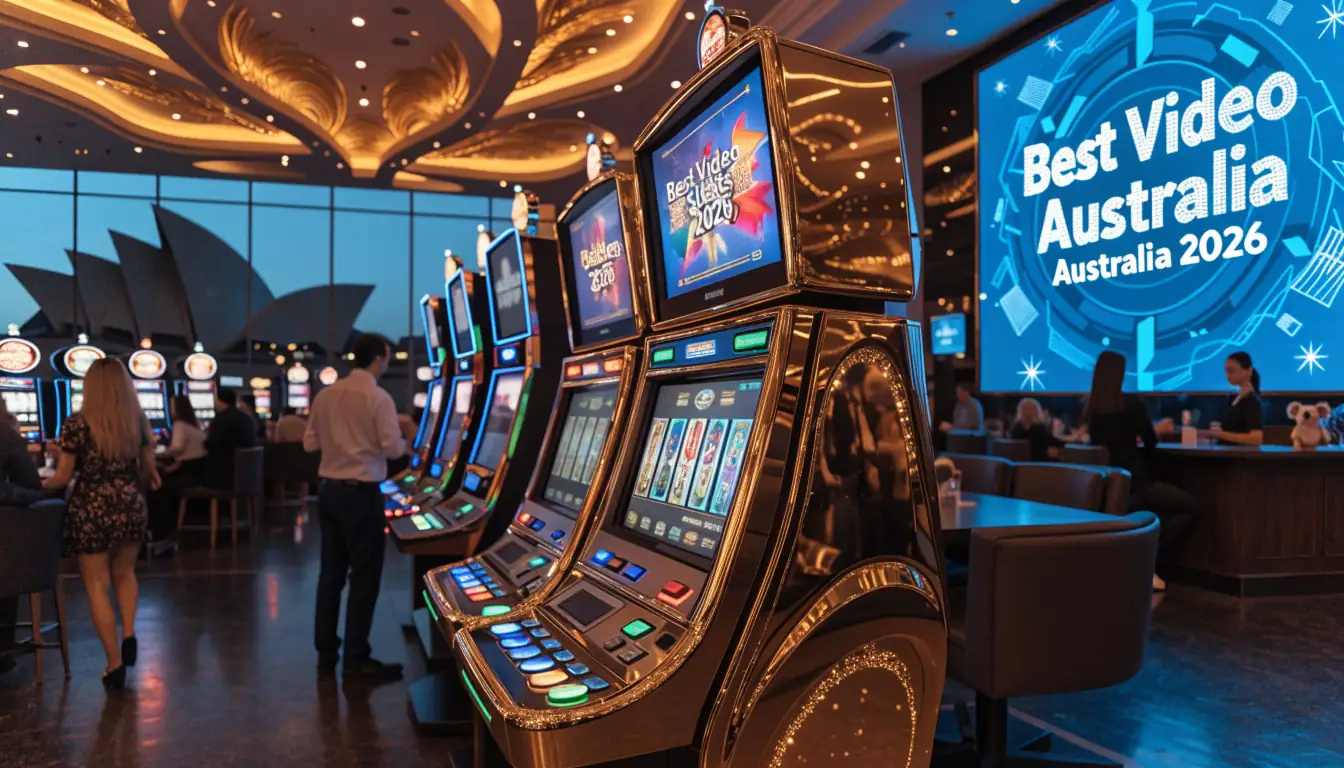
The cash-handling side of the hardware is where regulation leans hardest. Machines that accept large banknotes feed directly into the anti-money-laundering problem: a customer with access to more cash than their profile suggests, or depositing higher values and larger amounts of cash than the venue would expect, is a recognised red flag. Two controls answer it from the machine side — customer verification and patron profiling, which attach identity to play, and cashless or account-based pokies, which replace anonymous note insertion with a traceable transaction record. Account-based play turns the machine from a cash slot into an entry in a ledger, and that is precisely why regulators favour it.
The online line
Online, the framework changes. The Interactive Gambling Act was passed on 28 June 2001, and it prohibits the provision of online casino games — slots included — to Australian residents. There is no domestic licence an operator can hold for this. A company that wants to run online pokies for Australians cannot lawfully do so from Australia, and cannot obtain permission to do so from abroad either; the prohibition targets the provider, not the player.
Illegal supply
Providing online casino games to Australian residents breaches the Interactive Gambling Act and can result in significant penalties for operators.
That last distinction matters and is routinely misunderstood. It is not illegal for an individual Australian to play at an offshore-licensed online casino. The offence sits with the operator offering the service, not with the person spinning the reels. The practical consequence: no locally licensed real-money online casino exists for Australian players, so any site offering online slots to this market is doing so under a foreign licence or none at all. Any suggestion to "check the operator’s licence" against an Australian register fails on the facts — there is no register to check, because there is nothing on it.
Sports betting and lotteries sit under a different, licensed regime and are not part of this discussion; the prohibition covers casino-style games — slots, poker, blackjack, roulette — and in-play online betting.
Where the two layers meet
The physical and online regimes share one feature: both are built around harm minimisation as a stated purpose, and both increasingly treat traceability as the mechanism for it. On the floor, that means moving from anonymous cash play toward account-based machines. Online, where the Commonwealth has no licensed operators to regulate, it means enforcement against the supply side rather than supervision of it.
For anyone comparing the two, the position is stark. A pokie in a NSW club is a licensed, monitored, state-taxed device with cash-reporting obligations attached. An online slot offered to an Australian is a service the provider is breaking the law to supply. The machine may look the same on a screen; the legal status of the operator behind it does not.
Enforcement of the online prohibition falls to the Australian Communications and Media Authority, which pursues offending operators and the services that support them — a matter taken up in more detail elsewhere in this article, alongside the compliance obligations weighing on licensed land-based venues.
Casino Games Beyond Slots
Slot machines dominate the Australian gambling conversation, but they are not the whole of it. Land-based casinos run full table-game floors, and the broader online casino category — the games a search for "casino gambling games" usually turns up — covers several distinct families: table games, card games, live-dealer products and virtual or RNG-based games. This section covers what sits outside the pokies, and how the fiscal picture looks when all of it is counted together.
Table games
The classic casino floor categories — blackjack, roulette, baccarat and poker variants — operate in Australian casinos under state and territory licensing. These games differ from pokies in one structural respect: the house edge is fixed by the rules of the game and, unlike a machine’s programmed return, is visible in the published rules of play. Blackjack, baccarat and roulette have rule sets that have been stable for decades, which is why they anchor every live-dealer studio catalogue from providers such as Evolution Gaming, whose product lines supply the live tables most offshore platforms run.
Card games also include casino poker variants, where players play against the house rather than each other. These sit between table games and machine gaming in pace and volatility, but the distinction that matters for the player’s arithmetic is the same as everywhere else: table minimums and fixed payouts versus the machine’s per-spin wagering structure.
Virtual and RNG-based games
Virtual games are the online-only category: RNG-driven versions of table games, game-show formats, and instant-win products from studios such as Microgaming, NetEnt and Pragmatic Play. Where a land-based casino needs a dealer, a wheel and a supervisor, a virtual table needs none of them, which is why this category expands fastest across offshore platforms and why it is the part of the "online casino gambling games" catalogue with the least stable content — formats are retired and replaced continuously.
Virtual and RNG‑based casino games, including online slots, are prohibited for Australian residents under the Interactive Gambling Act.
It bears repeating in this context, because the surrounding sections cover it only from the slot angle: online casino games of every category — slots, poker, blackjack, roulette — are prohibited under the Interactive Gambling Act 2001 for provision to Australian residents. There is no domestic licence an operator can hold to offer them. Playing at an offshore-licensed casino is not an offence for the individual; offering the service is the offence. This applies to a virtual roulette wheel exactly as it applies to a pokie.
The fiscal context
The money in Australian gambling is still, overwhelmingly, machine money. According to complyadvantage.com, pokies generated $191.2 billion in Australian gambling turnover in 2023 — a figure that dwarfs the table-game take and is worth treating as a single-source estimate rather than an official statistic. The pattern it points to is consistent with the government data elsewhere in this article: electronic gaming machines carry the bulk of turnover and the bulk of player loss, while table games take a modest share of a very large market.
Two fiscal facts frame the whole category:
- Gambling winnings are not taxed in Australia. A win at the baccarat table or on a pokie is not income in the hands of the player. What is taxed is the operator’s side: gambling revenue feeds state and territory budgets through licence fees and gambling taxes.
- In 2015-16, gambling revenue accounted for 7.7% of state and territory taxation revenue. That share makes gambling taxation a structural line item in state budgets, not a marginal one — and it is the reason pokies regulation (covered in the following section) is a budget question as much as a policy one.
What this means for the game mix
The categories beyond slots matter to the Australian market in an asymmetrical way. Table games and their virtual versions are what most offshore online casino catalogues are built around, and what most searches for "best online gambling casino" are actually looking for. Domestically, they are a licensed, land-based product with a comparatively modest share of turnover. The money — the $191.2 billion turnover estimate, the per-capita loss figures, the state revenue share — runs through the machines, not the tables.
That asymmetry is the honest summary of the category: the games people picture when they picture a casino are not the games the Australian gambling economy is built on. The rest of this article deals with the ones it is built on.
Pokies in Australian Pubs and Clubs
The word "pokies" is not slang in Australia — it is the standard term for electronic gaming machines (EGMs), the formal name used in legislation and regulatory filings. What distinguishes pokies from casino slots is not the machine itself but where it sits: not in a designated gambling venue, but in the corner of a pub or a licensed club, a short walk from the bar and the bistro.
Scale of the venue network
Australia holds about 18% of the world’s poker machines, according to complyadvantage.com — a figure worth reading twice against the country’s 0.3% share of the global population. The concentration is starkest in New South Wales, where approximately 95,800 pokies operate across pubs and clubs. For comparison with casino floors: the machines inside venues like Sydney’s casinos are a minority share of the national total. The pub-and-club network is the main event.
NSW clubs alone recorded $1.945 billion in net pokies profit between December 2017 and May 2018 — profit to venues, which is loss to players, reported half a year apart from any casino financials. The volume behind that figure is even larger: Australians bet almost AUD$150 billion on electronic gaming machines in FY 2020–2021, with player loss of AUD$12 billion and per-capita loss of AUD$608.
- Implement cashless or account‑based pokies.
- Conduct regular AML risk assessments.
- Train staff to recognise red‑flag behaviours.
- Allow unrestricted cash insertions without identification.
- Ignore large cash payouts that deviate from player profiles.
- Overlook repeated small redemptions across venues.
Why pubs and clubs are a distinct category
A casino slot machine exists inside a venue whose entire purpose is gambling. A pokie in a suburban club exists inside a venue whose stated purpose is membership, sport, food and community — the machine is a tenant, not the building. This has three practical consequences:
- Access. Pokies sit inside everyday social spaces, with no separate entry threshold beyond the venue’s own licensing. Frequency of exposure, not size of any single bet, drives the loss totals.
- Harm profile. Poker machines are the most harmful form of gambling in NSW — this is not an advocacy position but the finding of the state’s own inquiries. The harm sits with the most widely distributed format, not the largest one.
- Cash handling. The high volume of cash transactions and limited traceability in pubs and clubs make pokies attractive for money laundering — a risk documented by the NSW Crime Commission and AUSTRAC, and structurally worse than in casino environments where identification is standard at the door.
Venue obligations
Operators running more than 15 pokies carry concrete duties: appointment of a compliance officer, documented risk assessments, an AML/CFT program, customer due diligence, and reporting of cash transactions above $10,000 to AUSTRAC. Cashless and account-based pokies — marketed as "transparent pokies" — improve traceability of funds and are the main policy lever aimed at the cash-laundering exposure of the venue network.
The online comparison
The online dimension works in reverse to what the venue numbers suggest. Domestic online pokies cannot be legally offered to Australian residents: casino-style games are prohibited under the Interactive Gambling Act 2001, and no Australian licence for an online casino exists. Playing at offshore-licensed sites is not illegal for the individual — the Act targets operators, not players — but there is no local regulator standing behind those platforms, no AUSTRAC-monitored operator behind the deposit, and no venue compliance officer on the other side of the screen.
The distinction that matters for anyone comparing the two: a pub pokie sits inside a licensed, inspectable, cash-reporting venue even if its harm profile is the worst in the country. An offshore online pokie sits inside no Australian framework at all. Neither option carries a domestic online-casino licence, because that licence does not exist to carry.
Gambling Help Online operates as the national support service for venue and online gambling harm, and BetStop, the self-exclusion registry launched in August 2023, registered 18,000 users in its first six months — a measure of demand that venue-level exclusions alone were not meeting.
Cryptocurrency and Online Casino Payments
Digital currencies appear in search behaviour around online gambling with predictable regularity: Bitcoin, Litecoin, Ethereum and similar tokens are marketed as deposit options by offshore casino sites that accept Australian players. The legal position does not change with the payment method. Under the Interactive Gambling Act 2001, online casino games — slots, poker, blackjack, roulette — cannot be offered to Australian residents, and no domestic licence exists for an operator to obtain. A Bitcoin deposit does not create a lawful operator where none is permitted; it simply moves the transaction onto infrastructure that is harder to trace.
Positive impact
Venues that switched to account‑based pokies reported a measurable drop in money‑laundering indicators.
Why crypto appeals to operators
The appeal is structural, not cosmetic. Card payments leave a regulated trail through Australian banks and payment processors; a cryptocurrency transfer settles on a public blockchain with no intermediary obligated to question the purpose. For operators who cannot lawfully serve this market, that frictionlessness is the product. Players who use these deposit routes accept the mirror image of the same property: no chargebacks, no banking dispute channel, and no domestic regulator to complain to when a withdrawal does not arrive.
AML controls and where crypto fits
The anti-money-laundering framework that applies to Australian gambling venues is built around customer verification and patron profiling. Cashless and account-based pokies improve traceability precisely because each transaction attaches to an identified player rather than to anonymous coins inserted into a machine. Cryptocurrency runs against that direction of travel: it re-introduces the pseudonymity that account-based play was designed to remove.
The red-flag indicators used in venue AML programs translate directly to crypto deposits:
- Access to more cash than expected for the customer profile — a wallet balance or transaction volume inconsistent with the player’s known financial position.
- Depositing higher values and larger amounts — a pattern of escalating transfers, the digital equivalent of repeated large cash insertions.
- Layering across platforms — moving funds between wallets and gambling sites to obscure origin, the same objective as structuring across venues.
AUSTRAC’s rules are explicit on one point relevant here: digital currencies are not an accepted payment channel for licensed Australian gambling operations. Crypto deposits sit entirely on the offshore side of the market, outside the transaction reporting and due-diligence obligations that apply domestically.
What a deposit actually buys
A cryptocurrency deposit at an offshore casino site is a transfer to an entity with no Australian licence, no AUSTRAC reporting obligation, and no local recourse if it withholds funds. The "bonus" offers advertised around Bitcoin and Litecoin deposits — matched amounts, wagering conditions — are set by the operator alone. Australian law requires licensed operators to display wagering requirements before any bonus is offered; an offshore site accepting crypto is under no such compulsion, and the terms can change after the deposit clears. The blockchain records the payment permanently. Whether the operator honours anything in return is not recorded anywhere.
Real‑Money Slot Play: Stakes and Payouts
Real‑money slot play is measured in two figures: what goes in and what stays behind. In Australia, both are large. In FY 2020‑2021, Australians bet almost AUD$150 billion on electronic gaming machines. Of that turnover, players lost AUD$12 billion — money that left their accounts and did not return.
Turnover and loss are not the same number, and the gap between them is where the economics of playing pokies for real money become clear. A machine can cycle the same bankroll through repeatedly, inflating turnover, while the loss figure tracks the actual amount players walk away without. The AUD$150 billion represents the churn; the AUD$12 billion is the cost of that churn to the people feeding the machines.
Spread across the population, the per‑capita loss from electronic gaming machines in FY 2020‑2021 was AUD$608. That figure is not a projection of what any individual loses — it is the total loss divided across every resident, gambler or not. For households that do play regularly, the effective share is higher than the average suggests, because non-players pull the per‑capita number down.
For anyone weighing real‑money play against other forms of spending, the arithmetic is straightforward. Winnings are not taxed in Australia, so a payout is received in full — but the same absence of tax applies to losses, which carry no deduction and no offset. The net position is the only one that matters: money staked, money returned, and the difference between the two.
No domestic online casino licence exists, so real‑money slot play through offshore sites sits outside these local figures entirely. The AUD$150 billion and AUD$12 billion measure machines on Australian soil — pubs, clubs and casinos. Online play for real stakes is a separate, unmeasured quantity in this accounting, and official sources do not publish a comparable figure for it.
Key conclusions
- Australia’s pokies market dominates gambling turnover and state revenue.
- Online slots remain prohibited for operators but accessible to players via offshore sites.
- Cashless, account‑based systems are the most effective AML mitigation for land‑based venues.
- Regulatory reforms are slowed by fiscal dependence on gambling revenue.
- Player losses are significant and not tax‑deductible, underscoring the need for responsible‑gambling measures.
Ethereum-Based Online Gambling Platforms
Ethereum sits alongside Bitcoin in the payment menus of offshore gambling platforms that accept Australian players. The legal position does not depend on the currency. The Interactive Gambling Act, passed on 28 June 2001, prohibits the provision of internet casino games — slots, poker, blackjack, roulette — to Australian residents, and no domestic licence exists for that type of service. A platform running on Ethereum is an internet casino in the eyes of the law, not a new category.
What changes with Ethereum is traceability, not legality. Blockchain transactions leave a permanent public record, yet the operators taking them are typically registered offshore, outside AUSTRAC’s reporting perimeter. That combination — visible transfers to invisible counterparties — is exactly where anti-money-laundering attention concentrates. Customer verification and patron profiling, standard AML controls in domestic gambling, have no clear equivalent on a platform that asks for a wallet address instead of a government-issued ID.
The prohibition targets the operator, not the player. Playing at an offshore-licensed site is not an offence for an individual Australian. Winnings are not taxed, since Australia does not treat gambling winnings as income.
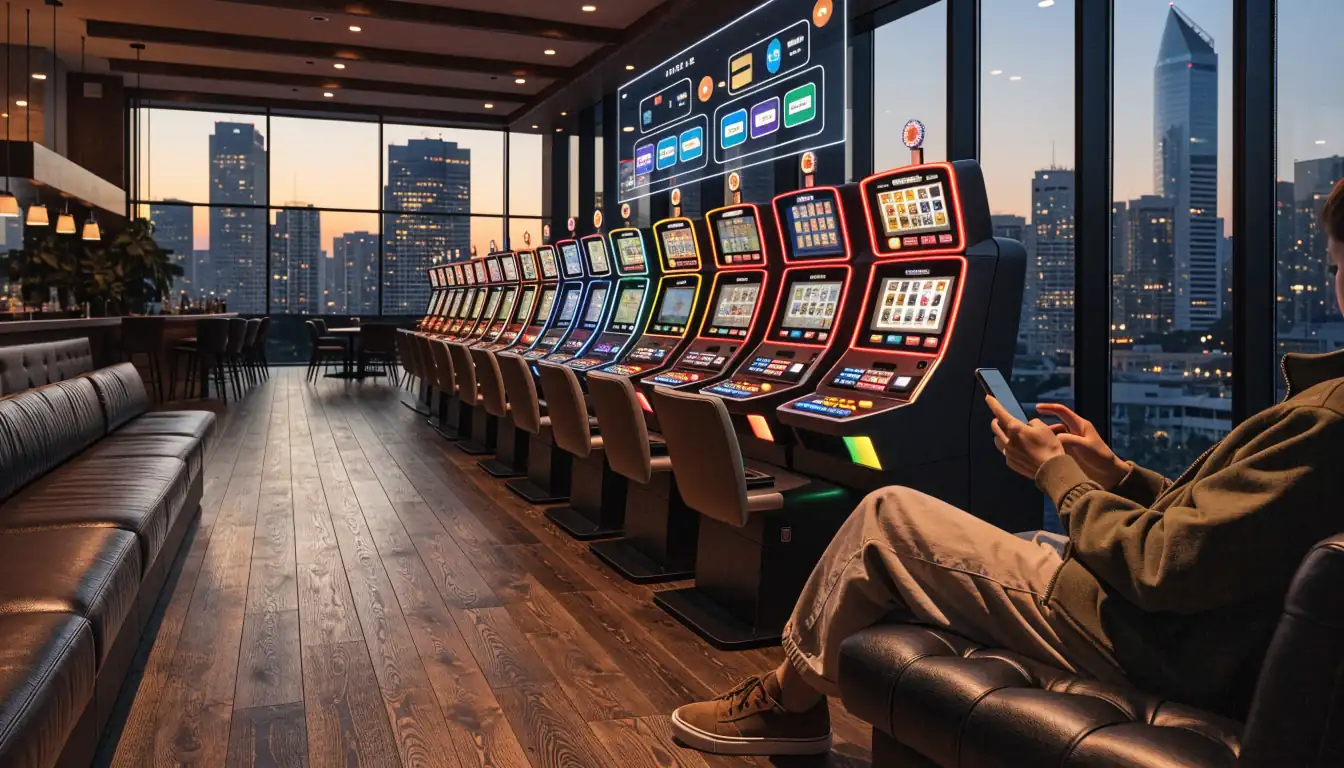
What a player cannot find is a regulated version of the product. There is no local Ethereum casino to compare against an offshore one — the choice is between an offshore platform and none at all.
Online Casino Operations in Australia
Online casino services in Australia sit under a single Commonwealth statute. The Interactive Gambling Act, passed on 28 June 2001, makes it an offence to provide online casino games — slots, poker, blackjack, roulette — to Australian residents. There is no domestic licence an operator can apply for, which distinguishes casino gaming from online sports betting and lotteries, both of which are licensed through state and territory authorities.
The law targets operators, not players. An individual Australian who plays at an offshore-licensed casino commits no offence under the Act; the exposure sits entirely with the service provider. Enforcement falls to the Australian Communications and Media Authority (ACMA), which can request takedowns and block access to prohibited services.
What Australians encounter online is therefore delivered from offshore jurisdictions, where operators hold licences issued elsewhere — the Malta Gaming Authority and the UK Gambling Commission being two examples. No domestically licensed real-money online casino exists for local players.
The tax treatment runs in the opposite direction to the regulatory one. Gambling winnings are not taxed in Australia: a payout is not income in the hands of the player, because the activity is treated as recreation rather than a profession. Taxes on gambling are collected at the operator and venue level, not from the winner.
The practical picture: a prohibited supply, an unpenalised demand, and a tax regime that ignores the proceeds.
Advertising, Compliance and AML Requirements for Casinos
Advertising of casino gambling in Australia is tightly constrained. Gambling ads may not appear on sports jerseys, and advertising must not target minors — not on television, not in stadiums, not online. Operators must include responsible-gambling messaging with harm-reduction information in every advertisement, and online casino services cannot be promoted on social media or any online platform at all. Since there is no domestic licence for online casino games, there is no lawful online casino advertising to regulate in the first place — the promotion ban simply closes the loop.

On the compliance side, venues operating more than 15 pokies must appoint a compliance officer, conduct risk assessments, implement an AML/CFT program, perform customer due diligence and report cash transactions above $10,000. AUSTRAC registration through the AUSTRAC Business Profile Form is the starting point. Cashless, account-based play improves traceability where it has been introduced; cash-heavy machines remain the harder problem.
Customer verification and patron profiling are the working AML controls. Staff are trained to watch for red flags: a patron with access to more cash than their profile suggests, large cash insertions followed by minimal play and immediate cash-out, frequent small redemptions across venues, refusal of identification, and multiple player cards used by one customer.
Player-protection infrastructure is also part of the picture. BetStop, the national self-exclusion registry launched in August 2023, registered 18,000 users in its first six months — evidence of demand, if nothing else.
Created by the ”Casino Payment Info” editorial team.