House of Pokies Casino Australia: Rules, Scale and Risk
 Available in AU
Understanding Pokies in Australian Casinos: Scale, Regulation, and Risk
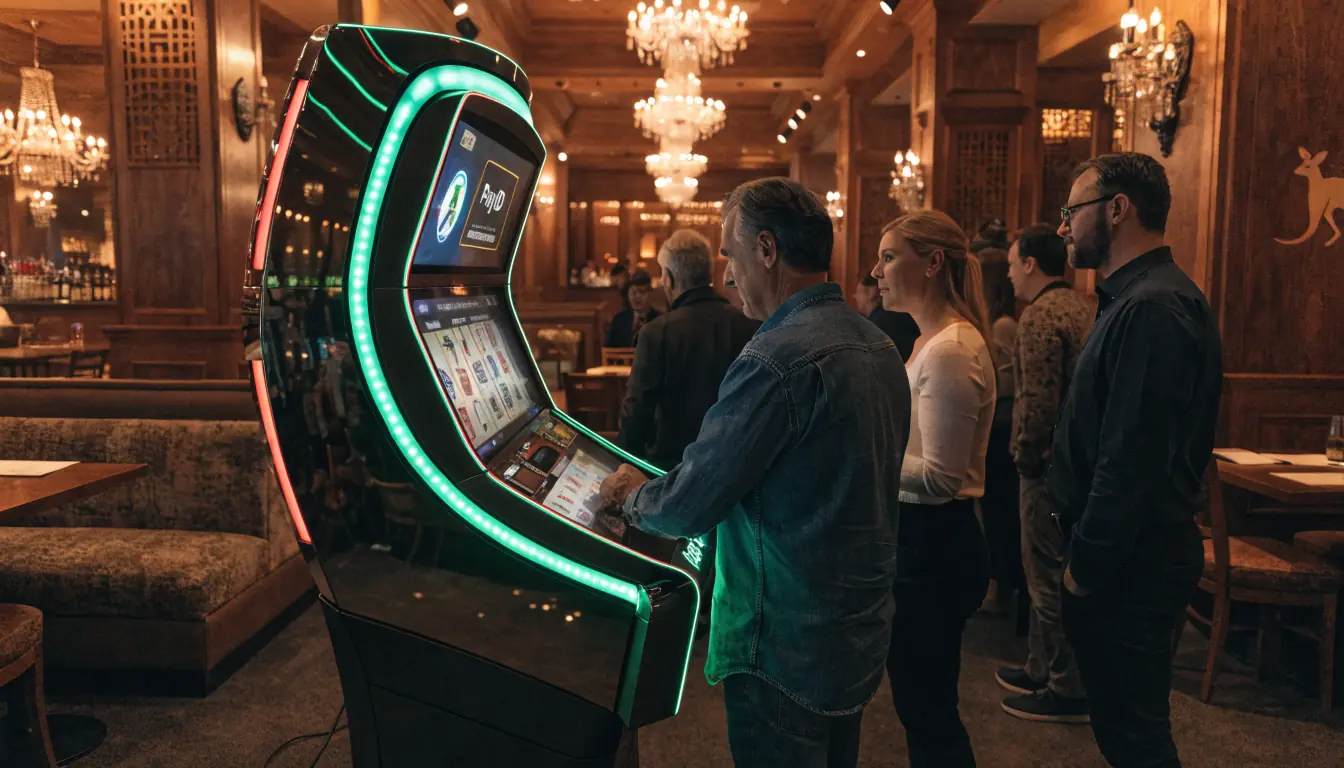
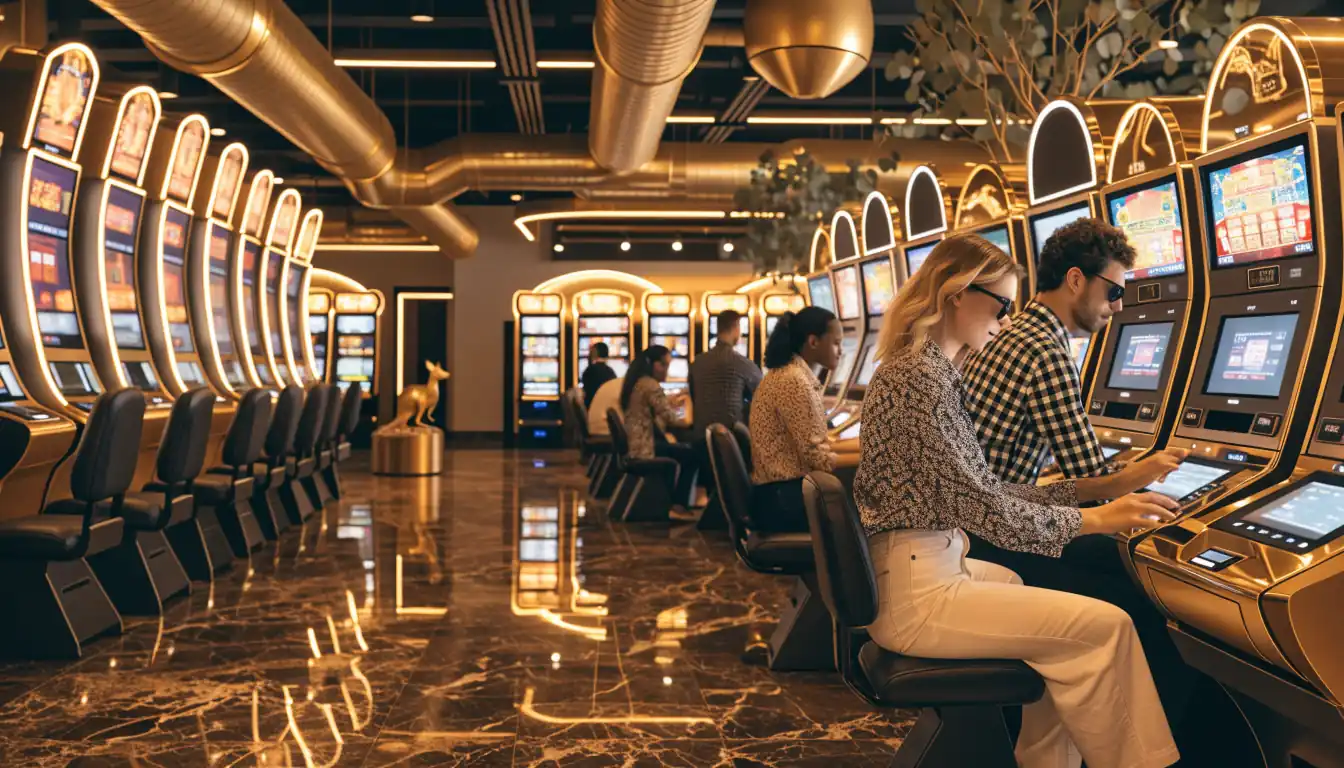
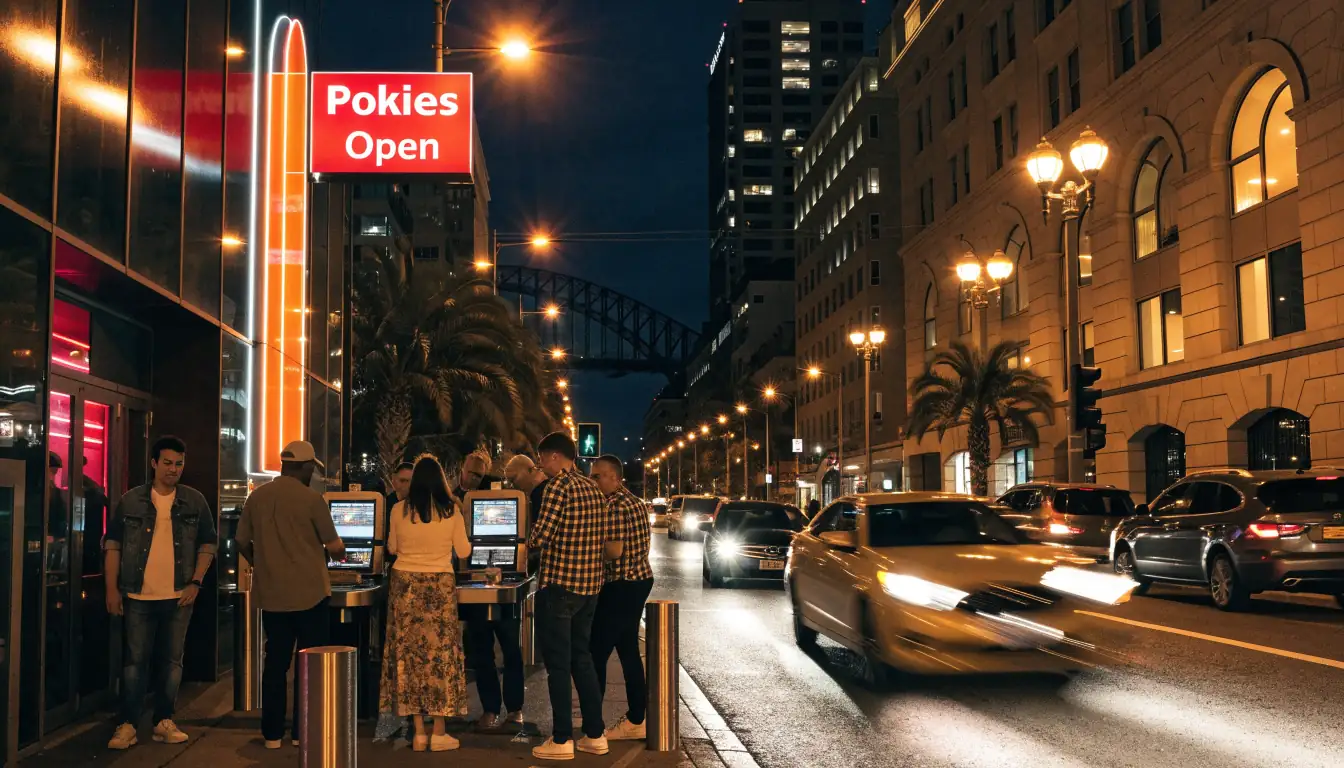
The phrase "House of Pokies" circulates widely in Australian online searches, and behind it sits a real, measurable national habit. Pokies — the local term for electronic gaming machines (EGMs) — are not a niche pastime in Australia. They are operated in every Australian state, the Australian Capital Territory and the Northern Territory, and they sit in pubs, clubs and casinos across the country. This section sets out what these machines are, what the numbers actually say about the scale of play, who regulates them, and where the documented risks sit. The legal treatment of bonuses and promotional offers is a separate question, covered later.
What the Term Actually Covers
"Pokies" is the everyday Australian word for poker machines — a term that long ago stretched to cover electronic gaming machines generally, whether or not the game on screen has anything to do with poker. In regulatory and academic writing the same machines are called EGMs, and the two terms are used interchangeably here. What the machines share is the underlying structure: a player inserts money, presses a button, and an outcome is produced by a random number generator. Winnings are credited to the machine and cashed out, historically in coins and now overwhelmingly as tickets or electronic transfers.
Before you commit real money anywhere, it helps to see how these casinos stack up on licensing, welcome offers, and deposit requirements. Here’s a quick, no-nonsense look at each one so you know what you’re actually getting.
License: Curacao Gaming Control Board (TechSolutions Group N.V.) · Bonus: 100% up to A$250 + 100 free spins (1st deposit) Licensed under the Curacao Gaming Control Board via TechSolutions Group N.V., this casino welcomes new players with a 100% match up to A$250 plus 100 free spins on the first deposit.
License: Curacao eGaming OGL/2024/923/0383 (Antillephone N.V.) · Bonus: up to A$2,000 + 100 free spins across 2 deposits · Min. deposit: A$30 Operating under a Curacao eGaming licence through Antillephone N.V., it offers a sizeable welcome package worth up to A$2,000 plus 100 free spins spread across two deposits, with a A$30 minimum deposit to get started.
License: Curacao eGaming (Roby Games Ltd) · Bonus: 100% up to A$750 + 200 free spins Licensed via Curacao eGaming under Roby Games Ltd, this casino stands out for a generous 100% bonus up to A$750 alongside 200 free spins.
License: Curacao eGaming OGL/2023/174/0082 (Dama N.V.) · Bonus: up to A$10,000 + 500 free spins across 4 deposits · Min. deposit: A$15 Holding a Curacao eGaming licence through Dama N.V., this operator offers one of the larger welcome packages on the list, up to A$10,000 plus 500 free spins across four deposits, with a low A$15 minimum deposit.
License: Curacao Gaming Control Board · Bonus: up to A$5,000 + 400 free spins Licensed by the Curacao Gaming Control Board, this casino backs its offering with a substantial bonus of up to A$5,000 plus 400 free spins.
License: Curacao (operating since 2017) · Bonus: 250% up to A$2,000 + 50 free spins on the first of six deposits · Min. deposit: A$20 A long-running Curacao-licensed operator active since 2017, it offers a notable 250% bonus up to A$2,000 plus 50 free spins on the first of six deposits, with a A$20 minimum deposit.
License: Curacao Gaming Control Board OGL/2023/174/0082 (Dama N.V.) · Bonus: up to A$5,000 + 300 free spins across 4 deposits Licensed by the Curacao Gaming Control Board under Dama N.V., this casino provides a welcome package of up to A$5,000 plus 300 free spins spread across four deposits.
License: Curacao Gaming Control Board OGL/2023/176/0095 (Hollycorn N.V.) · Bonus: 100% up to A$10,000 + 100 free spins Operating under a Curacao Gaming Control Board licence via Hollycorn N.V., it offers a strong 100% bonus up to A$10,000 plus 100 free spins.
Bonus: 100% up to A$750 + 200 free spins, 35x wagering · Payout speed: crypto 30-120 minutes, fiat 24-72 hours · Min. deposit: A$30 This casino offers a 100% bonus up to A$750 plus 200 free spins with 35x wagering, and stands out for fast crypto payouts within 30-120 minutes, with fiat withdrawals taking 24-72 hours and a A$30 minimum deposit.
Bonus: up to A$7,500 + 550 free spins across 10 deposits, 50x wagering · Payout speed: crypto under 1 hour, PayID 1-3 business days · Min. deposit: A$20 (A$30 to qualify for the bonus) This casino offers a large tiered bonus of up to A$7,500 plus 550 free spins across ten deposits with 50x wagering, backed by quick crypto payouts under an hour and PayID withdrawals within 1-3 business days; the minimum deposit is A$20, though A$30 is needed to qualify for the bonus.
The setting matters more than the machine. The same category of device operates in three distinct environments:
- Pubs — small numbers of machines in a licensed venue, regulated at state level.
- Clubs — licensed community and sporting clubs, which in some states operate very large machine floors.
- Casinos — full-scale casino floors, where pokies sit alongside table games.
The regulatory weight attached to each setting differs, as does the anti-money-laundering regime that applies, and both are set out below. The important point at this stage is that "pokies" is not shorthand for online slots. Online casino games occupy a separate and legally distinct category in Australia, and conflating the two produces a great deal of confused commentary — the legal framework section below returns to this.
The Scale of Play: What the Numbers Say
The figures for the financial year 2020–2021 are the clearest recent picture of the market as a whole.
- Australians placed bets worth almost AUD 150 billion on electronic gaming machines in FY 2020–2021.
- Total player loss from those machines in the same year was about AUD 12 billion.
- Per-capita losses from electronic gaming machines in FY 2020–2021 were AUD 608.
Read together, those three numbers describe the mechanics of the product with unusual precision. AUD 150 billion in turnover converting to AUD 12 billion in player loss means the machines returned roughly ninety-two cents in every dollar wagered over the year — and then the same money was, in most cases, wagered again. The per-capita figure of AUD 608 is a division of the national loss across the whole population, player and non-player alike, which makes it a conservative measure of what the average actual player lost.
On the question of how Australia compares internationally, the sources disagree, and the disagreement should be stated rather than smoothed over. One figure has Australia accounting for 3% of the world’s pub and club poker machines; another puts the country at about 18% of the world’s poker machines. The two claims are not necessarily contradictory — one counts a specific venue type while the other counts all machines — but they cannot be merged into a single confident number. What is safe to say is that on either measure, a country of about 26 million people holds a share of the world’s machines far out of proportion to its population.
Turnover FY 2020‑21 AUD 150 billion
Player loss FY 2020‑21 AUD 12 billion
Per‑capita loss FY 2020‑21 AUD 608
A more recent turnover figure also circulates: according to complyadvantage.com, pokies generated AUD 191.2 billion in gambling turnover in 2023. That number comes from a single source and should be treated as one reported figure rather than an established market statistic. It is at least directionally consistent with the FY 2020–2021 baseline: turnover in the low hundreds of billions, with a much smaller fraction retained by the venues.
Where the Money Goes: Taxation of Operators
Gambling winnings in Australia are not taxed — winnings are not treated as income for individual gamblers. The tax burden falls on the other side of the transaction. Operator taxation varies by state and by type of gambling service, which means a club operating pokies in one state and an identically sized club in another can face materially different tax treatments for the same activity. No single national rate applies, and any statement of "the" Australian gambling tax rate is wrong by construction.
The Legal Framework: What Is and Is Not Lawful
The regulatory structure has two layers, and the distinction between them is the single most misunderstood point in this whole subject area.
Land-based gambling. Pokies in pubs, clubs and casinos are lawful, licensed activity, regulated at state and territory level. Each jurisdiction licenses venues, caps machine numbers in various ways, and administers its own harm-minimisation and compliance regime. This is the sector the turnover figures above describe.


Online gambling. The Interactive Gambling Act 2001 (IGA) is the primary Commonwealth law governing online gambling. It makes it an offence for online operators to offer real-money online casino games — including slots, poker, blackjack and roulette — to Australian residents. There are no domestically licensed real-money online casino operators available to Australian players, and it is not possible to obtain a licence to operate an online casino domestically. What is licensed and lawful online is a narrower set of services: online sports betting, licensed at state and territory level, and lotteries. Live in-play betting online is prohibited, though live betting by phone is legal.
One asymmetry in the IGA does the heavy lifting in most discussions of this market: the law targets operators, not players. It is not illegal for individual Australians to play at offshore-licensed online casinos. The offence sits with whoever offers the service, not with whoever uses it. This is why a search term like "house of pokies casino australia 2026" can return a busy results page full of offshore casino brands in a country where offering such a service domestically is unlawful: demand is legal, supply is not, and the supply that exists is licensed somewhere else entirely.
Legal risk
Offering or promoting offshore casino bonuses to Australian players is illegal for the operator and can trigger enforcement action under the Interactive Gambling Act 2001.
A page like this one therefore has an obligation to be plain about what it cannot say. There is no Australian licence to check, no public register of Australian online casino licensees to consult, and no domestic regulator standing behind an offshore casino brand. Advice of the form "make sure the operator is licensed" is meaningless here unless it names a foreign regulator — and a foreign licence confers no rights in Australia and no protection under Australian law. Anyone evaluating an offshore casino brand against Australian rules is evaluating it against a framework that expressly prohibits its operation.
The age rules, by contrast, are unambiguous. The minimum legal gambling age in Australia is 18. Underage exposure is not a theoretical concern: almost one in three 12- to 17-year-olds in Australia gambles, and 46% of 18-year-olds do.
Money Laundering: The Documented Risk
The scale and cash intensity of the pokies sector has produced a second body of regulation, and it deserves separate treatment because it operates on a completely different logic from gambling law. Gambling regulation asks whether play is lawful; anti-money-laundering regulation asks whether the money is clean. Pokies sit at the intersection, and the documented problems are specific.
The core vulnerability is structural: a high volume of cash transactions and limited traceability. A machine that accepts cash, pays out tickets, and records nothing about who was playing is, from a laundering perspective, a conversion device. The documented methods follow directly from that structure:
- Insert-and-cash-out. Large sums of cash are inserted into machines, minimal gambling activity is performed, and the balance is cashed out. The result is a paper record that reads as winnings — dirty money with a clean receipt.
- Ticket purchase. Offenders buy winning tickets from genuine players, exchanging cash for a traceable, redeemable instrument. The player gets face value; the offender gets a legitimate-looking payout record.
- Structuring across venues. Smaller cash deposits are spread across different venues to stay under reporting thresholds, avoiding the very triggers designed to catch large single transactions.
According to complyadvantage.com, money mules are also recruited specifically to launder money through pokies — individuals moved or hired to run cash through machines on someone else’s behalf. The same single source should be named for that claim rather than presented as settled industry practice.
AUSTRAC and the Compliance Regime
AUSTRAC, the financial intelligence regulator, is the body that polices this space, and the obligations scale with the size of the operation.
Operators with up to 15 pokies must:
- register with AUSTRAC;
- keep identification records; and
- submit suspicious matter reports.
Operators with more than 15 pokies must:
- appoint a compliance officer;
- conduct risk assessments;
- implement AML/CFT programs;
- perform customer due diligence; and
- report cash transactions over AUD 10,000.
The two-tier structure reflects a simple calculation: a venue with a handful of machines is a limited laundering channel, while a large club or casino floor moving substantial cash is a systemic one. The AUD 10,000 cash transaction reporting threshold is also the number that the structuring method described above is designed to evade.
In 2024 AUSTRAC issued a guide to help firms recognise money-laundering red flags. The indicators it lists are recognisable as the signatures of the methods above:
- unusually high cash access;
- large deposits;
- cash transfers;
- casino disbursement checks; and
- certain occupations.
The behavioural red flags map onto the same behaviours. Large or repeated cash insertions followed by minimal play and immediate cash-out is the insert-and-cash-out method seen from the venue’s side of the counter. Frequent small redemptions across different venues within a short period is structuring made visible. Customers refusing identification, or using multiple player cards, are either privacy-sensitive or running someone else’s money through the machine — and the venue cannot tell which, which is precisely why the conduct is flagged.
The consequences of non-compliance are specified rather than vague. Non-compliant operators may receive remedial directions, infringement notices and civil fines, and suffer reputational damage. In New South Wales the ceiling has been raised sharply: an amendment to the Casino Control Act 1992 allows NSW casino operators to be fined up to AUD 100 million for compliance failures. A fine of that size is not a cost of doing business, and it was not designed to be.
A 2022 NSW Islington Report recommends that all NSW pokies become cashless by the end of 2028, aiming to close the anonymity gap used for money‑laundering.
Cashless Gaming and the Direction of Reform
The reform conversation has a clear shape: replace anonymous cash with accountable, account-based play.
According to facctum.com, adoption of cashless, account-based pokies improves traceability and reduces anonymity. The same source describes transparent, account-based machines as providing full traceability of deposits, gameplay and withdrawals — a complete record where the cash machine provides almost none. Every laundering method described above depends on the gap between the money inserted and the record of who inserted it; account-based play closes that gap at the source. Regulators, for their part, recommend tighter customer due diligence, transaction monitoring, and the adoption of cashless gaming systems — the three measures read as a single package.
The timeline question has a specific answer, though again from a single source: according to complyadvantage.com, the 2022 NSW Islington Report — following work by the NSW Crime Commission — recommended making all NSW pokies cashless by the end of 2028. A recommendation is not a law, and the date is a target proposed in a report rather than a deadline in force. But the direction is consistent across every body that has examined the question: the anonymous cash machine is being phased toward an auditable account, and each of the enforcement measures above tightens as that transition proceeds.
Main conclusion
Australian pokies generate massive turnover but are subject to increasingly strict regulation, especially around money‑laundering and the shift to cashless play.
Where This Leaves the Market
The picture assembled from the verified numbers is consistent. A sector turning over roughly AUD 150 billion a year, retaining about AUD 12 billion of it, distributed unevenly across states with different tax regimes, and increasingly regulated not for whether people play but for how money moves through the machines. The enforcement ceiling in NSW, the AUSTRAC tiers, and the cashless recommendations all point at the same target — cash anonymity — and none of them restrict the underlying product, which remains lawful, licensed and available in every jurisdiction in the country.
The offshore online casino market, which produces search traffic around names like "House of Pokies," operates outside this framework entirely: unlawful to offer to Australian residents, legal for residents to use, licensed in foreign jurisdictions whose regulators — the Malta Gaming Authority or the UK Gambling Commission among them — have no standing in Australia. That gap between demand and lawful domestic supply is where promotional offers, bonus terms and the rest of the offshore marketing apparatus live, and it is the subject of the next section.
Deposit Bonuses and Promo Codes for Pokies: Legal Landscape and Player Considerations
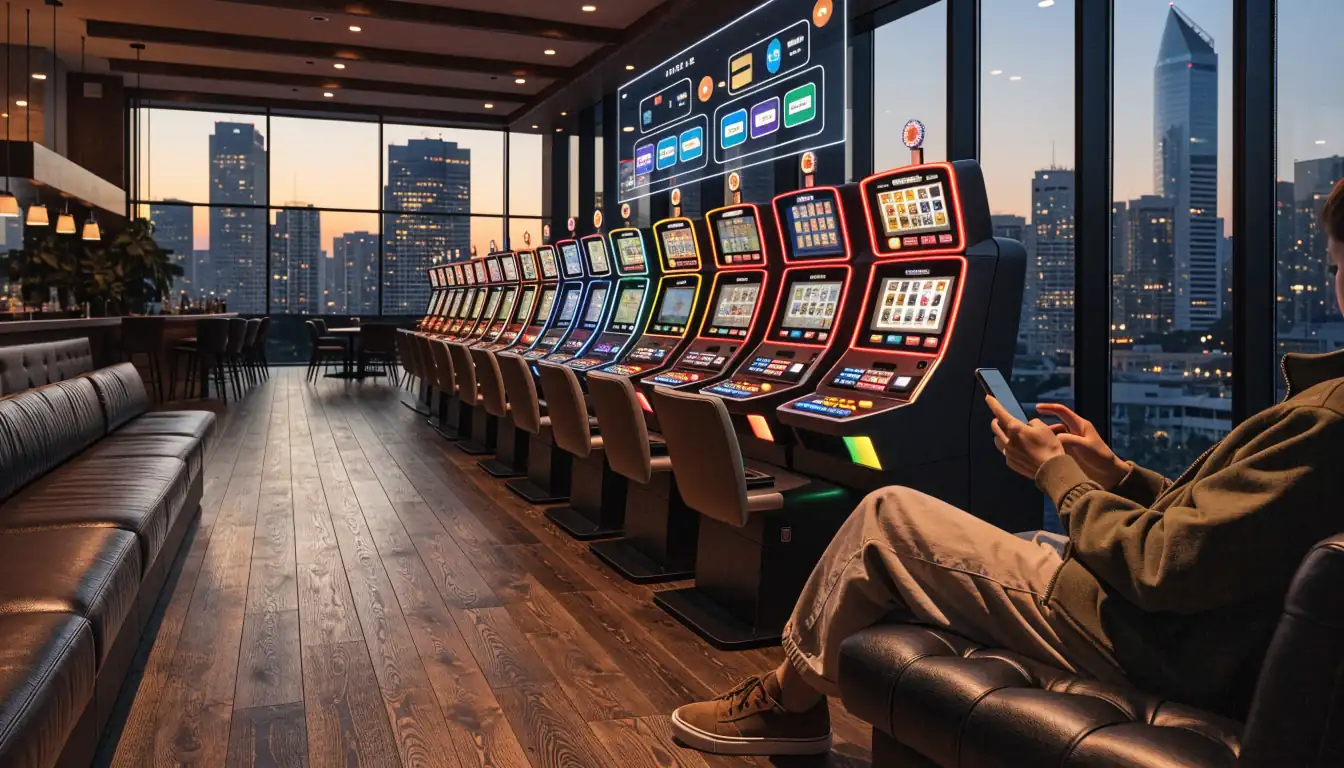
The search for a no deposit bonus code, a free chip or a signup incentive at an online pokies site begins from a false premise: that such offers sit within a regulated system an Australian player can verify. They do not.
What the law actually says
The Interactive Gambling Act 2001 makes it an offence for online operators to offer real-money gambling — pokies included — to Australian residents. There is no domestic licence an online casino can hold for this market, which means there is no regulator standing behind the bonus terms, no licence number to check and no complaint body with authority over the operator. A deposit match, a promo code or a free chip offered to an Australian player is, by definition, an offer made outside the Australian licensing system. Whatever conditions attach to it — wagering requirements, withdrawal caps, expiry dates — the player has no statutory recourse if the operator simply declines to pay.
Sites advertising a house of pokies no deposit signup bonus are typically operated from offshore jurisdictions. That is not illegal for the player; the Act targets operators, not individuals. But the practical consequence is that every term of the offer is enforceable only by the goodwill of a company with no legal obligation to the customer.
Covers pokies regulation, online legality, money-laundering risk and bonus compliance — with AUD 12 billion…
Tax treatment: the one point in the player’s favour
Winnings from gambling in Australia are not taxed for the individual. A payout from a pokies venue or, in practice, from an offshore site carries no personal income tax liability under current arrangements. This is the single part of the transaction the Australian state does not reach.
Compliance risk runs the other way
Operators that ignore the Act face remedial directions, infringement notices, civil fines and reputational damage. For the player, that risk translates into instability: an offshore site offering bonus codes to Australians is one enforcement action or payment-processor freeze away from closing with balances intact.
The honest summary: no deposit bonus codes for Australian pokies players are not a bargain to be compared. They are unsecured claims against unlicensed operators. Winnings are untaxed; the capital is unprotected. That is the full calculation.
Published by the Casino Payment Info team.