
$200 No Deposit Bonus Casino Australia: What Applies

Understanding $200 No‑Deposit Bonuses in Australian Online Casinos
A No Deposit Bonus is a sum of money — or a batch of Free Spins — credited to an account before any deposit is made. In its cash form, it is what the market calls Free Cash: a real balance, denominated in dollars, that the player has not paid for and can wager with immediately after registration. The $200 figure in the headline is the upper end of what Australian-facing offshore casinos advertise under this label, and it is the number that draws most of the attention. The number is also the least interesting part of the offer. What determines whether a $200 No Deposit Bonus is worth claiming is everything attached to it: the wagering requirement, the maximum cashout, the eligible games list, the expiry window, and the legal position of the player who claims it.
This section sets out what the bonus actually is, how it is claimed, what stands between the credited balance and a withdrawable one, and the regulatory backdrop that makes an Australian no‑deposit offer a different animal from the same offer in a licensed European market. The short version of each answer, before the detail: the bonus is promotional credit, not a gift; it is claimed automatically or with a promo code; withdrawal requires satisfying a wagering requirement that is frequently the most expensive condition in the entire offer; and the legal framework in Australia prohibits the supply of online casino games to residents, while leaving the individual player outside the reach of the prohibition.
While a $200 no deposit bonus is the hook that brings players to this page, it’s worth checking what each casino actually offers beyond that headline figure before signing up.
License: Curacao Gaming Control Board (TechSolutions Group N.V.) · Bonus: 100% up to A$250 + 100 free spins (1st deposit) Licensed under Curacao’s Gaming Control Board, this casino welcomes newcomers with a first-deposit package combining a percentage match with a solid batch of free spins.
License: Curacao eGaming OGL/2024/923/0383 (Antillephone N.V.) · Bonus: up to A$2,000 + 100 free spins across 2 deposits · Min. deposit: A$30 Holding a Curacao eGaming license, it spreads a sizeable welcome package across two deposits and keeps the entry threshold accessible with a modest minimum deposit.
License: Curacao eGaming (Roby Games Ltd) · Bonus: 100% up to A$750 + 200 free spins Operating under a Curacao eGaming license, it stands out for pairing a solid deposit match with a generous number of free spins for new players.
License: Curacao eGaming OGL/2023/174/0082 (Dama N.V.) · Bonus: up to A$10,000 + 500 free spins across 4 deposits · Min. deposit: A$15 Licensed via Curacao eGaming, this casino offers one of the more substantial welcome packages on the list, spread across four deposits with a low minimum deposit requirement.
License: Curacao Gaming Control Board · Bonus: up to A$5,000 + 400 free spins Under a Curacao Gaming Control Board license, it backs its welcome offer with a large bonus sum and a generous free spins allocation.
License: Curacao (operating since 2017) · Bonus: 250% up to A$2,000 + 50 free spins on the first of six deposits · Min. deposit: A$20 A long-running Curacao-licensed operator since 2017, it offers a high percentage match spread over multiple deposits with an accessible minimum deposit.
License: Curacao Gaming Control Board OGL/2023/174/0082 (Dama N.V.) · Bonus: up to A$5,000 + 300 free spins across 4 deposits Licensed by the Curacao Gaming Control Board, it structures its welcome bonus across several deposits, combining a large bonus total with a healthy free spins count.
License: Curacao Gaming Control Board OGL/2023/176/0095 (Hollycorn N.V.) · Bonus: 100% up to A$10,000 + 100 free spins Holding a Curacao Gaming Control Board license, it offers one of the larger welcome bonus totals on this list alongside a free spins component.
Bonus: 100% up to A$750 + 200 free spins, 35x wagering · Payout speed: crypto 30-120 minutes, fiat 24-72 hours · Min. deposit: A$30 This casino combines a deposit match with a large free spins package, clear wagering terms, and notably fast crypto payouts alongside standard fiat processing times.
Bonus: up to A$7,500 + 550 free spins across 10 deposits, 50x wagering · Payout speed: crypto under 1 hour, PayID 1-3 business days · Min. deposit: A$20 (A$30 to qualify for the bonus) With a large welcome package spread across multiple deposits, this casino is notable for fast crypto withdrawals and quick PayID processing, though a higher deposit is needed to unlock the full bonus.
What a $200 No Deposit Bonus Actually Is
Strip away the marketing and the mechanics are simple. A casino credits a balance to a newly registered account. The player wagers that balance on the games the terms permit. Winnings accumulate in a bonus wallet, not a cash wallet. Nothing in that wallet is withdrawable until the conditions attached to the bonus are met in full.
No deposit bonuses in Australia come in two primary forms: Free Cash (sometimes structured as chips, particularly at live dealer tables) and Free Spins. Free Cash is the more flexible of the two — it can be spread across whatever games the terms allow, in whatever stake sizes the terms permit. Free Spins are tied to specific slot games named in the offer, at a stake fixed by the operator, with winnings credited to the bonus wallet once the batch is used. A $200 headline figure almost always refers to the Free Cash form; Free Spins offers are advertised by spin count, not by dollar value, and the two formats are not interchangeable.
The important conceptual point, and the one that the advertising does not foreground: the $200 is not money. It is a wagering allowance. The player’s entitlement is to use the balance, not to have it. Whether any of it converts into money the player can withdraw depends entirely on conditions that are published in the bonus terms — and those conditions are where the economics of the offer live.


How the Bonus Is Claimed
There are two claim paths, and only two.
The first is automatic. The player registers an account, completes whatever verification the operator requires, and the bonus balance appears without further action. Operators prefer this path because it removes a step between advertisement and play.
The second is the promo code. The player registers, then enters an alphanumeric code — in the cashier section, in a bonus tab, or sometimes with the support desk — and the credit is applied on validation. Codes exist partly for tracking: they let an operator measure which affiliate or which campaign produced which players. That is worth knowing for a reason unrelated to tracking. An offer that requires a code is an offer that can be missed. A player who registers without the code, makes a deposit, and only then discovers the no‑deposit offer may find that the promotion is available to new accounts only, and that the account is no longer new. The sequence of actions at registration is not a formality; it is a condition.
What registration itself requires varies by operator, and the operators do not publish a uniform standard. Identity verification — documents proving age and address — is part of the process, and the minimum legal gambling age in Australia is 18. An account that cannot pass verification will not convert a bonus balance into a withdrawal, regardless of how the wagering went.
If you fail to enter the promo code during registration, you will miss the no‑deposit bonus entirely.
The Wagering Requirement: Where the Math Lives
Every dollar earned from a No Deposit Bonus is subject to a wagering requirement before withdrawal. This is the single most important condition in the offer, and it is the one that turns a headline number into a calculation.
The mechanics: the operator multiplies the bonus amount — or, in some structures, the bonus plus the winnings derived from it — by a multiplier. The product is the total amount that must be wagered before the balance becomes real money. One worked example, cited in a single industry review of Australian no‑deposit offers, illustrates the arithmetic: a $10 bonus with a 20× wagering requirement requires $200 in bets. The example is instructive not because 20× is a market standard — it is one review’s illustration, not a published norm — but because of the ratio it exposes. The wagering obligation is twenty times the size of the bonus itself. At that ratio, a $200 bonus would require four thousand dollars of turnover before anything is withdrawable. Whether any particular offer imposes a multiplier at that level or another is stated only in the terms of the specific operator; there is no verified figure that applies across the market, and any confident-sounding "average" would be invented.
Three structural details change the calculation materially, and all three are found in the terms rather than the advertisement.
What the multiplier applies to. Bonus-only wagering is cheaper to satisfy than bonus-plus-winnings wagering. The difference compounds over a session, because winnings from bonus funds are themselves treated as bonus funds until the requirement is cleared.


Game contribution. The eligible games list may be restricted, and restricted it usually is. Wagers on some games may not count toward the requirement at all, or may count at a reduced rate. The terms name the eligible games; playing anything else with the bonus balance wastes the allowance. On this point the practical advice from industry reviews is consistent: low house edge games such as blackjack and baccarat are recommended for fulfilling wagering requirements, because every dollar wagered loses less on average, and the requirement is denominated in dollars wagered, not dollars lost. A wagering requirement is a volume obligation. The cheapest way to meet a volume obligation is to route it through games where the house takes the smallest cut per unit of volume.
Conversion and residual wagering. Some operators run a two-stage structure: bonus funds convert to real money once the primary requirement is met, and the converted funds may then carry a further wagering requirement of 1×. A 1× requirement on converted funds is a modest condition as these things go — it means the converted amount must be wagered once more — but it is a condition, and it belongs in the arithmetic before the withdrawal button is pressed.
The honest summary of the wagering requirement: it is designed so that the operator’s statistical edge is applied to a turnover many times the size of the bonus. The bonus is free to the player in the sense that no deposit is required. It is not free in the sense of being a transfer of value. The house edge, applied repeatedly across the required turnover, is the price.
Calculating wagering requirement
The example uses a $10 bonus.
The wagering multiplier is 20×, so multiply $10 by 20.
$10 × 20 = $200 of bets that must be placed before any winnings can be withdrawn.
The Maximum Cashout
Bonus terms may include a maximum cashout limit — a ceiling on what can be withdrawn from a no‑deposit offer, regardless of how much the balance reaches. This is the condition most often overlooked and most often resented, because it operates invisibly until the moment it matters.
The sequence that produces disappointment is standard. A player clears the wagering requirement, checks the balance, and initiates a withdrawal. The operator then applies the maximum cashout: the balance above the cap is removed, and the withdrawal is processed at the cap. The player met every published condition and still receives less than the balance shown. The cap was published — it is in the terms — but it was published in the same document as the wagering requirement, and most players read the multiplier and stop reading.
For an offer advertised at the $200 level, the maximum cashout question is the first question worth asking, before the wagering multiplier: what is the most this promotion can pay out? If the terms cap the payout below what the player considers worth the time, the wagering requirement is irrelevant. The arithmetic runs in that order. There is no verified, market-wide figure for caps on Australian no‑deposit offers; the number, where it exists, is set per operator and published in the terms of the specific promotion. Reading the cap is a two-minute task that settles whether the rest of the terms are worth reading.
Expiry and Time Windows
A bonus balance does not sit indefinitely. The terms define a time window — a validity period within which the wagering requirement must be completed and, in some structures, within which the bonus must first be activated. Miss the window and the bonus and any derived winnings are removed.

The expiry interacts with the wagering requirement in an obvious but under-appreciated way. A requirement satisfied through blackjack and baccarat wagers is satisfied through many small, slow bets. A large turnover obligation and a short window are, together, a demand for either higher stakes or faster games — and higher stakes on a bonus balance increases the variance that can wipe the balance before the requirement is met. The two conditions need to be read as a pair. Neither the market-wide window length nor a typical multiplier exists as a verified figure; both are per-operator terms, and the only authoritative source is the promotion’s own conditions.
Claiming: Automatic vs. Promo Code, and What Can Go Wrong
The claim mechanics deserve a second, closer look, because the failure modes are procedural rather than mathematical.
An automatically credited bonus requires nothing of the player except a completed registration. The risk is the reverse of the code situation: a player who intends to deposit first and claim later may find the no‑deposit credit applied on registration, with the account now bound by that promotion’s terms — including its eligible games restrictions and its maximum cashout — before the player has chosen to accept any conditions at all. Some operators allow the bonus to be declined or forfeited before play; whether that option exists is, again, in the terms.
A code-based claim fails in the other direction: the code is entered late, entered wrong, or not entered at all, and the offer is unavailable. Where a code is published, the entry point is the cashier or the promotions page; where the code is not published, it is distributed through the operator’s own channels, and the offer is effectively invitation-only.
The bonus is added immediately after registration and verification, requiring no further action from the player.
The player must enter an alphanumeric code after registering; failing to do so or entering it incorrectly results in a missed bonus.
In both cases the principle is the same. A no‑deposit promotion attaches to an account at a specific moment, and everything the account does afterward is measured against that promotion’s conditions. The moment of attachment is worth knowing in advance.
Bankroll Logic: Why Players Take These Offers at All
Set against the wagering arithmetic, the case for the No Deposit Bonus is not the expected payout. It is structural.
A no‑deposit offer provides a risk‑free way to explore an online casino. The exploration costs nothing from the player’s own funds: the games, the software, the withdrawal workflow, the live dealer tables, the responsiveness of support. For a player evaluating an offshore operator — where, as discussed below, there is no domestic licence to inspect and no local regulator to complain to — the ability to test the machine before feeding it money has value independent of whether the bonus itself ever converts. Used this way, the bonus functions as a due-diligence tool.
The second structural use is bankroll management. A bonus balance is a layer of funds that is not the player’s money, and wagering it is not drawing down the player’s bankroll. For a player who treats gambling spend as a budget with a ceiling, a no‑deposit offer extends the number of bets available within that budget — or, viewed from the other side, reduces the deposit required to sustain a given session length. Using no‑deposit bonuses this way — as a supplement to, not a substitute for, disciplined bankroll management — is the only framing under which the offer reliably delivers value. The offer does not make the player money; it makes the player’s money last longer, or makes the trial free. That is the whole of the benefit, and it is not nothing.

What the bonus is not is income. Chasing losses with a bonus balance on the theory that the funds are "free anyway" produces exactly the losing behaviour the bankroll discipline exists to prevent. The restrictions section of this article’s approach — do not chase losses, do not exceed the maximum earnings, do not blow past the time window — is not moralising; each violation destroys either the balance or the payout, and both belong to the player up to the moment they are forfeited.
The Legal Backdrop: What Australian Law Actually Says
This is where an Australian no‑deposit offer differs most sharply from its equivalents elsewhere, and where most general-audience explanations get it wrong by omission.
The primary Commonwealth law governing online gambling in Australia is the Interactive Gambling Act 2001 (IGA), introduced with an explicit public-protection and harm-minimisation focus. The IGA prohibits the provision of online casino-style games — slots, poker, blackjack, roulette — to Australian residents. It is an offence to offer online casino gambling in Australia, and there is no pathway to obtain a domestic licence to operate an online casino. The consequence for the player is structural: there are no domestically licensed real-money online casino operators available to Australian players. None. A casino advertising a $200 No Deposit Bonus to Australians is, by definition, operating from outside the domestic licensing system.
One point of the record requires care, because sources conflict on the naming of the legislation: some references cite an Interactive Gambling Act 1997 as prohibiting the provision of online casino games to Australian residents, while the operative Commonwealth statute is consistently identified as the Interactive Gambling Act 2001. The discrepancy is in the citation, not in the effect — the prohibition on providing online casino games to Australians is not in dispute between the two versions.
Illegal operator offers
Offering a no‑deposit casino bonus to Australian residents breaches the Interactive Gambling Act 2001 and can result in enforcement action against the operator.
Two further features of the framework matter to anyone evaluating a no‑deposit offer.
Regulation is layered, not centralised. There is no single overarching statute and no single national gambling authority for gambling in Australia; regulation occurs at both the state/territory level and the federal level. Sports betting operates legally under state and territory licences. Online casino games, poker, and in-play betting are prohibited federally under the IGA. Live in-play betting online is illegal, while live betting placed by telephone is legal — a distinction that illustrates how granular the framework is. The body that enforces the IGA at the federal level is the Australian Communications and Media Authority (ACMA).
The prohibition targets operators, not players. It is not illegal for an individual Australian to play at an offshore-licensed online casino. The law’s penalties fall on the supply side — the operators and, in specified circumstances, the promoters of prohibited services — not on the person who registers an account and claims a bonus. This asymmetry is why the offshore no-deposit market for Australian players exists at all: the demand side is lawful, the supply side is prohibited, and the operators serving that demand sit outside the reach of the prohibition.
This legal position has a practical consequence that no honest treatment of the topic can skip. The standard international advice — "choose a casino licensed by a recognised authority" — translates poorly to the Australian context. There is no domestic licence to check, no public register of licensed online casino operators to consult, and no Australian regulator standing behind the wager. Where international players can escalate a dispute to a licensing authority, an Australian player at an offshore casino has no equivalent domestic recourse. The offshore operators may hold licences issued by other jurisdictions — and the quality of those regimes varies — but "check the licence" in the Australian context means checking a foreign regulator’s register, with whatever weight that carries, not verifying membership of a domestic scheme.

The evaluation burden therefore sits entirely with the player, and the no‑deposit bonus is one of the few instruments that reduces it. A promotion that costs nothing to claim, and that takes the player through registration, verification, wagering, and — if it comes to that — the withdrawal process, is a test of the operator’s entire workflow conducted with the operator’s money. That is the sense in which the legal backdrop, rather than the headline number, is what makes a $200 No Deposit Bonus worth understanding properly.
How the Offer Differs From Other Promotions
Placed against the rest of a casino’s promotional catalogue, the No Deposit Bonus is defined by two absences and one presence.
The first absence is the deposit. Match bonuses — the "100% up to X" format — require the player’s own money before any promotional credit exists. The no‑deposit offer does not. This is why it is structurally risk-free in a way no deposit-linked promotion can be: the downside for the player is measured in time, not funds.
The second absence is commitment. A deposit-linked bonus binds real money to wagering conditions; funds that would otherwise be withdrawable become locked until the multiplier is cleared. A no‑deposit balance was never the player’s money, so no player funds are ever locked. The player who abandons a no‑deposit offer midway loses a promotional balance, not a deposit.
Main insight
A no‑deposit bonus is a risk‑free trial tool, not a source of immediate cash.
The presence is scrutiny. Precisely because no‑deposit offers cost the operator money on every claim with no deposit revenue attached, their terms are the tightest in the catalogue. The wagering requirements on no‑deposit earnings may be fairly high — higher, in the general run of offers, than the requirements attached to deposit bonuses. The maximum cashout, where imposed, is more likely to bind. The eligible games list is more likely to be short. The verification requirements are enforced more strictly, because a no‑deposit offer with loose verification is simply a mechanism for paying out to whoever registers. A player comparing promotions should expect the most restrictive terms in the catalogue to sit on the offer with the friendliest headline.
The Two Formats in Practice: Free Cash and Free Spins
Within the no‑deposit category, the Free Cash and Free Spins formats behave differently in play, and the difference is worth stating precisely.
Free Cash — or chips, at operators that structure the live-table version of the offer that way — is a single balance to be allocated by the player. The allocation decisions are where the value is preserved or lost: routing the balance toward blackjack and baccarat to satisfy the wagering volume at the lowest house edge, and away from games that contribute nothing or little toward the requirement. The eligible games list in the terms defines the corridor; the low-house-edge games within that corridor define the efficient path through it.
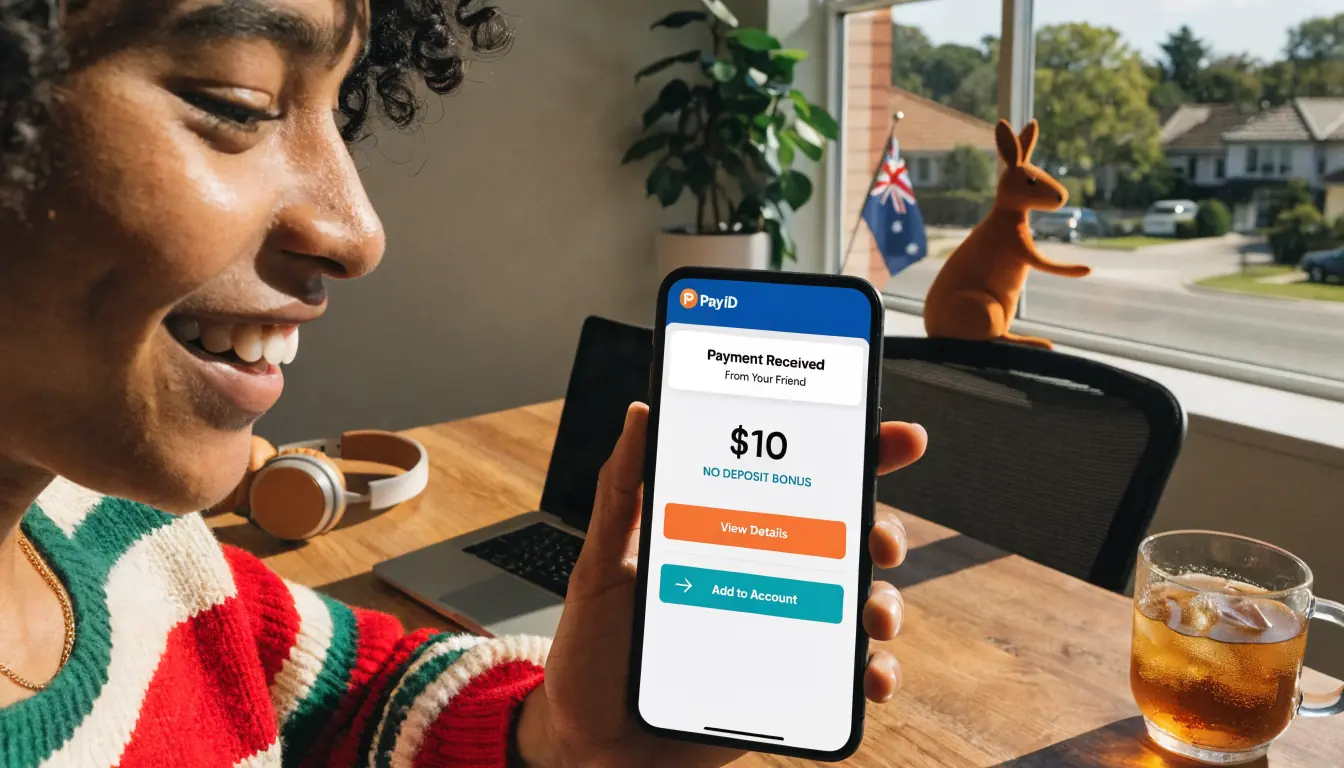
Free Spins are pre-allocated. The games are named by the operator, the stake per spin is fixed, and the player’s only decision is whether to claim. The output of the batch — winnings, if any — lands in the bonus wallet and is then subject to the same wagering machinery as Free Cash. Because the game and stake are fixed, there is no strategic routing; the format is a lottery ticket with extra steps. That is not a criticism — the ticket costs nothing — but it means the Free Spins version of a no‑deposit offer concentrates all of its value in the post-winnings terms, and none of it in anything the player controls.
What the Games Library and Live Tables Look Like
Two verified details round out the picture of what a no‑deposit balance buys access to.
On the software side, Microgaming — one of the providers named in connection with Australian-facing no‑deposit casinos — powers over 600 games. A library of that size matters to a bonus player for one reason: game variety widens the set of eligible games through which a wagering requirement can be routed. A restricted eligible-games list is less of a constraint when the underlying catalogue is large.
On the live side, the dealers at Australian no‑deposit bonus casinos are native English speakers — many with American accents — or speak excellent English with a European accent. The detail is small but it is one of the few things about the live product that can be stated as verified fact rather than advertisement, and for players whose no‑deposit trial includes the live tables, it is the one quality indicator that does not depend on the operator’s own marketing.
Microgaming powers over 600 games, giving players a wide selection of eligible titles for meeting wagering requirements.
A Note on Banking the Payout
Where a no‑deposit balance does clear every condition — wagering complete, cashout under the cap, withdrawal requested inside the window — the money moves through the operator’s payment channels. According to a single industry review of Australian no‑deposit offers, accepted payment methods include credit and debit cards, PayPal, Skrill, wire transfers, and in some cases cryptocurrencies. That list is one review’s observation of the market rather than a fixed standard; the methods actually available on any given account are whatever that operator’s cashier supports, and the cashier is the authoritative source.
Australian law adds a constraint here that shapes the payment picture at regulated operators but sits oddly with the offshore market: domestic gambling rules do not permit credit cards or digital currencies for deposits or betting. Offshore operators serving Australians are outside that rule’s direct reach, which is precisely why the payment environment around offshore no‑deposit bonuses looks different from the domestic wagering environment — and why payment method availability, more than any headline number, is part of the practical due diligence a claimant performs. The deposit side of that question — funding accounts, PayID, and the mechanics of moving money to an offshore operator — is treated separately in the next section of this article, and is not covered here.
Age and Access
The minimum legal gambling age in Australia is 18. This applies to the player regardless of where the operator sits. Offshore registration does not create an exemption from Australian age restrictions, and account verification — the document check that gates withdrawals — is also, in practice, the age check. A no‑deposit bonus is an 18-plus product in every sense that matters: the claim, the play, and above all the payout.
Ensuring you are 18+ and providing verification documents keeps your bonus eligibility intact.
Putting the Conditions in Order
For an offer advertised at the $200 level, the terms deserve to be read in a specific sequence, because each condition determines whether the next one is worth calculating.
- The maximum cashout, if any. This caps the entire exercise. If the cap makes the offer not worth the time, nothing else needs reading.
- The wagering requirement — the multiplier and what it applies to. This is the volume obligation, and it is the largest number in the terms. The worked example from the industry review — $10 at 20× requiring $200 in bets — sets the shape of the arithmetic: the obligation is a multiple of the bonus, and at headline scale it becomes a large multiple.
- The eligible games list and contribution rates. This determines whether the volume obligation can be routed through blackjack and baccarat, or must be burned through games with a higher house edge.
- The time window. This determines whether the volume is achievable at stakes the player is prepared to place.
- The verification requirements. Documents proving age and address, demanded before the payout rather than after.
An offer that survives all five readings is rare, and that is not an accident of any particular operator — it is the economics of giving away wagering balances with no deposit attached. The No Deposit Bonus is best understood not as $200, but as a structured product: a free trial, a bankroll supplement, and a test of an operator’s machinery, with a payout attached whose probability and size are both set by the terms. The terms are public, the arithmetic is simple, and the only expensive mistake available is taking the headline number as the product.
PayID Deposits for $200 Pokie Play: How to Fund Your Sessions
PayID has become a familiar name in Australian banking: an identifier — a phone number, an email address or an ABN — linked to a bank account so that transfers arrive without anyone typing in BSB and account numbers. For players looking to fund a $200 pokie session, the appeal is obvious. The mechanics of the payment itself, however, are only half the picture. The other half is the regulatory environment, and it changes what a "PayID casino" actually is.
How a PayID deposit works
The workflow is short, because PayID was designed to be short:
- Create an account at the casino and complete whatever identity verification the operator requires.
- Open the cashier section and select the bank transfer or PayID option.
- Copy the operator’s PayID identifier and bank details exactly as displayed — the name attached to the account must match, or the bank may flag the transfer.
- Send the $200 from your own banking app. The payment travels through the normal banking system, not through the casino’s platform.
- Wait for confirmation. The casino credits the balance once the transfer is reconciled on its end.
One structural detail matters here: the deposit is a push payment. The casino never touches the player’s banking credentials. What the player sends, the player cannot claw back — a bank transfer sent to a wrong or unverified recipient is, in practical terms, gone. That makes step 3 the step worth double-checking.
What else sits alongside it
According to one industry review, payment methods accepted at casino sites serving Australian players include credit cards, debit cards, PayPal, Skrill, wire transfers, and sometimes cryptocurrencies. What any single operator accepts is set out in its own terms, and those terms — not any market-wide rule — are what governs a specific deposit. There is no published standard here, and operators do not disclose uniform lists.
The regulatory frame: read this part before the first transfer
This is where the transaction stops being ordinary.
Under the Interactive Gambling Act 2001 (IGA) — the primary Commonwealth law governing online gambling in Australia, introduced with a public-protection and harm-minimisation focus — online casino games, including pokies, are prohibited. It is illegal to offer online casino gambling in Australia, and there is no licence an operator can obtain domestically to run one. The Australian Communications and Media Authority (ACMA) is the federal regulator that enforces the IGA.
Two consequences follow for anyone weighing a $200 deposit.
First, no domestic licence exists to check. Advice that works in licensed markets — "verify the operator’s licence before depositing" — has nothing to verify here. There are no ACMA-licensed online casinos, because the licence does not exist. Any casino accepting Australian pokie players is operating from an offshore licence, under a regulator with no presence in Australia.

Second, the player is not the target of the law, but the payment carries no protection. It is not illegal for an individual Australian to play at an offshore-licensed casino; the IGA targets operators, not players. That distinction, however, does not extend to the money. A $200 PayID transfer sent to an offshore operator sits outside the dispute and protection mechanisms that apply to domestic licensed gambling. If the operator fails to credit the deposit, or fails to pay out, the player’s bank cannot reverse the payment on request, and no Australian regulator will take up the complaint.
It is also worth noting that gambling regulation in Australia is not governed by a single statute or a single authority — it operates at both state/territory and federal level — while the specific prohibition on online casino games is federal.
A practical assessment
PayID itself is a reliable payment rail; the banks behind it are not the risk. The risk sits entirely on the receiving end: an operator that cannot be licensed in Australia, cannot be checked against any Australian register, and cannot be compelled by any Australian authority to return a cent. A $200 transfer through PayID is fast and simple in the same way, and to exactly the same degree, that it is final. The two facts are the same fact.
Free $200 Sign‑Up Pokie Bonuses: What You Need to Know
A sign-up bonus built around pokies follows the same mechanics as any No Deposit Bonus: free cash or Free Spins credited without a deposit. What changes is the scope. A generic no-deposit cash bonus lands as a balance the player can carry across the casino’s game range, subject to the eligible-games list in the terms. A pokie-focused sign-up offer is narrower by design — the bonus exists to be played on slot reels, and the conditions attached to it assume that.

Free Cash versus Free Spins
In Australia, no-deposit offers come in two primary forms: Free Cash (or chips) or Free Spins. A $200 headline figure can sit behind either. As Free Cash, it functions as a play balance. As Free Spins, the same headline covers a package of spins on specified pokie titles — and the game restriction is not a footnote here, it is the product itself. Free Spins tied to a pokie bonus cannot be redirected to blackjack or roulette, and any attempt to play outside the specified games voids the play at best.
The Wagering Requirement
No version of this bonus pays out on arrival. Winnings from a no-deposit bonus carry a wagering requirement that must be satisfied before a withdrawal is possible, and for sign-up offers of this size the requirement is rarely a formality. The arithmetic is fixed: a small bonus multiplied by a high multiplier produces a large betting volume before the first dollar becomes withdrawable. A bonus advertised as free is therefore a bonus paid for in turnover, not in cash. The operator discloses the multiplier in the bonus terms; it belongs in the calculation before the registration, not after.

Maximum Cashout
Bonus terms may include a maximum cashout limit. On a $200-scale no-deposit offer, that limit is the number that determines whether the promotion is worth claiming at all — a large headline balance with a low ceiling means the realistic return is the ceiling, not the headline. The limit is stated in the terms of the specific offer; the terms of one operator say nothing about the terms of another.
How This Differs from a Generic Cash Bonus
The differences come down to three points:
- Game scope. A pokie sign-up bonus is locked to slots; a general Free Cash balance can move across eligible games, provided the terms permit them.
- Structure. Free Spins packages carry per-spin values and specified titles, both set by the operator; Free Cash is a single balance figure.
- Same withdrawal rules. Both forms sit under wagering requirements and possible cashout caps. The pokie framing changes where the bonus is spent, not how it converts.
One point on the legal backdrop, since it applies to every offer on this page: online casino games, pokies included, cannot be lawfully offered to Australian residents under the Interactive Gambling Act 2001, and no domestic licence for that activity exists. Any operator promoting a $200 no-deposit pokie bonus to Australian players is doing so from offshore. Playing at such a site is not illegal for the individual — the law targets operators, not players — but there is no Australian licence to check and no local regulator standing behind the offer. ACMA enforces the prohibition against the operators. A bonus denominated in dollars does not change that position.
Can I play online pokies for free?
Yes, you can use a no deposit bonus to play eligible slots for free. Free Spins offers are specifically tied to certain slot games, while Free Cash bonuses can be spread across permitted slots.
What law governs online gambling in Australia?
The Interactive Gambling Act 2001 (IGA) is the primary federal law, enforced by the Australian Communications and Media Authority (ACMA). It prohibits the supply of online casino games to residents, while regulation also occurs at the state and territory level.
Which software providers power the recommended online casinos?
One of the software providers is Microgaming, which powers over 600 games. The specific providers for any individual casino are listed in its platform details.
What advanced security features are used in Australian casinos?
Security features include identity verification to prove age and address before allowing withdrawals, ensuring players are at least 18 years old. Specific technical measures vary by operator.