
Best Pokies in Perth: Types, Features and Where to Play

Understanding Pokies in Perth: Types, Features and Player Considerations
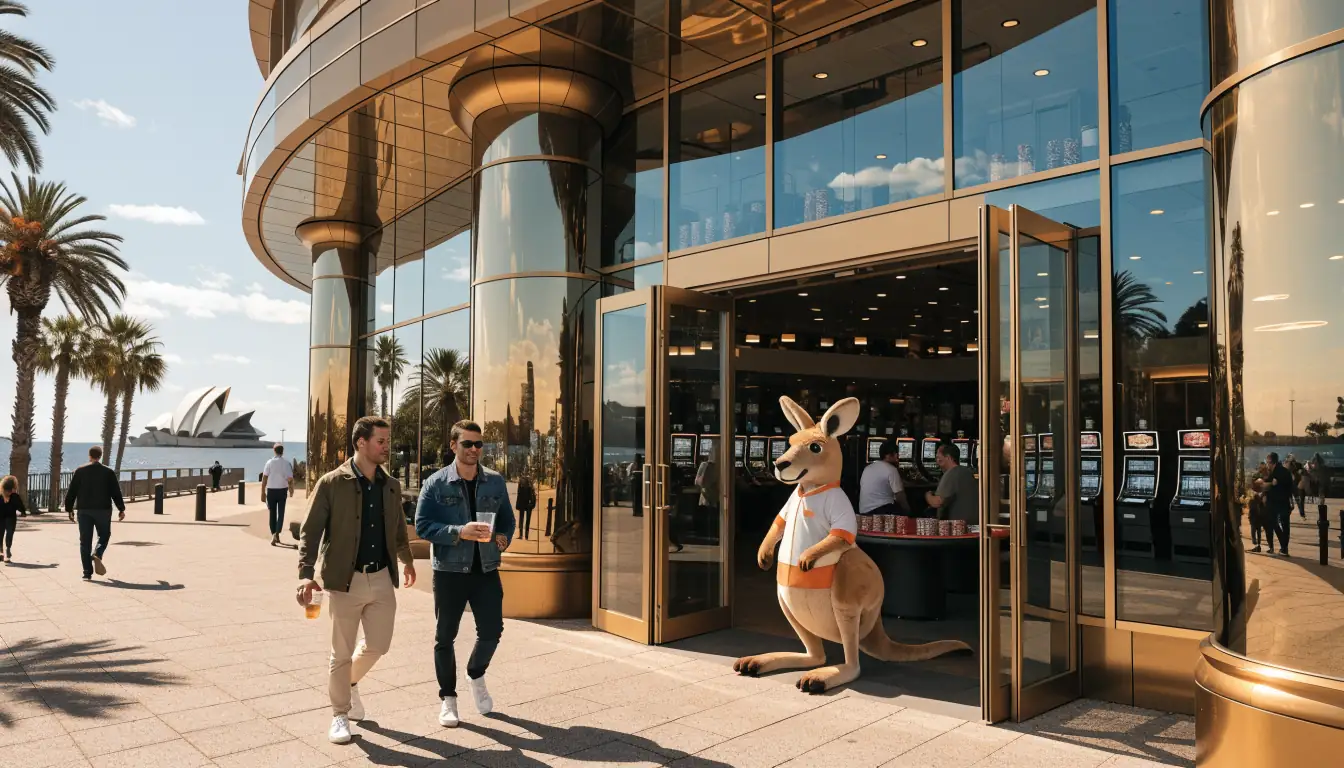
"Pokies" is the word Australia uses for what the rest of the world calls slot machines, and in Perth it carries a specific legal weight that the generic term does not. Western Australia has some of the strictest gaming laws in the country, and access to physical casinos is limited in Western Australia in a way that has no equivalent on the east coast. Crown Perth is the only legal venue for traditional poker machines in Western Australia. There are no machines in pubs, no machines in clubs, no suburban gaming rooms of the kind that Sydney and Melbourne take for granted. A Perth player looking for physical pokies has exactly one address, and that fact shapes everything else about how the local market works.
This section is about the machines and the games themselves: what a pokie actually is once you strip away the cabinet and the lights, how the mathematics inside it is built, and which features matter when comparing one game against another. The regulatory environment, the bonuses offered by online platforms and the specifics of payout percentages are treated separately. What follows is the mechanical foundation — the part a player needs to understand before any comparison of venues is meaningful.
Since Perth pokies fans often play online between casino visits, it helps to know which platforms are properly licensed and offer solid welcome deals before you sign up.
License: Curacao Gaming Control Board (TechSolutions Group N.V.) · Bonus: 100% up to A$250 + 100 free spins (1st deposit) Licensed under the Curacao Gaming Control Board via TechSolutions Group N.V., this casino greets new players with a 100% match up to A$250 plus 100 free spins on the first deposit.
License: Curacao eGaming OGL/2024/923/0383 (Antillephone N.V.) · Bonus: up to A$2,000 + 100 free spins across 2 deposits · Min. deposit: A$30 Operating under a Curacao eGaming licence held by Antillephone N.V., it offers a two-deposit welcome package worth up to A$2,000 plus 100 free spins, with a A$30 minimum deposit to get started.
License: Curacao eGaming (Roby Games Ltd) · Bonus: 100% up to A$750 + 200 free spins Licensed through Curacao eGaming under Roby Games Ltd, this casino provides a 100% bonus up to A$750 alongside 200 free spins for newcomers.
License: Curacao eGaming OGL/2023/174/0082 (Dama N.V.) · Bonus: up to A$10,000 + 500 free spins across 4 deposits · Min. deposit: A$15 Backed by a Curacao eGaming licence via Dama N.V., it stands out for a generous four-deposit bonus scheme reaching up to A$10,000 plus 500 free spins, with a low A$15 minimum deposit.
License: Curacao Gaming Control Board · Bonus: up to A$5,000 + 400 free spins Licensed by the Curacao Gaming Control Board, this casino offers a sizeable welcome bonus of up to A$5,000 plus 400 free spins.
License: Curacao (operating since 2017) · Bonus: 250% up to A$2,000 + 50 free spins on the first of six deposits · Min. deposit: A$20 A Curacao-licensed casino running since 2017, it offers a 250% match up to A$2,000 plus 50 free spins on the first of six deposits, with a A$20 minimum deposit.
License: Curacao Gaming Control Board OGL/2023/174/0082 (Dama N.V.) · Bonus: up to A$5,000 + 300 free spins across 4 deposits Operating under a Curacao Gaming Control Board licence via Dama N.V., it spreads a bonus of up to A$5,000 plus 300 free spins across four deposits.
License: Curacao Gaming Control Board OGL/2023/176/0095 (Hollycorn N.V.) · Bonus: 100% up to A$10,000 + 100 free spins Licensed by the Curacao Gaming Control Board through Hollycorn N.V., it offers one of the larger welcome packages here — a 100% bonus up to A$10,000 plus 100 free spins.
Bonus: 100% up to A$750 + 200 free spins, 35x wagering · Payout speed: crypto 30-120 minutes, fiat 24-72 hours · Min. deposit: A$30 This casino offers a 100% bonus up to A$750 plus 200 free spins with 35x wagering, and pays out quickly — crypto within roughly 30-120 minutes and fiat within 24-72 hours, with a A$30 minimum deposit.
Bonus: up to A$7,500 + 550 free spins across 10 deposits, 50x wagering · Payout speed: crypto under 1 hour, PayID 1-3 business days · Min. deposit: A$20 (A$30 to qualify for the bonus) With a bonus of up to A$7,500 plus 550 free spins spread across ten deposits at 50x wagering, this casino also offers fast crypto payouts under an hour and PayID withdrawals within a few business days, requiring a A$30 deposit to qualify for the bonus.
What a Pokies Machine Actually Is
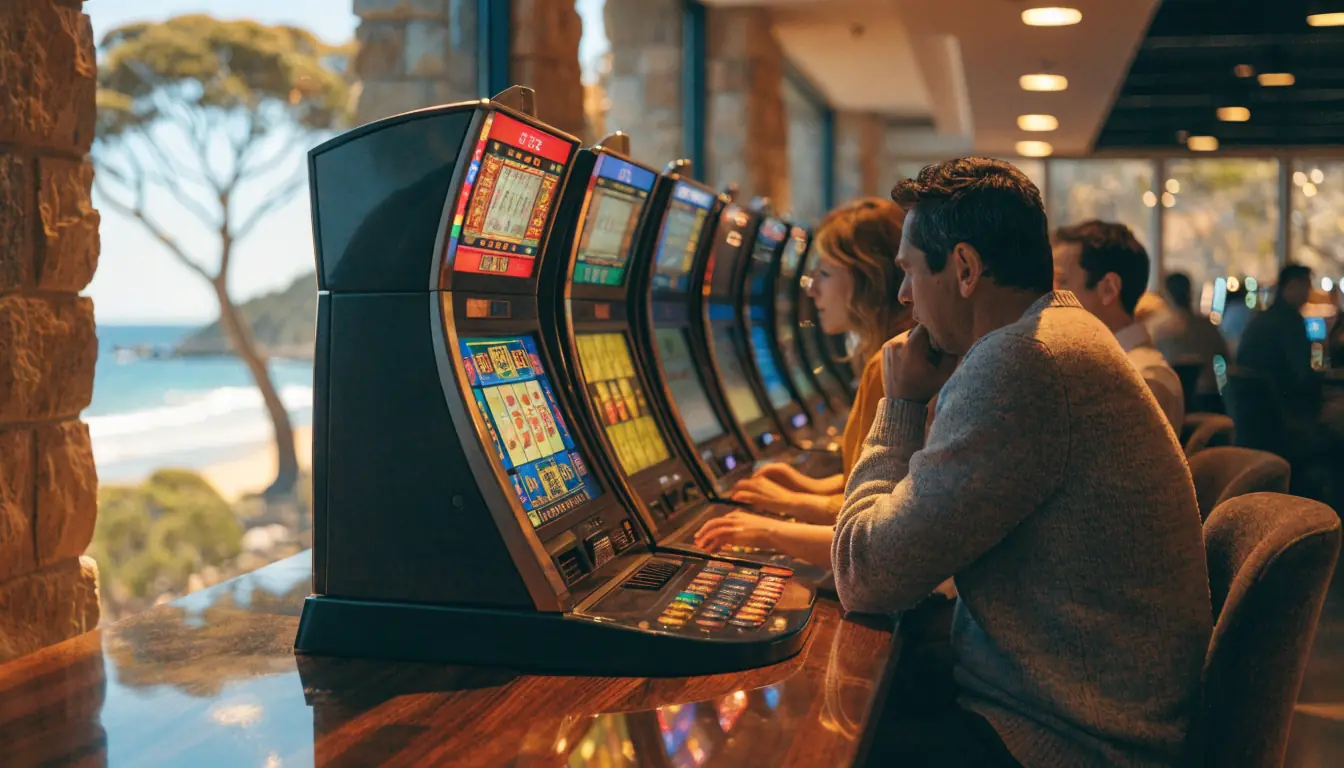
A pokie is a game of pure chance built on a random number generator, or RNG. Every spin, the RNG produces an outcome, and that outcome determines where the reels stop. There is no memory of previous spins, no "warming up," no machine that is "due." The reels themselves are theatre: the outcome is decided before they begin to move, and the animation is a presentation of a result that already exists. Understanding this single point eliminates most of the folklore that surrounds these machines — hot streaks, cold machines, times of day when a game "pays better." None of it survives contact with how the software actually works.
The RNG itself is not simply trusted on faith. Independent testing laboratories — iTech Labs and eCOGRA are the two names that recur throughout the industry — test RNG outputs and verify reported RTPs for games. This matters for a simple reason: a game can claim any return-to-player figure it likes in its marketing, but a verified figure has been checked against the actual behaviour of the code by a party with no stake in the outcome. When comparing games, the difference between a stated RTP and a certified one is the difference between an advertisement and a measurement.
A pokie, structurally, consists of a few standard components:
- Reels and rows. The vertical columns and horizontal lines that display symbols. The classic format is three or five reels.
- Paylines. The fixed or adjustable paths across the reels on which matching symbols must land for a win. Modern games frequently replace paylines with “ways to win” systems, where matching symbols in adjacent reels pay regardless of exact position.
- Symbols. Regular symbols that pay according to a paytable, plus special symbols — wilds that substitute for others, scatters that trigger features, bonus symbols that unlock separate game modes.
- The paytable. The published list of what each combination pays. Every legitimate game exposes this; a player who has not read it is playing blind.
- Bet controls. Coin value, bet level, and the total stake per spin, which scales all payouts proportionally.
None of these components involves skill. There is no decision a player can make during play that changes the expected outcome of a spin. The only decisions that matter are made before play begins: which game to play, at what stake, and for how long. That is why the features discussed below — RTP, volatility, and the structural options a game offers — deserve more attention than any superstition about how to press the button.
RTP: The Number That Governs Everything
Return to Player, or RTP, is the single most important number attached to any pokie. RTP is a long-term theoretical measure of a game’s return over many spins. It expresses, as a percentage, how much of all money wagered on a game the mathematics of that game will return to players over an extended period. A game with a higher RTP returns more over the long run; a game with a lower RTP returns less. That is the entire content of the number, and its limitations need to be stated as clearly as its meaning.
RTP Limitation
RTP is measured over millions of spins; a single session can deviate dramatically, so players should not expect the advertised percentage to guarantee short‑term results.
The first limitation is time. RTP is measured over millions of spins. A single session — even a long one — is a rounding error against that sample size. A player can sit at a 97% RTP game and lose the entire session budget, and the game’s mathematics remains exactly as advertised. The second limitation is that RTP says nothing about the shape of the returns. Two games with identical RTP can distribute their returns completely differently: one in frequent small amounts, one in rare large amounts. That shape is described by volatility, which is treated below.
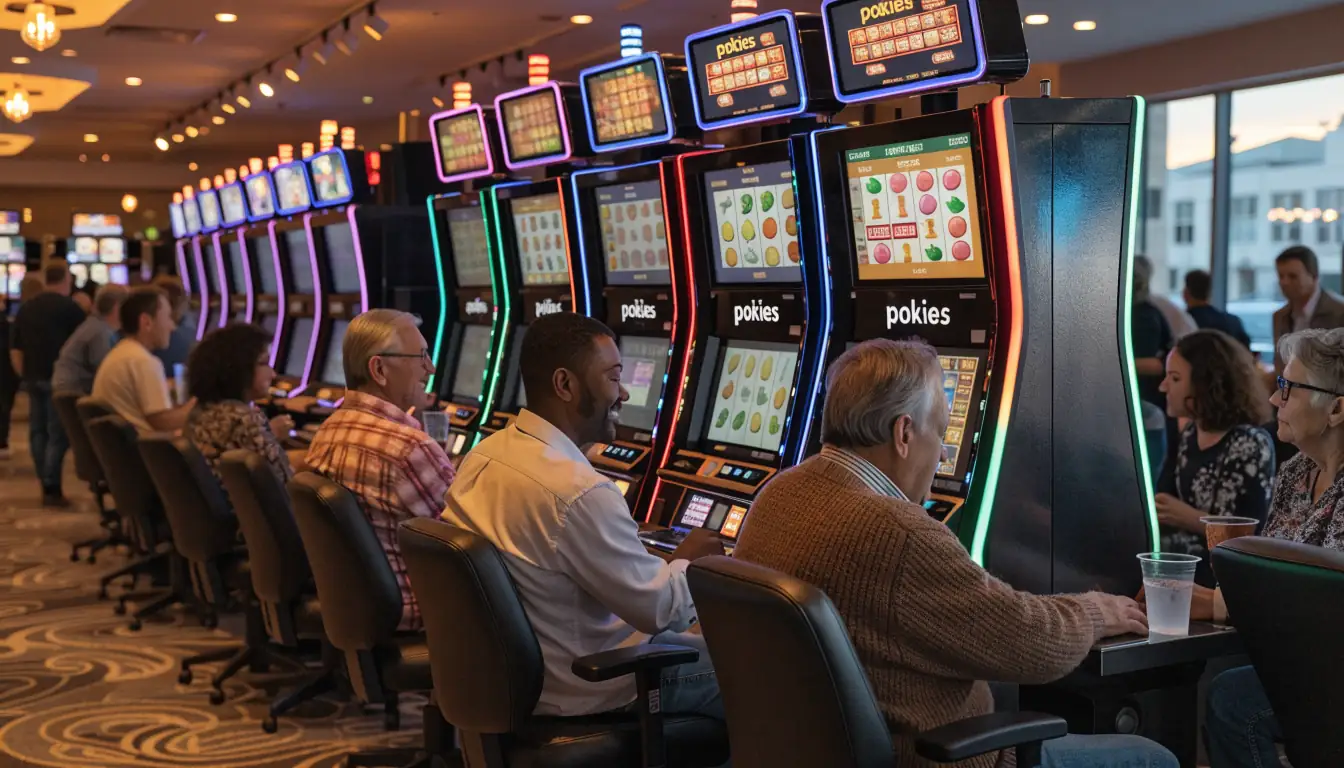
The third point is the comparison that matters most to a Perth player. Physical pokies have RTPs of about 85%–92%, while online slots typically have RTPs of 96%–98%, according to one industry review. The gap is structural, not accidental. A physical machine is a piece of hardware occupying licensed floor space with maintenance costs, venue obligations and a regulated return framework attached; an online game is software with a different cost structure. Whatever the explanation, the arithmetic consequence is plain: over the long run, the same volume of wagering faces a materially different expected cost depending on whether it happens on a cabinet or on a screen. The house edge — the difference between 100% and the RTP — is the price of playing, and that price differs between the two formats. The full implications of these payout percentages are examined in a later section; here, the point is simply that RTP is the number a comparison starts from.
One practical note on verification: game developers publish RTP figures, and reputable online platforms display them in each game’s information panel. Where a figure has been independently verified by iTech Labs or eCOGRA, that verification is worth more than the developer’s own claim. A player comparing two games should compare verified figures against verified figures. Comparing a certified number against a marketing number is not a comparison.
Volatility: How a Game Pays, Not How Much
If RTP answers "how much does the game return overall," volatility answers "in what pattern." Volatility describes how a pokie tends to pay. A low-volatility game produces frequent small wins, with the balance maintained by keeping the large payouts rare or modest. A high-volatility game produces long stretches of nothing, punctuated by occasional large hits. Both can carry the same RTP; the experience of playing them is entirely different, and so is the budget each one requires.
The practical consequence is direct: high-volatility pokies can quickly deplete a session budget. This is not a character flaw of the games or a warning born of caution — it is arithmetic. A game designed to pay rarely must, by definition, absorb many bets between payouts. A player who brings a budget sized for a low-volatility game to a high-volatility one will typically run out of funds before the mathematics has a chance to express itself. The reverse is also true: a player who wants the possibility of a genuinely large win from a modest stake is choosing high volatility, knowingly accepting that most sessions will end at zero.
Volatility describes how a game distributes its wins. Matching a game’s volatility to your session budget is essential to avoid running out of funds prematurely.
For a Perth player, the volatility question has a particular relevance, because the choice between physical and online play changes which end of the volatility range is realistically available. Online platforms allow players to filter games by provider, volatility, and features — meaning a player can decide in advance whether the evening’s budget is going toward frequent small returns or a long shot at a large one, and select accordingly. On a physical floor, the selection is whatever the venue stocks, and the filtering happens by walking around.
The way to think about matching volatility to a budget is straightforward. A session budget is a fixed amount that the player has decided is spendable. Low volatility stretches that budget across many small returns, producing a longer session and a flatter result curve. High volatility concentrates the risk: shorter sessions, more of them ending at zero, and a small number ending well ahead. Neither is correct. But arriving with a low-volatility budget at a high-volatility game is a mismatch between plan and product, and it is the most common structural reason a session ends earlier than intended.
The Feature Set: What Modern Pokies Offer
Beyond the core mechanics, modern pokies layer on features that change the texture of play without changing the underlying mathematics. Understanding what each feature actually does — as opposed to what its name suggests — separates the meaningful from the decorative.
Wild symbols substitute for regular symbols to complete winning combinations. Expanded wilds cover entire reels; sticky wilds remain in place across spins; multiplying wilds apply a multiplier to any win they participate in. All of these increase the frequency or size of wins in the base game, which is already priced into the game’s RTP.
Scatter symbols pay or trigger features regardless of their position on the reels, rather than needing to sit on a payline. The typical function is to trigger a round of free spins.
Free spins are spins that do not deduct from the player’s stake, usually triggered by landing a required number of scatters. They frequently carry enhanced conditions — additional wilds, accumulating multipliers, or a changed reel set — and in many games this is where the bulk of the large payouts live. A game’s real character is often less in its base play than in what its free spins round does.
Multipliers apply a fixed or increasing factor to wins. In some games they accumulate across a sequence of spins; in others they appear only within bonus rounds.
Respins are additional spins triggered by a specific event, often involving sticky or expanding symbols. They occupy a middle ground between base play and a full bonus round.
Gamble features invite the player to wager an existing win — typically by guessing a card colour or a related proposition — for the chance to double it or lose it entirely. The arithmetic here deserves its own caution: a gamble feature is a separate, roughly even-priced bet attached to the game. Using it after every win converts a low-volatility game into a higher-volatility one. A player who consistently gambles wins has effectively rewritten the game’s payout shape while leaving its RTP untouched.
Substitute for regular symbols, often expanding or sticking to increase win frequency or size.
Pay or trigger features regardless of position, commonly used to launch free‑spin rounds.
Bonus spins that do not cost the player’s stake and often carry enhanced wilds or multipliers.
A paid option that instantly triggers the bonus round, turning the feature into a separate high‑variance wager.
Bonus buy options are the most consequential feature introduced in recent years. Some pokie games feature bonus buy options, according to one industry review — the ability to pay a fixed multiple of the base stake to trigger the bonus round directly, skipping the spins that would otherwise lead there. The feature changes the game’s economics in a way that deserves clear statement. A bonus buy is a large bet with a known cost and an uncertain return: the player pays, for instance, many times the base stake, and receives the bonus round’s outcome immediately. The RTP logic still holds over many purchases, but each individual purchase is a concentrated, high-volatility bet. For budget management, a bonus buy should be treated as its own wager, sized against the session budget on its own terms — not as a shortcut within the existing stake structure. A session budget that accommodates base spins at a certain stake does not automatically accommodate even one bonus purchase at that stake.
The honest summary of all features is this: they redistribute when and how a game pays, and they are priced into the RTP. Features make games more interesting to play and change the volatility profile; they do not change the long-run cost of playing. A player choosing between games should read features as a description of the experience — frequent events versus rare ones, base-game wins versus bonus-round wins — rather than as a lever on the return.
Filtering and Selection: How Platforms Let Players Compare
The practical difference between the physical and online experience is not just the RTP gap noted above. It is the ability to select the game before committing to it. Online platforms allow players to filter games by provider, volatility, and features. The significance of this is easy to understate, so it is worth spelling out what the filters actually deliver.

Filtering by provider matters because game developers have recognisable design signatures. Big Time Gaming is the studio associated with the Megaways mechanic and a high-volatility design philosophy. ELK Studios builds games with clustered feature chains. Lightning Box and BGaming each carry their own structural tendencies. 3 Oaks, Fair Go, Kingmaker, Goldenbet, Bets.io and Lucky Elf round out a provider landscape where the studio name is often a reliable shorthand for the game’s character. A player who has learned that a particular studio’s design suits their budget and temperament can filter to that studio and skip everything else.
Filtering by volatility is, as discussed, the single most useful selection tool for budget management. It converts what would otherwise be trial-and-error — discovering a game’s payout behaviour by losing money to it — into an informed choice made in advance.
Filtering by features serves the same purpose from the other direction: a player who specifically wants bonus buy options, or wants to avoid them, or wants a game whose free spins round carries accumulating multipliers, can restrict the visible library accordingly.

On a physical floor, none of this filtering exists. The player sees what the venue has stocked, at the RTP the venue’s machines operate at, with whatever volatility those specific titles carry. That is not an argument against the physical experience — the casino floor offers things a browser window does not — but it is a difference in the information available before money is committed. The machine does not display its volatility; the player either knows the title or does not.
The Perth Context: One Venue, Two Markets
The legal geography of Western Australia produces a market with a shape found nowhere else in the country, and it is worth stating plainly because so much general advice about pokies assumes the eastern-states model.
In New South Wales and Victoria, poker machines are distributed through thousands of pubs and clubs. In Perth, they are not. Crown Perth is the only legal venue for traditional poker machines in Western Australia. The result is that the phrase “Perth pokies” refers, in physical terms, to a single location — and every question about where to play physical machines in Perth has the same answer. Searches for venues, clubs, or late-night options in the suburbs return nothing, not because the information is hidden but because the thing itself does not exist. Western Australia’s strictness on this point is a settled policy difference, not an oversight.
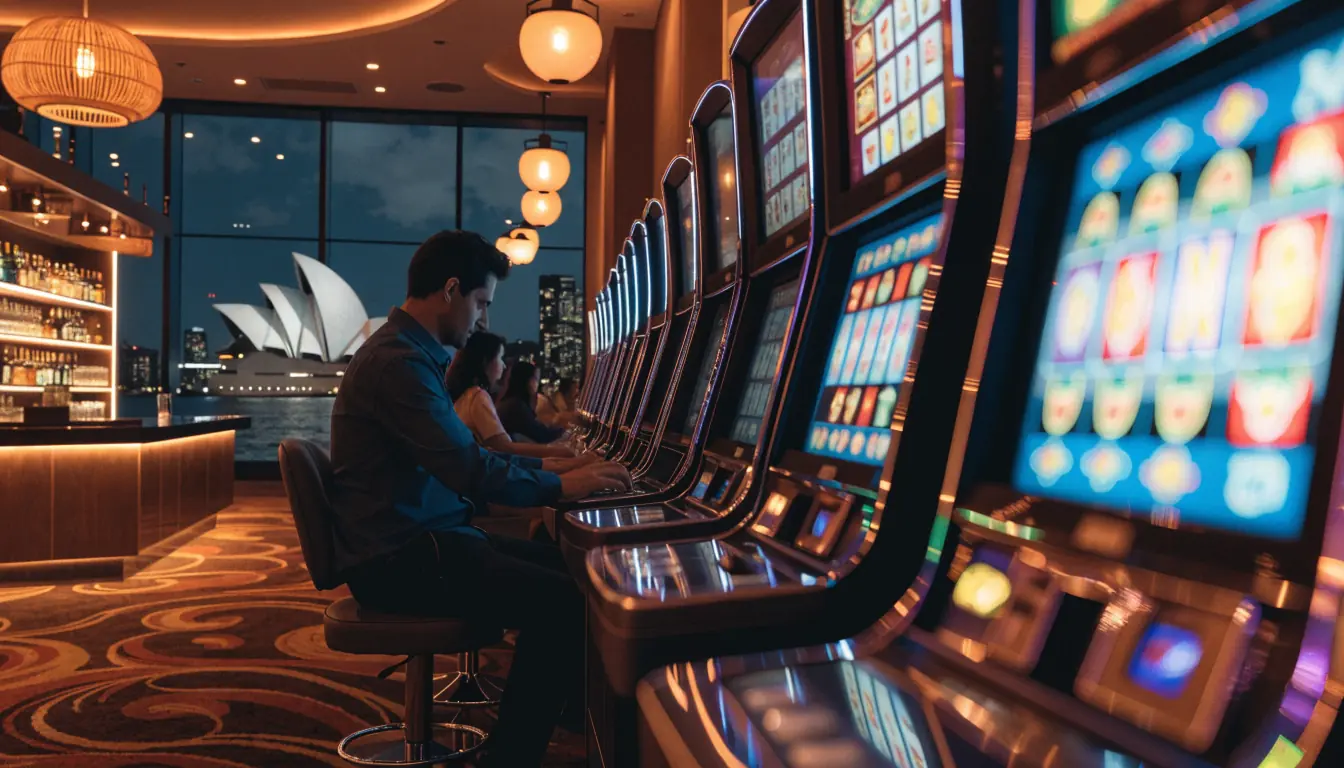
This has two practical consequences worth naming here. The first concerns the searches people run for opening hours, round-the-clock play, and machines available "now." In a city where the physical option is concentrated in one venue, questions about availability at a given hour frequently resolve to the online market instead — and the online market, by its nature, does not close. Availability at any hour is a structural property of browser-based play, not a feature of any particular platform. The specifics of how online platforms serving Australian players operate, and under what licensing, are the subject of the next section.
The second consequence concerns the game itself. Everything described above — RNG mechanics, RTP, volatility, features — applies identically to a cabinet on the Crown Perth floor and to a game running in a browser. The mathematics does not know where the screen is. What differs between the two environments is the selection available, the RTP range at which games operate, and the information a player can gather before playing. Those differences are real and material, and they are quantified elsewhere in this article. But the foundation is the same: a random number generator, a published return, a volatility profile, and a set of features that shape the experience without changing the underlying cost.
Types of Pokies: A Working Taxonomy
The pokie library, taken as a whole, sorts into recognisable categories. The boundaries blur at the edges — modern games borrow across categories freely — but the taxonomy is useful for describing what a game is before deciding whether to play it.

Classic three-reel games. The direct descendants of the original machines: three reels, a handful of symbols, a paytable readable in ten seconds, no bonus rounds to speak of. These games tend toward low volatility and minimal feature complexity. Their appeal is simplicity itself; their limitation is that the payout ceiling is correspondingly modest. For a player whose goal is a long session on a small budget, they remain a rational choice.
Five-reel video pokies. The standard modern format. Five reels, multiple paylines or ways-to-win systems, wilds, scatters, free spins rounds, and frequently a narrative theme layered over the mechanics. This is the category where providers compete most aggressively on features, and it spans the full volatility range — which is exactly why the volatility filter discussed above earns its keep. Two five-reel games that look identical on the surface can sit at opposite ends of the payout-behaviour spectrum.
Megaways-style games. Built on dynamic reel mechanics where the number of symbols on each reel changes every spin, producing a different number of ways to win on each outcome. Big Time Gaming originated the mechanic and it has since spread across the industry through licensing. These games are typically high-volatility: large numbers of ways to win, but wins concentrated in feature rounds, with base play that can run long and dry. The budget implications discussed under volatility apply to this category with particular force.
Progressive jackpot games. A category defined not by reel structure but by a jackpot that grows as players across the network wager, paying out in full to a single trigger. The structural fact worth stating plainly: a progressive jackpot is funded from the game’s returns. A portion of every wager that would otherwise be returned to players is diverted into the jackpot pool, which means the base RTP of a progressive game — the return available to the player not hitting the jackpot — sits below the headline figure, and the jackpot itself is a lottery-priced long shot layered on top. Players choose these games for the ceiling, not the return, and should do so with that arithmetic in view.
Hold-and-win / respin games. Built around a core mechanic where special symbols lock in place and award respins, with the round continuing while new special symbols land. 3 Oaks is among the studios associated with this format. These games offer a middle path on volatility: the hold-and-win round triggers often enough to structure the session, while still carrying meaningful payout potential within the round.
Games with bonus buy options. Not a reel format but a purchasing model, discussed above — any of the above categories may or may not offer a bonus buy. Where present, it functions as a separate high-stakes wager on the bonus round’s outcome.
Reading a Game Before Playing It
Given everything above, the efficient way to evaluate a pokie before committing money is short enough to list. The order matters, because each step eliminates more games than the last.
- Check the RTP. Read the game’s information panel, not its promotional copy. Prefer figures that independent testing by iTech Labs or eCOGRA has verified over figures that exist only in a developer’s description.
- Check the volatility. The game information or the platform’s filter will state it. Match it to the session budget, not to the mood — the mismatch between the two is the most common avoidable cause of a session ending early.
- Read the paytable. Five minutes with the symbol values and the feature descriptions establishes what the game actually pays for, and where its meaningful wins live — base game or bonus round.
- Note the feature set, especially bonus buys. If the game offers a bonus buy, know its cost relative to the base stake before playing, and decide in advance whether the session budget includes it. An unplanned bonus purchase is a bet that was never sized.
- Check the provider. Studio name is a reliable shorthand for design philosophy once a player has sampled a few. Filtering by provider, volatility and features — an option online platforms provide — does in seconds what used to require losing money across a dozen games to learn.
This sequence applies equally to a game on the Crown Perth floor and a game in a browser, with one caveat noted already: on the floor, the information is harder to obtain, the RTP range is lower, and the selection is whatever the venue holds. Online, all five steps can be completed before a single dollar is committed. The choice of environment — and the legal framework that shapes it — is treated in the sections that follow. What this section establishes is the constant: beneath every cabinet and every browser window, the game is an RNG, a published return, a volatility profile, and a set of features, and every one of those four is knowable in advance.
Online and Crown Perth Casino Pokies: Licensing, Bonuses and Banking
The legal geography of pokies in Perth
Western Australia has some of the strictest gaming laws in the country, and the layout of the market reflects that. Access to physical gaming machines is limited in a way that has no equivalent in the eastern states: Crown Perth is the only legal venue for traditional poker machines in Western Australia. There are no machines in pubs or clubs, and the state’s legislation — the Gaming and Wagering Commission Act 1987 framework — has kept it that way for decades.
Online, the picture is different in structure but strict in its own way. Under the Interactive Gambling Act 2001, it is illegal to offer online casino games to Australian residents, and no domestic licence for that type of gambling exists. The law targets operators, not players: it is not illegal for an individual Australian to play at an offshore-licensed online casino. The practical consequence is that online pokies platforms serving Australian players operate under licences issued by Curaçao eGaming, not by any Australian regulator. There is no local licence to check and no local registry to consult — a point worth stating plainly, because generic advice about "verifying a licence with your regulator" simply does not map onto this market.

So the choice facing a Perth player is narrow: physical machines at Crown Perth, or offshore online platforms licensed abroad. Neither option involves an Australian online casino regulator, because no such body exists for this product.
Crown Perth: the single physical option
Crown Perth’s status as the sole legal venue means everything that happens on a physical machine floor in Western Australia happens there. For players looking for high-limit play, the venue is where it exists — there is no second location to compare against, and no pub or club alternative. That concentration is the direct result of state policy rather than market preference.
The venue also operates within the state’s harm-minimisation framework. Self-exclusion from pokies is available to Perth players through the venue’s own programs, and support services such as Gamblers Help operate alongside them. For anyone whose play has stopped being a budgeted entertainment expense, exclusion arrangements are the mechanism designed for exactly that situation — and at a single-venue market, they are correspondingly straightforward to enforce.
Bonuses: what is actually on the table
Offshore platforms competing for Australian players lead with welcome offers, and per one industry review, these include deposit matches and free spins. That formulation is worth a closer look, because the value of a bonus is decided by its conditions, not its headline.
The conditions that matter are wagering requirements — how many times bonus funds must be turned over before a withdrawal is permitted — and any caps on what the bonus can pay out. One industry review reports that at least one operator offers bonuses with no wagering requirement at all, where winnings from the bonus are withdrawable immediately. At the other end of the spectrum, offers with heavy turnover conditions can lock a deposit behind play the player never intended. The arithmetic is simple: a bonus is only worth what remains after its conditions are met, and those conditions belong in the reading before the deposit, not after.

No-deposit offers deserve the same treatment, only more so. A no-deposit bonus from an offshore platform is not free money; it is a marketing spend by the operator, structured so that most claims never reach withdrawal. Whether that trade is worthwhile depends entirely on the attached terms, which vary by operator and change over time.
Banking: deposits, withdrawals and what the tests measured
Deposits and withdrawals are where offshore platforms differentiate themselves most concretely, and where claims are easiest to verify or disprove. One industry review conducted real-money stress tests using A$50 deposits via PayID and Bitcoin specifically to measure withdrawal times — deposits in, withdrawals out, timed end to end. That methodology matters: stated processing times and observed processing times are different things, and only the second one describes what a player actually experiences.
The same review reports that several platforms support fast crypto withdrawals, and that some Australian-friendly casinos offer instant cashouts. The qualification is important — this is what one review measured, on a specific set of platforms, at a specific time. Processing speed is not a fixed property of the market; it is a property of individual operators, subject to change. A withdrawal time verified at sign-up is worth re-checking before it matters.
Two structural points on banking deserve separate mention. First, payment rails matter: PayID and Bitcoin cover very different ground, and platforms built around browser-based interfaces — as one industry review describes them — handle both without requiring a native app install. Second, identity verification sits between a withdrawal request and the money. Government-issued ID is a standard prerequisite before any withdrawal, and the platform that processes it once, cleanly, at sign-up is worth more than a headline processing speed, because verification delays are where fast withdrawals usually stop being fast.

Mobile access
For players who access online pokies via offshore casinos, mobile play runs through browser-based interfaces as often as through dedicated apps — a pattern one industry review attributes to the platforms serving this market. The practical test is unglamorous: whether the game library loads and plays identically on a phone browser, and whether account functions — deposits, withdrawal requests, bonus terms — are reachable without a desktop. A platform that handles real-money functions cleanly on mobile, per the same review’s mobile performance criteria, is doing the part of the job that matters after the welcome screen.
How this market compares
The comparison a Perth player is actually making is between a heavily restricted physical market with one venue and no local alternative, and an offshore online market with no Australian regulator standing behind any of its operators. Crown Perth offers a licensed, supervised floor within a strict state framework. Offshore platforms offer breadth of games and payment speed under a Curaçao licence, with the player carrying the diligence burden that a domestic regulator would otherwise carry. Neither option is a free lunch; they are two different sets of conditions, and the conditions — not the marketing — decide the outcome.
Perth Pokies Payout Percentages: What Players Can Expect
Payout percentage — the return to player, or RTP — is a long-term theoretical measure of a game’s return over many spins. It is not a forecast for one session: any single run can finish far above or below the stated figure, and the gap closes only across a large volume of play.
The figures themselves differ by venue type. According to one industry review, physical pokies carry RTPs of about 85%–92%, while online slots typically sit in the 96%–98% range. The gap is structural, not a matter of picking the right machine — venue-based games carry costs that online titles do not.
For a Perth player comparing the two, the arithmetic is straightforward: over the long run, a higher RTP returns more of what goes in. The short run stays what it has always been — a coin toss with better paperwork.
Can I play online pokies in Australia?
Yes, Australian players can access online pokies via offshore casinos licensed by Curaçao eGaming.
What online pokies pay out the most?
Online pokies typically have RTPs of 96%–98%, compared to 85%–92% on physical machines. To find the best returns, filter games by their verified RTP figures and look for certified results tested by iTech Labs or eCOGRA.
Do casinos offer welcome bonuses?
Yes, welcome bonuses include deposit matches and free spins. Some platforms, like Winz, even offer bonuses with no wagering requirement.
Can I play online pokies for free?
Yes, some pokie games feature bonus buy options and platforms like Boho Casino offer a no deposit bonus, allowing you to play without funding your account first.
How can a player verify that an online casino holds a valid licence in Australia?
Online pokies platforms serving Australian players operate under licences from authorities like Curaçao eGaming. To verify this, check the licensing information displayed on the casino’s website.