
Best Pokies in Sydney: RTP, Volatility and Legal Rules
Understanding Pokies in Sydney: RTP, Volatility and Legal Landscape
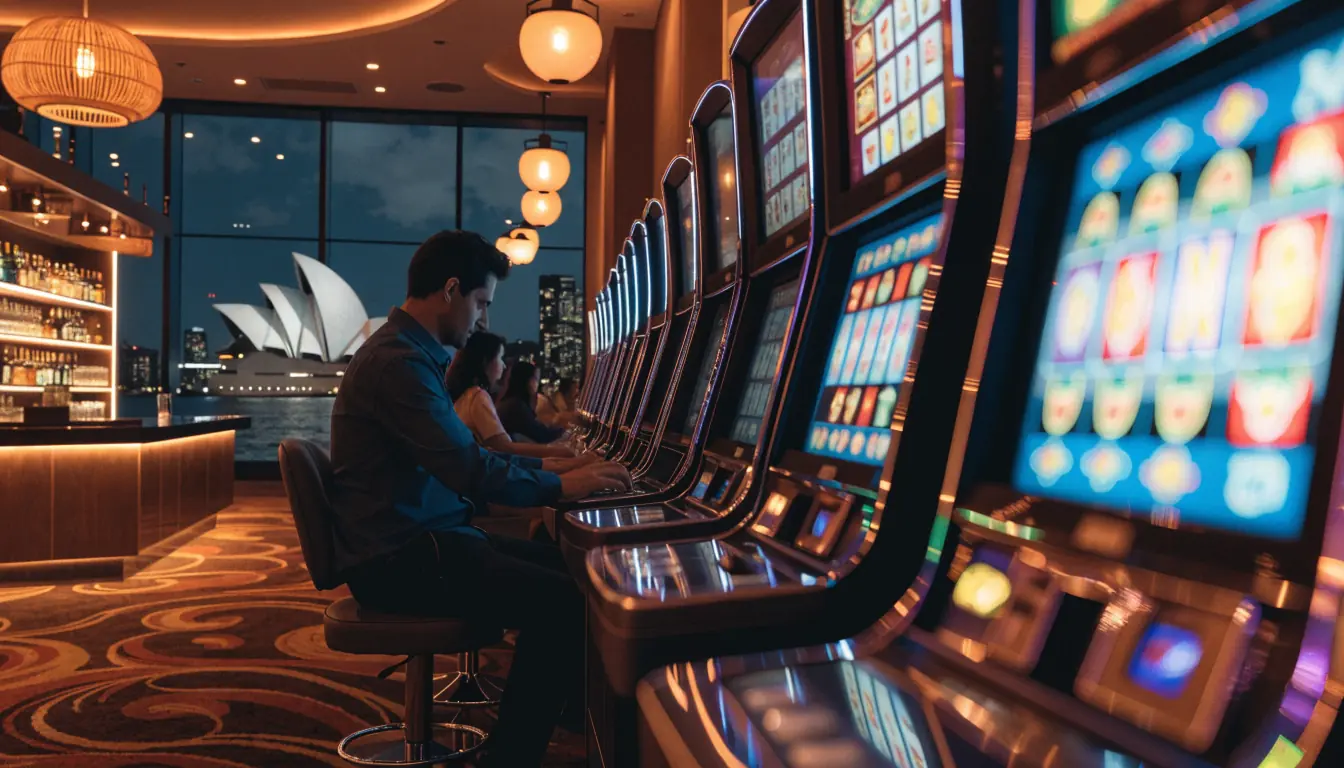
Pokies hold a peculiar position in Sydney’s entertainment economy. Nowhere else in the world do gaming machines sit in such dense concentration inside pubs and clubs, and nowhere else is the vocabulary quite so local — a "pokie" in Sydney is what most of the world calls a slot machine, and the word carries with it an entire regulatory history that shapes what a machine may return, when it may operate, and who may play it. Before comparing specific venues or specific titles, three concepts determine almost everything about the experience: the return to player (RTP), the volatility (variance) of the game, and the legal framework that separates what NSW venues may lawfully offer from what offshore online platforms can push into the market.
What RTP Actually Measures
RTP is a long-term theoretical measure of how much a game returns over many spins. The emphasis belongs on every word of that definition. It is long-term: the figure is calculated across millions of simulated or actual spins, not across a Tuesday evening session. It is theoretical: no individual player’s outcome is bound to it in the short run. And it is a measure, not a promise — a game does not "pay out" its RTP to each player in sequence; it distributes returns in an uneven pattern governed by the machine’s internal mathematics.
With so many pokies sites competing for Sydney players in 2026, it helps to know the licensing, bonus terms, and payout details behind each option before you sign up.
License: Curacao Gaming Control Board (TechSolutions Group N.V.) · Bonus: 100% up to A$250 + 100 free spins (1st deposit) Licensed by the Curacao Gaming Control Board under TechSolutions Group N.V., this casino welcomes newcomers with a matched deposit bonus plus free spins on the first deposit.
License: Curacao eGaming OGL/2024/923/0383 (Antillephone N.V.) · Bonus: up to A$2,000 + 100 free spins across 2 deposits · Min. deposit: A$30 Operating under a Curacao eGaming licence via Antillephone N.V., it offers a sizeable multi-deposit bonus with free spins and a low minimum deposit to get started.
License: Curacao eGaming (Roby Games Ltd) · Bonus: 100% up to A$750 + 200 free spins Holding a Curacao eGaming licence through Roby Games Ltd, this operator pairs a solid deposit match with a generous batch of free spins for new players.
License: Curacao eGaming OGL/2023/174/0082 (Dama N.V.) · Bonus: up to A$10,000 + 500 free spins across 4 deposits · Min. deposit: A$15 Licensed under Curacao eGaming via Dama N.V., it stands out with a large welcome package spread across several deposits, free spins, and an accessible minimum deposit.
License: Curacao Gaming Control Board · Bonus: up to A$5,000 + 400 free spins Regulated by the Curacao Gaming Control Board, this casino offers a substantial welcome bonus combined with a large number of free spins.
License: Curacao (operating since 2017) · Bonus: 250% up to A$2,000 + 50 free spins on the first of six deposits · Min. deposit: A$20 A Curacao-licensed operator running since 2017, offering a high-percentage bonus spread across six deposits, free spins on the first one, and a modest minimum deposit.
License: Curacao Gaming Control Board OGL/2023/174/0082 (Dama N.V.) · Bonus: up to A$5,000 + 300 free spins across 4 deposits Licensed by the Curacao Gaming Control Board through Dama N.V., it provides a generous bonus split across multiple deposits along with a healthy free spins allocation.
License: Curacao Gaming Control Board OGL/2023/176/0095 (Hollycorn N.V.) · Bonus: 100% up to A$10,000 + 100 free spins Operating under a Curacao Gaming Control Board licence via Hollycorn N.V., it offers one of the larger matched bonuses on this list plus free spins.
Bonus: 100% up to A$750 + 200 free spins, 35x wagering · Payout speed: crypto 30-120 minutes, fiat 24-72 hours · Min. deposit: A$30 Offers a deposit bonus with free spins and clearly stated wagering terms, plus fast crypto payouts alongside standard fiat processing times.
Bonus: up to A$7,500 + 550 free spins across 10 deposits, 50x wagering · Payout speed: crypto under 1 hour, PayID 1-3 business days · Min. deposit: A$20 (A$30 to qualify for the bonus) Provides an extensive multi-deposit bonus with free spins and defined wagering requirements, backed by quick crypto and PayID withdrawal options.
The practical consequence is that two players on the same machine, in the same hour, with the same budget, can have outcomes that bear no resemblance to each other. A 96% RTP machine does not return 96 cents on every dollar fed into it. It returns a mixture of nothing, small amounts, moderate amounts and — rarely — large amounts, such that the aggregate across the machine’s lifetime trends toward the stated percentage. Session outcomes are governed far more by volatility than by RTP, a distinction that matters enormously when choosing between games and is routinely ignored.
The NSW Statutory Floor: 85 Percent
In New South Wales, the mathematics of the machines is not left to the market. Land-based machines in NSW must legally operate at a minimum RTP of 85%. That floor is a legal requirement, not a competitive benchmark: a venue cannot lawfully configure a machine below it, and the configuration is subject to regulatory oversight rather than the venue’s discretion.
The floor creates a wide band. A machine set at the statutory minimum returns materially less over its lifetime than a machine set near the top of the legal range, and the difference compounds relentlessly across thousands of spins. For a recreational player, the difference between 85% and a higher setting is invisible on any given night — volatility drowns it out — but as a structural matter, the machines in Sydney pubs and clubs are engineered to retain a meaningful share of everything wagered on them. That is the business model. The RTP floor defines the worst-case version of it.
There is a persistent folklore that certain venues or certain machines "run looser" than others. The only verifiable statement available on this point is the statutory floor itself: every lawful machine in NSW returns at least 85%, and no publicly available register identifies which machines sit where within the legal band. Anecdote fills the space that data does not occupy, which is precisely why anecdote should be treated with suspicion here.
Online Pokies and the RTP Gap
Online titles present a different picture. According to one industry review, online pokies often exceed 96% RTP — a figure that, if accurate for a given title, sits well above the NSW land-based floor. The structural reasons are straightforward: an online game has no cabinet to maintain, no floor staff to roster and no venue lease to service, so the operator’s cost base per machine is a fraction of a physical venue’s.
That gap does not make online play automatically better, for two reasons. First, the legal status of online pokies in Australia is fundamentally different from that of land-based machines — a matter examined in detail below, and one that no RTP percentage can offset. Second, an online title’s stated RTP is only as reliable as the operator publishing it. Offshore platforms are not subject to Australian testing regimes, and a number displayed on a promotional page has a different evidentiary weight than a figure embedded in NSW regulatory compliance.
Legal Risk
Online pokies are not legally offered to Australian players; accessing offshore platforms may breach the Interactive Gambling Act.
The same industry review that flags the online RTP advantage also advises against choosing online pokies with RTP below 96%, treating that threshold as a minimum standard rather than an aspiration. As a filtering heuristic the logic is sound — within a single operator’s library, the RTP of each title is published, and there is rarely a reason to select the mathematically worse option. The threshold should be understood as that review’s editorial position rather than an established market norm, but the arithmetic behind it is not in dispute: over a long enough horizon, percentage points convert directly into money retained or returned.
Volatility: The Statistic That Governs the Session
If RTP describes a machine’s lifetime behaviour, volatility (variance) describes its temperament. The mechanics are simple in outline. Low volatility pokies offer frequent small wins; high volatility pokies offer infrequent large wins. The long-run return can be identical across both profiles. Everything about the experience of reaching that return is different.
On a low-volatility game, the balance drifts downward in small increments, punctuated by modest returns that partially offset the decline. Sessions tend to be long, the swing is shallow, and the bankroll survives extended play. On a high-volatility game, long stretches return nothing at all, followed by occasional payouts large enough to recover the drought — or not. The distribution is the point: the same RTP is delivered as either a slow bleed with frequent consolation, or as a series of cliffs.
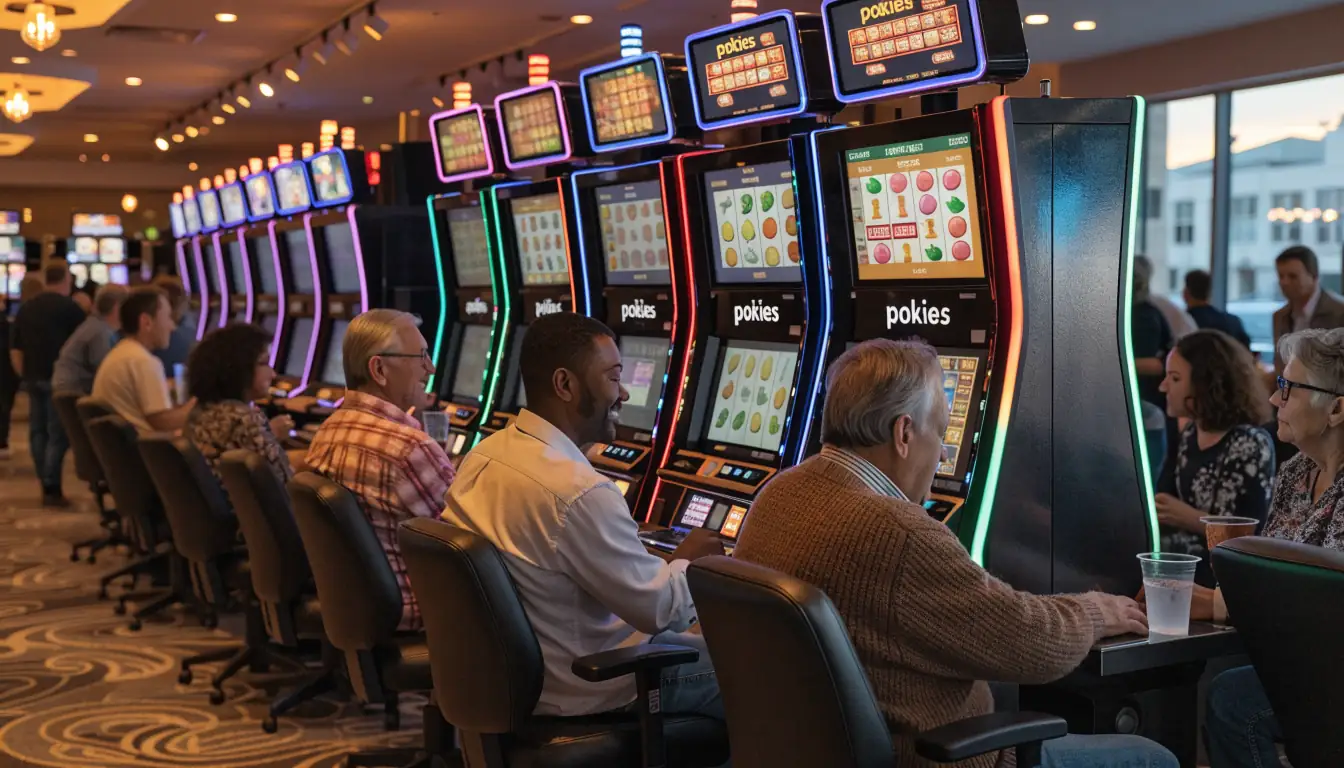
One industry review warns that high-volatility pokies and expensive bonus features can quickly burn through a session budget. The warning deserves emphasis because it describes the mechanism, not the outcome. Feature Buy options — the ability to purchase direct entry into a bonus round rather than waiting for the triggering combination to land — concentrate the volatility into a single upfront payment. The purchase price is fixed and known; the bonus round’s return is neither. Buying features on a high-variance game converts the session budget into a small number of high-stakes draws, and the arithmetic of that conversion is unforgiving: the RTP applies to the purchase price, but the variance applies to the experience of losing several purchases in sequence.
The practical discipline follows from the structure rather than from any moral position: the amount a player is prepared to spend should be decided before playing and adhered to. A high-volatility game does not reward a half-sized bankroll with patience — it simply ends the session sooner. Matching the game’s variance profile to the actual budget, rather than to the desired outcome, is the only variable fully within the player’s control.
Hit Frequency: The Third Number
Between RTP and volatility sits a third statistic that receives less attention: hit frequency, the share of spins that return any win at all. According to moviemaker.com, a balanced pokie should have a hit frequency between 25% and 35% — meaning roughly one in three to one in four spins produces some return, however small.
Hit Frequency Range
A balanced pokie typically has a hit frequency between 25 % and 35 % of spins producing any win.
The number deserves the same caveat as any single-source figure: it is one outlet’s editorial standard, not a regulatory requirement, and it should be presented as such. But the concept it describes is real and useful. A game with a high hit frequency feels generous even when its RTP is unremarkable, because the balance column keeps moving. A game with a low hit frequency can have an identical RTP and feel punitive, because the intervals between returns stretch and the balance only falls. Hit frequency is the statistic that most directly shapes the felt experience of a session — and it is the one players most often fail to check before committing a bankroll.
The three numbers do independent work. RTP sets the long-run expectation; volatility sets the size distribution of outcomes; hit frequency sets the rhythm of the session. A title with a published 97% RTP and punishing variance will behave nothing like a title with the same RTP and frequent small returns. Comparing pokies on RTP alone is the equivalent of comparing investments on yield alone, without reading the risk column.
Named Titles and What Can Be Verified
Specific games circulate in discussion of high-RTP play, and the verifiable details are worth separating from the marketing. Merge Up carries an RTP of 97.25%, according to moviemaker.com — a figure that, if accurate, places it near the top of the range commonly discussed for online titles. Cash the Gold is associated with a 97.3% RTP in the same body of coverage. Reactoonz 2, from Play’n GO, is a widely distributed title whose mechanics — cascading clusters rather than paylines — sit firmly in the high-volatility category. Gates of Olympus 1000 is another high-variance title with a Feature Buy mechanic attached.

Each of these figures comes from a single source and should be treated as reported rather than independently confirmed. What can be said without qualification is the comparative logic: within a single operator’s library, the published RTP of each title is directly comparable, and titles at or above the 96% threshold coexist with titles materially below it. The selection decision is made at the title level, not the venue level — which is precisely why the statistics above matter more than the signage on the door.
The Land-Based Map: Where Pokies Legally Operate in Sydney
Sydney’s land-based pokie landscape divides into two tiers: the two casino complexes and the vastly larger network of registered clubs and hotels.
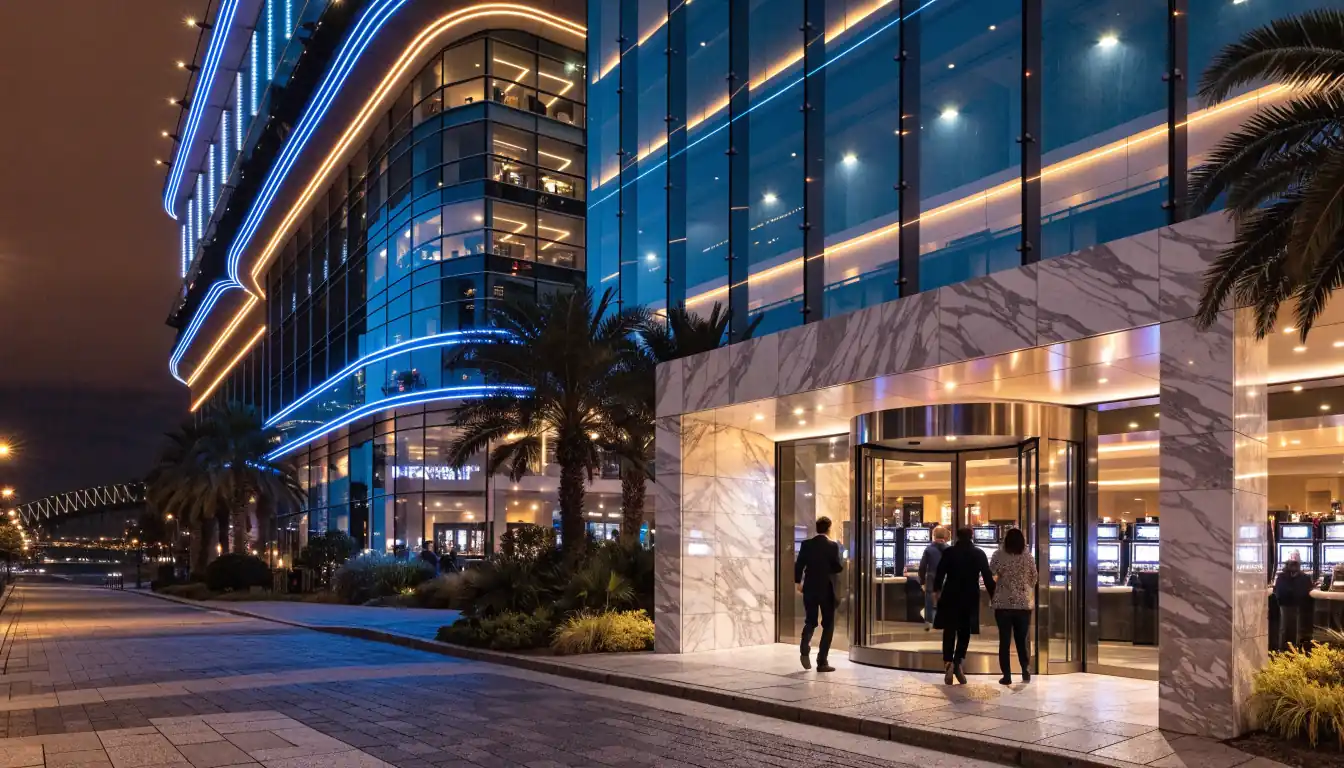
Crown Sydney, at Barangaroo, operates under a casino licence with its own regulatory conditions, and its gaming offer is oriented toward the premium end of the market — table games prominently, with electronic gaming machines present within the licensed casino environment. The Star Sydney, at Pyrmont, is the city’s long-established casino and carries one of the largest concentrations of electronic gaming machines in the state. Between them, the two casinos account for the only venues in Sydney where casino-style gambling is lawful in the full sense — poker, blackjack, roulette and pokies under a single roof, in person.
Premium casino at Barangaroo with a large floor of electronic gaming machines, responsible‑gambling officer on duty and the standard 4 am–10 am shutdown window.
Long‑established casino at Pyrmont, similar machine offering, same regulatory obligations and shutdown schedule.
The second tier is where the overwhelming majority of Sydney’s machines actually sit: registered clubs and hotels across every suburb. Clubs in the NSW model are community organisations — leagues clubs, sports clubs, RSL clubs — that derive a large share of revenue from gaming machines, with proceeds directed toward community purposes under the club scheme. Bankstown Sports Club is among the largest examples in the state. Venues of this kind operate under the same statutory RTP floor as the casinos, the same shutdown rules, and additional obligations tied to their machine count. Churchill’s Sports Bar represents the smaller end of the licensed hotel spectrum, where a modest bank of machines operates alongside the ordinary business of a bar.
Geography shapes access more than most visitors expect. Around Sydney Airport, the pokie density is a function of the surrounding suburbs — Mascot, Rockdale, Arncliffe — where licensed clubs and hotels operate under standard NSW conditions rather than any special airport regime. North Sydney’s venues operate under the same rules; the North Sydney local government area has historically taken a restrictive attitude toward gaming machine approvals, and the practical effect is that the dense clusters sit just across its boundaries. The frequently searched promise of "24 hour pokies" runs directly into the statutory shutdown examined below: no lawful venue in NSW offers continuous round-the-clock machine play, because the law closes the machines for a fixed window every morning. Venues marketing themselves as open overnight are open as venues; the machines inside them are not.

The NSW Operating Rules: What the Law Requires of Venues
Three venue-level requirements in NSW are worth knowing because they define the environment inside every lawful pokie room in the state.
First, venues with more than 20 gaming machines must have a Responsible Gambling Officer on duty during gaming hours. The threshold matters: it places the obligation on the large clubs and hotel complexes where most machines are concentrated, and the officer’s role is not decorative — the position exists to identify and intervene in situations of visible gambling harm, administer venue exclusion arrangements, and serve as the human layer of the state’s harm-minimisation framework.
Second, gaming machines must be shut down in most pubs and clubs between 4:00 AM and 10:00 AM. The shutdown is mechanical and universal: the machines stop accepting play for that six-hour window regardless of the venue’s opening hours. This is the provision that renders "24 hour pokies" a legal impossibility in NSW. A venue may be licensed to serve drinks through the night; its gaming floor goes dark on schedule. The window was chosen deliberately — it covers the hours in which extended play correlates most strongly with loss-chasing behaviour.
Third, ATMs in pokies venues must be located at least 5 metres from gaming rooms. The distance requirement is modest in absolute terms, but the design intent is explicit: the walk to the machine is a pause, and pauses interrupt cycles of immediate reinvestment. Cash cannot be withdrawn at the seat; credit betting is prohibited; the friction is the policy.
ATM Distance
Machines must be located at least 5 m from any ATM, a rule designed to introduce a pause between cash withdrawals and play.
Alongside these sit the structural protections that define the state’s harm-minimisation approach. Gaming machine play is restricted to persons aged 18 and over — the legal gambling age in Australia, enforced at venue entry and enforced more strictly still in the casinos, where identification is checked systematically. Self-exclusion programs operated through venues and through the ClubSAFE scheme allow a person to bar themselves from participating venues, and the schemes carry real administrative weight rather than operating as informal agreements.
One point of genuine financial significance follows: recreational players in Australia generally do not pay tax on their winnings. Gambling winnings are not treated as income for the typical player, because the tax system does not regard recreational gambling as a business. The carve-outs exist for those who gamble as a profession — a category the tax office defines narrowly — but for the ordinary player, a win at The Star or at a suburban club is received gross. The house edge is the only levy applied to the session, and it is applied on the way in.
The Federal Layer: The Interactive Gambling Act
The land-based framework governs machines a player can walk to. The online environment is governed by an entirely separate body of federal law, and the separation is absolute in a way that surprises many players.

The Interactive Gambling Act 2001 (IGA) is the primary Commonwealth law governing online gambling in Australia. It was introduced with an explicit public-protection purpose and a focus on harm minimisation, and its central prohibition is unambiguous: the IGA prevents Australian-licensed operators from offering online pokies and table games to locals. Online casino games — slots, poker, blackjack, roulette — are prohibited under the Act. There is no domestic licensing pathway for real-money online casino operations. An operator cannot obtain an Australian licence to run online pokies; the category of “Australian-licensed online casino” does not exist.
Enforcement sits with the Australian Communications and Media Authority (ACMA). The Authority polices the IGA through a suite of instruments that include formal warnings, requests to internet service providers to block access to prohibited services, and enforcement action against operators and their advertising channels. ACMA’s blocking activity has expanded substantially over the past decade, and the list of blocked domains grows continuously — a fact that shapes the operational reality of offshore platforms serving Australian players, which respond to blocking by rotating domains.
The Act’s history includes two amendments that closed specific gaps. The 2017 amendment shut the in-play betting loophole — the practice of offering "click-to-call" live wagering that had grown around the edges of the prohibition on online in-play betting — and pushed offshore operators out of that grey zone. Live in-play betting remains unlawful online in Australia, with telephone betting as the lawful exception. The 2023 Credit and Other Measures Act banned credit cards and digital currency as payment methods at licensed online wagering services, extending to the betting sector a principle long applied in venues: gambling on credit is not a lawful mode of gambling.
Operator vs Player Liability
The Interactive Gambling Act targets operators; Australian players are not criminally liable for playing on offshore sites.
A documentary discrepancy is worth naming rather than smoothing over. Some references describe the Interactive Gambling Act 1997 as the statute prohibiting the provision of online casino games to Australian residents; the operative federal statute is in fact the Interactive Gambling Act 2001. The 1997 dating appears in circulation and appears to be an error or a conflation — no 1997 Interactive Gambling Act governs Australian online casino prohibition. Players researching the legal position will encounter both dates in the wild, and the discrepancy itself is a useful reminder of how unreliable secondary gambling-legal content can be.
The Offshore Reality and What the Law Says About Players
The IGA’s prohibition is directed at operators, not at individuals. It is not illegal for an individual Australian to play at an offshore-licensed online casino; the offence lies in providing the service, not in consuming it. This asymmetry is deliberate — the Commonwealth’s policy is to attack supply while declining to criminalise demand — and it produces the current landscape: a domestic market in which no lawful online pokie operator exists, adjacent to an offshore market in which numerous operators continue to accept Australian players.
That landscape requires clear-eyed description rather than reassurance. An offshore casino holding, for instance, an Anjouan gaming licence is licensed by a jurisdiction that imposes real but minimal regulatory obligations, and that licence confers no standing under Australian law. Operators in this space — platforms of the kind marketed under names such as Bizzo Casino, Goldenbet, Need for Spin, Rolling Slots, Wild Tokyo and others — accept Australian players because the prohibition on their doing so is enforced against them only episodically, through blocking and warning rather than prosecution in absentia. Game content on these platforms comes from the same major studios that supply regulated markets worldwide — Aristocrat, the Australian-headquartered manufacturer that dominates the domestic physical machine market; NetEnt; Pragmatic Play; Hacksaw Gaming; Evolution Gaming at the live-table layer; BGaming in the crypto-facing segment — and the presence of familiar studio names says something about the games’ internal mathematics but nothing about the platform’s solvency, its payout practices, or the enforceability of any dispute.
The distinction that matters for a Sydney player weighing the options is this: a dispute at The Star Sydney or at a licensed club is a dispute inside a regulatory system with an operator licence to lose, complaint mechanisms, and statutory obligations. A dispute with an offshore platform is a dispute with an entity that holds no Australian obligations whatsoever, however its marketing reads. The RTP column on an offshore title is a number; the RTP floor on a NSW machine is a law. Those two categories of number should not be mistaken for each other.
Payment Rails and the 2026 Regulatory Horizon
Two developments define the payment environment entering 2026, and both bear on how Sydney players experience withdrawal of funds — the point at which an operator’s promises either settle or evaporate.
The first is domestic. Osko transactions settle in real time, 24/7, through the New Payments Platform that underlies PayID transfers. According to moviemaker.com, casinos supporting PayID can offer instant withdrawals on this rail — a claim that describes a technical capability of the payment system rather than a guaranteed practice of any operator, since the speed of a PayID withdrawal depends entirely on whether the operator processes the request promptly, not on the rail itself. The same outlet reports that confirmation-of-payee protections matter for reducing misdirected payments, and that Australian banks rolled out the Confirmation of Payee service in July 2025, which reduces the error risk on account-based transfers.
Crypto Travel Rule
From 31 March 2026 offshore casinos must attach verified identity details to crypto withdrawals under AUSTRAC’s Travel Rule.
The second is offshore and crypto-denominated. According to moviemaker.com, hybrid platforms report processing the large majority of crypto withdrawals in minutes using Litecoin, Bitcoin or Tether. The figure is a single-source claim about operators’ self-reported performance. What is verifiable is the regulatory change bearing down on it: AUSTRAC’s Travel Rule, effective 31 March 2026, requires crypto withdrawals to include verified identity details — originator and beneficiary information attached to the transfer. For offshore casinos serving Australian players, the Travel Rule compresses the anonymity that has been part of the crypto-withdrawal proposition. For players, it means the KYC verification that operators previously could defer indefinitely now attaches to the withdrawal leg, and the "instant" crypto cashout becomes instant only after identity verification is complete.
The interaction between these two rails and the IGA is worth stating plainly. Domestic instant payment infrastructure serves the lawful sectors — wagering, lotteries, and in-person venue play settlements. Crypto rails serve predominantly the offshore casino sector, where the 2023 credit-and-digital-currency ban does not reach because it binds licensed wagering operators, and the offshore platforms are not licensed at all. The speed of a payment rail is a genuine quality; it is not a licence, and it is not a remedy.
Responsible Gambling: The Framework Behind the Rules
Every element of the NSW and Commonwealth regime — the RTP floor, the shutdown window, the ATM distance rule, the Responsible Gambling Officer requirement, the prohibition on credit play, the age restriction at 18 — belongs to a harm-minimisation architecture that treats gaming machines as a product requiring containment. The architecture is not ornamental and it is not optional. Venues must display responsible-gambling messaging; advertising that makes gambling appeals must carry harm-reduction information; targeting of minors with gambling advertising is prohibited across television, stadium and online environments; and social-media advertising of online casino services is prohibited outright, which is why offshore platforms reach Australian audiences through affiliate content and search visibility rather than through lawful advertising channels.
The personal counterpart to the institutional framework is the one rule that every source in this space converges on: the decision about how much money can be spent — money whose loss changes nothing — is made before the session starts, and it holds. The statistics above explain why the rule is structural rather than moral. RTP guarantees nothing in a session. Volatility determines whether the session ends early or late. Hit frequency determines what the ride feels like. None of the three can be negotiated from inside the session, and the shutdown clock at 4:00 AM closes the question for the night regardless.
Set Your Limit
Set your bankroll limit before you start and stick to it – it’s the most effective way to stay in control.
What Carries Into the Sections That Follow
The foundation set here is threefold. Statistically: NSW machines return a lawful minimum of 85% as a floor, online titles are reported to exceed 96% as a class, and volatility and hit frequency — not RTP — govern what any single session feels like. Legally: land-based pokie play in Sydney is lawful, dense and tightly regulated at the venue level; online pokie play is unlawful to offer and unlicensed domestically, with offshore platforms filling the demand under AUSTRAC’s tightening identity rules. Practically: the choice of venue and the choice of title are separate decisions with separate risk profiles, and the numbers that inform each are public, statutory, or reported — in that descending order of reliability.
The sections that follow apply this framework to the specific operators serving Sydney players and to the payout expectations that can be stated with confidence about each environment.
Online Casinos in Sydney: Crown, Star and Other Licensed Platforms
The first thing to establish, because every search result on this topic quietly avoids it: there is no such thing as an Australian-licensed online casino offering pokies to Sydney residents. The Interactive Gambling Act 2001 prohibits Australian operators from providing online casino games — pokies, poker, blackjack, roulette — to locals, and no licence exists to authorise it. Crown Sydney and The Star Sydney operate legal land-based gaming floors under NSW regulation. Neither operates an online pokies platform for Australian players. Any site presenting itself as "Crown Casino Sydney online pokies" is not Crown; it is an offshore operator using a recognisable name, which is itself a reason to close the tab.

What Crown Sydney and The Star actually offer
Crown Sydney at Barangaroo and The Star at Pyrmont are the two flagship venues for Sydney pokies. Their floors carry Aristocrat machines alongside other licensed titles, including high-limit rooms where minimum bets per spin run substantially above the main floor. These are the venues to visit in person for high limit pokies in Sydney — a term that has meaning on a regulated NSW floor, where return percentages are locked to a statutory minimum and the venue answers to a state regulator.
Physical payout limits are a matter for the venue cashier, not for a machine: large wins at land-based venues are paid at the cashier’s discretion and reporting requirements, so anything beyond a modest amount is a transaction with a person, not a hopper. Anyone promising a specific "maximum cash payout" figure for online pokies in Sydney is inventing it.
NSW venues operate under rules worth knowing before walking in. Venues with more than twenty machines must have a Responsible Gambling Officer on duty. Gaming machines in most pubs and clubs shut down between 4:00 AM and 10:00 AM. ATMs must sit at least five metres from any gaming room. The legal gambling age is 18, and both Crown and The Star enforce identification checks at entry.
The offshore reality of "online pokies Sydney real money"
It is not illegal for an individual Australian to play at an offshore-licensed online casino — the Interactive Gambling Act targets operators, not players. That distinction explains the entire offshore market serving Sydney: platforms licensed in jurisdictions such as Anjouan, stocked with pokies from Pragmatic Play, NetEnt, Hacksaw Gaming and BGaming, none of it answerable to ACMA beyond blocking actions against the operators themselves. ACMA polices the IGA and has pushed offshore operators out of the market before, most notably through the 2017 amendment that closed the in-play betting loophole. The sites reappear; the enforcement continues.
Since no domestic licence exists, the standard advice — "check the operator’s licence in the public register" — is useless here. There is no register to check. What can be verified instead is the licence of the offshore jurisdiction itself and the terms attached to any bonus.
Payments: where the 2026 landscape has actually changed
According to moviemaker.com’s coverage of the Australian market, withdrawal speed — instant payout — is the single most important factor for players choosing a casino in 2026, and platforms are expected to support PayID for instant transfers, with Osko transactions settled in real-time around the clock. That last point matters for timing: an Osko transfer doesn’t wait for banking hours, which is where traditional bank withdrawals used to stall.
Two further developments are documented. Australian banks rolled out the Confirmation of Payee service in July 2025, adding a name-matching check to transfers. And per one industry review, hybrid platforms can process more than 90% of payments in under 15 minutes using Litecoin, Bitcoin or Tether — though crypto withdrawals now carry a compliance cost: AUSTRAC’s Travel Rule, effective 31 March 2026, requires crypto withdrawals to include verified identification details. The pseudonymous crypto cashout is, in effect, over.
No deposit bonuses and self-exclusion
Searches for online pokies in Sydney with no deposit bonus reflect a real offer category, not a Sydney-specific product. Per one industry review, some Australian-facing offshore casinos offer no deposit free spins, and a small number of bonuses carry no wagering requirement at all — wager-free rather than the standard arrangement. The same review reports good wagering requirements in the 30x–35x range against a 40x standard. Where terms are not displayed up front, they are not favourable; that is the reliable heuristic.
For self-exclusion from pokies in Sydney, the effective mechanisms are local rather than online. Crown Sydney and The Star run their own exclusion programs, and ClubSAFE supports self-exclusion across participating NSW clubs. Third-party schemes such as GamStop are UK products; they do not cover Australian venues. An offshore casino’s exclusion tool, where one exists, only binds that one operator — a structural limitation worth pricing in before relying on it.
The honest ledger
Crown Sydney and The Star offer regulated pokies, in person, under NSW law. Online pokies for real money exist only offshore, without an Australian licence, without an Australian regulator, and without recourse through one. The payment infrastructure has become fast and verifiable; the legal protection around it has not changed at all. Those are the two facts that survive contact with any 2026 bonus page.
Sydney Pokies Payout Percentage: What Players Can Expect
The NSW statutory framework sets the floor: any gaming machine operating in a pub or club across New South Wales must legally return at least 85% of money wagered over time. That 85% is a minimum, not a promise — individual venues and machines sit at or just above it, and RTP is a long-term theoretical measure, so a single session can land well above or below that figure.
Online pokies are a different calculation. According to one industry review, online titles frequently exceed 96% RTP — a gap of more than eleven percentage points on the same dollar, compounding with every spin. The same review notes that players should avoid online pokies with RTP below 96%, though it’s worth remembering that online casino games cannot be legally offered to Australian residents by locally licensed operators.
The comparison is straightforward: the statutory minimum for machines on Sydney floors, against materially higher theoretical returns online. What a session actually returns is decided by volatility (variance), not by either number.
What are the best online casinos in Australia for 2026?
In 2026, the most important factor in choosing a casino is withdrawal speed, so look for platforms supporting instant PayID transfers and crypto options like Litecoin, Bitcoin or Tether.
Which software providers power the recommended online casinos?
Merge Up is among the recommended pokie titles powering top-rated online casinos, offering an RTP of 97.25%.
Do you have to pay taxes for winnings from the best paying pokies?
No, recreational players in Australia generally do not pay tax on their gambling winnings.
Do Australian-friendly casinos offer free spins and pokie bonuses?
Yes, some Australian-friendly casinos offer no deposit free spins, and certain bonuses come with no wagering requirements attached.
What are the common responsible‑gaming utilities offered by reputable online casinos?
Reputable platforms encourage players to decide how much they are happy to spend before playing and stick to that limit to avoid high-volatility pokies quickly burning through a session budget.